Saudi Arabia pushes ahead with plan to be world’s top ‘green hydrogen’ producer

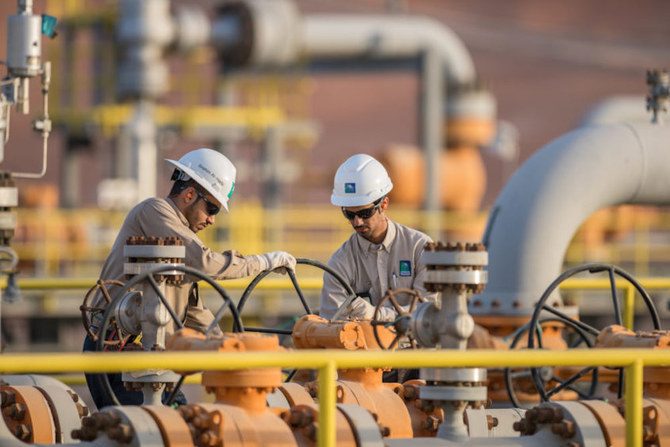
The hydrogen plant will be located in the planned megacity of NEOM. (Supplied)
Short Url
Updated 07 March 2021
Follow

Saudi Arabia pushes ahead with plan to be world’s top ‘green hydrogen’ producer

  • The move comes as global demand for clean fuel surges, with superpowers such as China and Europe setting sights on the growing hydrogen business
  • Energy experts reportedly described Saudi Arabia as the one to watch in the global race in the hydrogen scene

DUBAI: Saudi Arabia is building a $5-billion green fuel plant for export in a bid to become the world’s largest supplier of hydrogen, Bloomberg reported.
The hydrogen plant will be located in the planned megacity of NEOM, which lies north of the Red Sea. It will be powered entirely by sun and wind, the report said.
“There’s nothing I’ve ever seen or heard of this dimension or challenge,” Peter Terium, who heads the energy, water, and food sector at NEOM, said.
“I’ve been spending the last two years wrapping my mind around ‘from scratch,’ and now we’re very much in execution mode,” he added.
The move comes as global demand for clean fuel surges, with superpowers such as China and Europe setting sights on the growing hydrogen business, which Bloomberg predicts to be worth as much as $700 billion by 2025.
The European Union alone earlier dedicated $500 billion as investment to hydrogen production, but experts suggested there were still major obstacles that hinder a global energy transition.
Many countries have expressed a desire to use the gas more, including the UK, China, Japan, and the US, highlighting the potential of the industry.
Energy experts reportedly described Saudi Arabia as the one to watch in the global race in the hydrogen scene, which could be attributed to the Kingdom’s geographical characteristics – “perpetual sunshine and wind, and vast tracts of unused lands.”
Green hydrogen is produced by using renewable energy instead of fossil fuels, and producing a kilogram of the gas currently costs about $5.
Saudi Arabia could drive this cost down to $1.5 per kilogram by 2030, according to Bloomberg’s energy research arm.


IsDB announces $2.41bn in new financing for strategic development sectors

Updated 24 February 2026
Follow

IsDB announces $2.41bn in new financing for strategic development sectors

JEDDAH: The Islamic Development Bank has approved $2.41 billion in new financing for a series of transformative projects during its 364th Executive Board meeting, chaired by IsDB President Mohammed Al-Jasser.

The approvals underscore the bank’s ongoing commitment to regional cooperation, economic development, and climate- and environment-friendly investments that advance the UN Sustainable Development Goals across its member countries.

The new financing includes an additional $40 million for the Central Asia–South Asia Electricity Transmission and Trade Project (CASA-1000) in Tajikistan, aimed at boosting regional energy trade, improving electricity access and reliability, and mitigating climate change through the export of clean and renewable energy.

The bank also approved €116 million ($135 million) to upgrade Senegal’s Dakar Expressway Project.

The initiative is designed to improve health, education, and economic services for local populations, reduce traffic congestion and peak travel times, and enhance road safety measures to halve traffic-related deaths and injuries, with a particular focus on women and young pedestrians.

A $1.307 billion allocation was approved for Kazakhstan’s Economic and Industrial Zones Project to foster sustainable industrial development.

The initiative is expected to promote economic diversification, attract investment, create jobs, and boost global competitiveness through infrastructure upgrades and operational efficiency in special economic zones, industrial zones, and specialized industrial zones.

Bahrain will receive $330.07 million to expand its industrial capacity and strengthen economic competitiveness. The funding will support the development of modern industrial land with resilient infrastructure, advanced export-oriented manufacturing, effective internal connectivity, and reclaimed land facilities.

The project aims to stimulate private investment, generate employment, and reinforce Bahrain’s position as a regional industrial and logistics hub.

The IsDB approved $160 million to enhance utilities, water, and urban development sectors in Jordan.

The financing will secure future drinking water supply for Aqaba, Amman, and northern regions, support climate adaptation and mitigation, foster economic growth, and promote private sector participation in sustainable, long-term water solutions to alleviate severe water stress.

Azerbaijan was granted $436.67 million to improve agricultural productivity by reducing irrigation water losses and supporting sustainable rural development, in line with Azerbaijan’s 2030 vision.

The project will also promote green growth, strengthen climate resilience, and ensure long-term food security.

The approved projects reflect the IsDB’s strategic focus on fostering sustainable and inclusive growth across member countries by addressing critical infrastructure, energy, water, transport, and industrial development challenges.

These initiatives are expected to deliver lasting impact and contribute effectively to achieving the Sustainable Development Goals.