





JEDDAH: As Saudi Arabia sets out to introduce its culture, history and social life to a global audience, fashion is finding it has a key role to play in the Kingdom’s “brand strategy.”
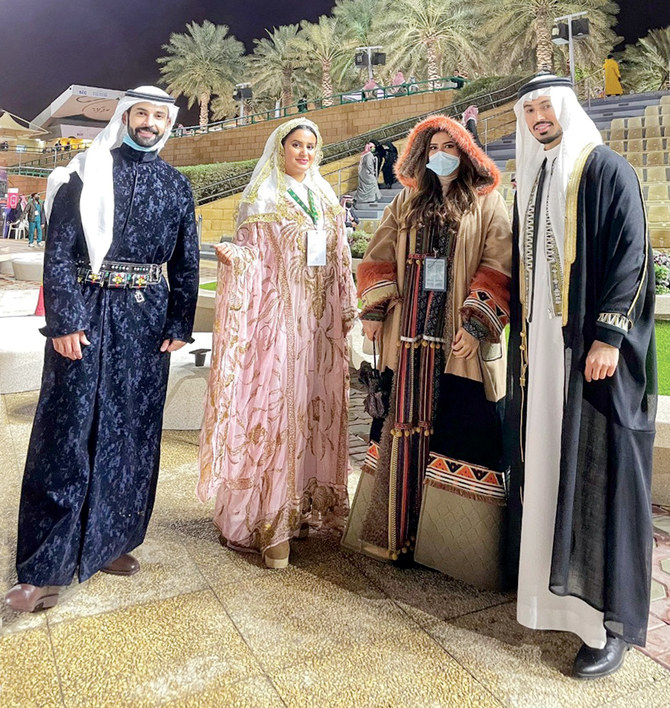
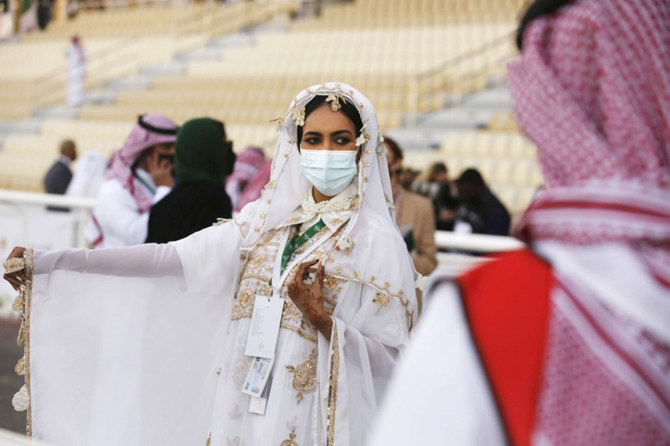
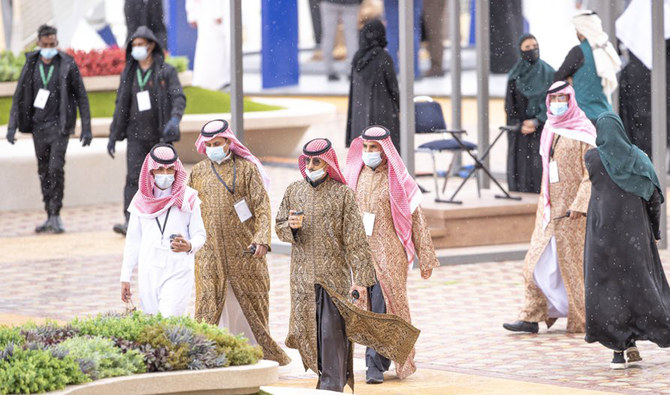
Traditional wear proudly worn by both Saudis and expats at the recent Saudi Cup showed how age-old cultural styles could find new life in a contemporary setting.
While fashions can reflect a specific era, they also can act as a transition to the future, with fabrics, cuts, motifs and embroidery designs, and even colors and layers, keeping the story alive.
The Saudi Cup showcased traditional outfits, with the Ministry of Culture’s fashion commission encouraging a dress code that required racegoers to highlight their heritage, and designers to showcase their exclusive works, mixing the contemporary with the old.
Although Western outfits dominate the world fashion market, Saudi Arabia is choosing to stay connected with its traditional dress.
Saudi designers are constantly introducing new trends in the way outfits are made or worn, finding inspiration in age-old styles or seeking to bring the traditional clothing of a region into the present.
HIGHLIGHTS
• Although Western outfits dominate the world fashion market, Saudi Arabia is choosing to stay connected with its traditional dress.
• Saudi designers are constantly introducing new trends in the way outfits are made or worn, finding inspiration in age-old styles or seeking to bring the traditional clothing of a region into the present.
• Mohammed Khoja, a fashion designer who uses traditional approaches in his contemporary work, believes that his collections help shed light on cultural elements that appeal to both local and international audiences.
• International events, from Eid celebrations at Saudi missions across the globe to overseas university students celebrating an occasion, allow Saudis to don traditional clothing to represent their homeland.
• Omaima Kindassa, a Saudi designer and owner of a contemporary heritage boutique, said that events such as the Saudi Cup allowed Saudis to represent their own region and culture, as well as show the Kingdom’s rich heritage and diverse culture to the world.
• Princess Nourah Al-Faisal, the designer behind Nuun Jewels, hoped to represent the historical beauty and color of traditional Saudi clothing in a way that encouraged people to embrace and celebrate their culture.
Mohammed Khoja, a fashion designer who uses traditional approaches in his contemporary work, said: “Since the beginning of my fashion design career, cultural elements have appealed to me. I am particularly driven by being able to contribute in documenting and potentially giving cultural elements more importance.”
Khoja believes that his collections help shed light on cultural elements that appeal to both local and international audiences.
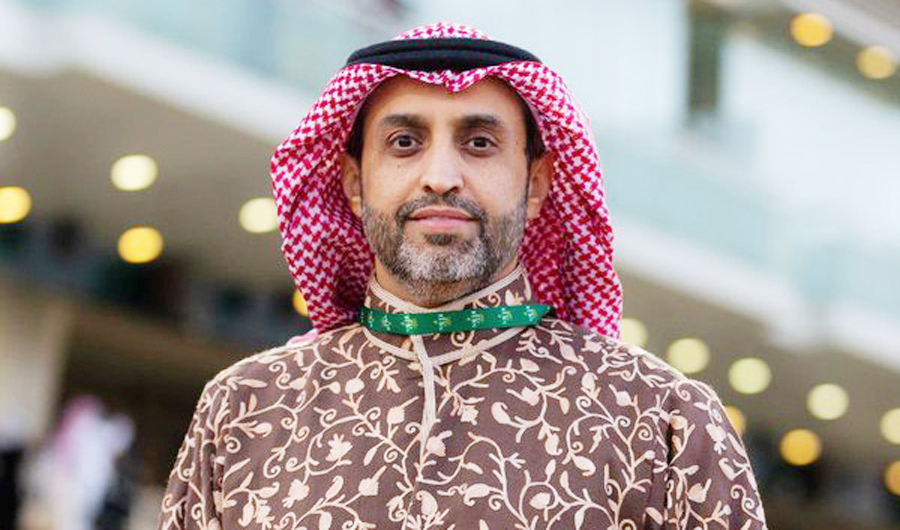
Traditional wear proudly worn by both Saudis and expats showed how age-old cultural styles could find new life in a contemporary setting.
The same elements have also helped him identify with his own contemporary identity, he said.
Omaima Kindassa, a Saudi designer and owner of a contemporary heritage boutique, said that events such as the Saudi Cup allowed Saudis to represent their own region and culture, as well as show the Kingdom’s rich heritage and diverse culture to the world.
“I’ve been designing and modernizing traditional Saudi wear for 10 years,” Kindassa told Arab News. “Now many younger designers are pursuing that as well because they have fallen in love with our heritage.”
She added: “If the current generation were to wear traditional clothes, they would find them overbearing and heavy, especially accessory-embellished designs and those adorned by stones. Modernizing these outfits makes them relevant to today’s generation and ensures our tradition keeps pace with fashion.”
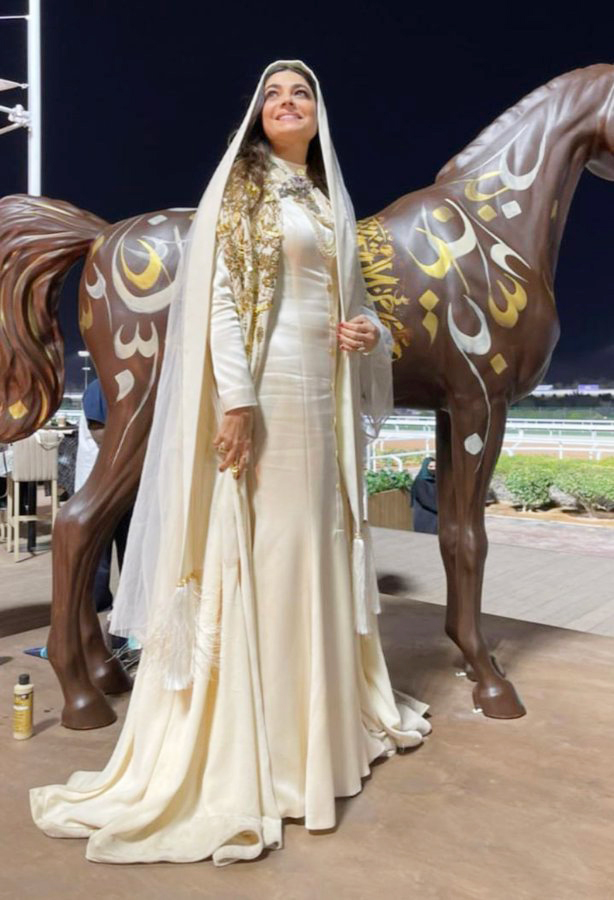
The Saudi Cup showcased traditional outfits, with the Ministry of Culture’s fashion commission encouraging a dress code that required racegoers to highlight their heritage, and designers to showcase their exclusive works, mixing the contemporary with the old. (Supplied)
Kindassa specializes in traditional wear from the Kingdom’s regions but also modern clothing “that tell tales of the long past.”
“Each region offers its own rich heritage through its designs, from the geometric elegant shapes, the vibrant colors, the embroidery — it looks like a painting to admire,” she said.
International events, from Eid celebrations at Saudi missions across the globe to overseas university students celebrating an occasion, allow Saudis to don traditional clothing to represent their homeland.
Princess Nourah Al-Faisal, the designer behind Nuun Jewels, told Arab News that the Saudi Cup was a “great opportunity to present the variety, regionality and beauty that is Saudi culture.”
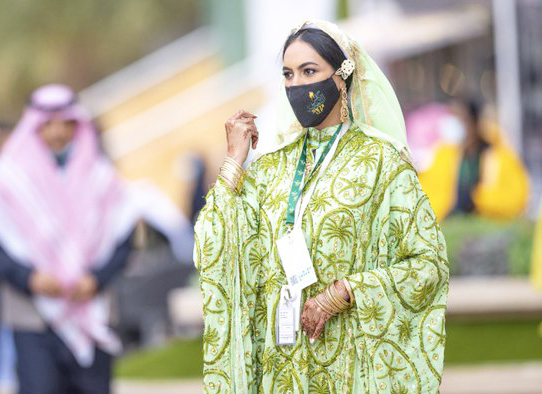
She was brought in as a consultant for the project, a link between the Saudi Cup and the Ministry of Culture, “to curate the event in terms of looks and feel.”
Princess Nourah said the idea to promote traditional Saudi fashion was not hers, but came from Crown Prince Mohammed bin Salman.
The princess hoped to represent the historical beauty and color of traditional Saudi clothing in a way that encouraged people to embrace and celebrate their culture. She also wanted people to take ownership of their heritage, and see designers and communities using it as inspiration for future designs.
“So not just reproducing traditional cultural dress, but also taking it as a point of reference and moving forward into the future, recreating it, developing it and having fun with it by creating something completely new,” she said.
Impressed with the outcome, she hopes to build on this momentum where people celebrate culture every day.
“There are a number of entities within Saudi Arabia, organizations that are all about preserving our heritage; things like regional embroidery, jewelry, costumes, and really making sure that they’re archiving it, whether through photographs or through the actual pieces. I think that is something that we have been working on as a nation either in the private sector or the public sector for a while,” she said.

keywords


