



Houthi strikes spark calls for action against Yemen militias

1 / 4
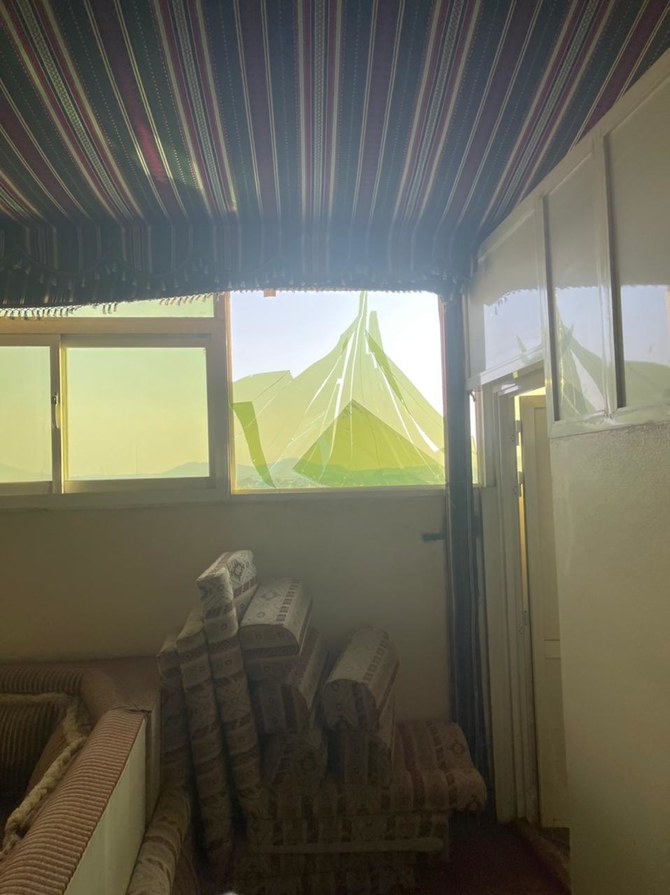
Shrapnel fell on a number of residential areas in Khamis Mushayt and Ahad Rafidah on Friday after several Houthi drones were intercepted. (SPA)
2 / 4
Shrapnel fell on a number of residential areas in Khamis Mushayt and Ahad Rafidah on Friday after several Houthi drones were intercepted. (SPA)
3 / 4
Shrapnel fell on a number of residential areas in Khamis Mushayt and Ahad Rafidah on Friday after several Houthi drones were intercepted. (SPA)
4 / 4
Shrapnel fell on a number of residential areas in Khamis Mushayt and Ahad Rafidah on Friday after several Houthi drones were intercepted. (SPA)
Short Url
Updated 06 March 2021
Follow

Houthi strikes spark calls for action against Yemen militias

  • A man and child were treated after being injured by shrapnel
  • A number of houses were also damaged by flying shrapnel

RIYADH, ISLAMABAD: The Arab coalition on Friday intercepted and destroyed six Houthi drones targeting the southwestern Saudi city of Khamis Mushayt.

Spokesman Brig. Gen. Turki Al-Maliki said the Iranian-backed militia’s attempts to attack civilians in a deliberate and systematic manner constituted war crimes.
A child and a civilian were injured as a result of flying shrapnel, according to the General Directorate of Civil Defense in Asir. No casualties were reported.
He added that the coalition had put in place measures to protect civilians in accordance with international humanitarian law.
The UAE condemned the latest Houthi attempt to strike Khamis Mushayt, with its Foreign Ministry describing recent air attacks as a dangerous escalation of the militia group’s efforts to undermine security and stability in the region.
Yemen’s Foreign Minister Ahmed Awad bin Mubarak said the situation hindered the peace process and blamed Iran for the ongoing crisis in the country.
“The Iranian interventions have become a formidable obstruction to peace as Iran has turned the Yemeni conflict into a negotiating card that the Iranian regime capitalizes on to serve its nuclear negotiations,” he added.
Djibouti’s ambassador to Saudi Arabia, Dya-Eddine Said Bamakhrama, urged the international community to take a united stand against terrorist acts that destabilized the security of the region.
Ali Al-Balawi, a strategic analysis expert, said the increase in Houthi attacks ran contrary to the efforts of the US administration to help bring an end to the war and other crises in Yemen.
“I think that the matter (the escalation in attacks) is related to the negotiations on the Iranian nuclear file, as Tehran doesn’t want to give the (American President Joe) Biden administration a long time to return to the agreement and with conditions, but rather wants to push it to negotiate by force,” he told Arab News.
The war was an extension of diplomacy, Al-Balawi added, and was primarily an Iranian escalation that would not be confined to Yemen only. “The indications are that Iran has given its militias instructions to escalate in Iraq, the last of which was targeting the Ain Al-Asad air base in western Iraq.”
He pointed out that the Iranians believed Biden’s administration to be weak and preoccupied with internal US divisions and its strained relations with China.
“Accordingly, there is Iranian bullying and attempts to obstruct the maritime movement in the Arab Gulf, and therefore the ball is now in the American court. The statements that have no effect on the reality are enticing Iran to interfere in the internal affairs of the countries of the region,” he said.
Meanwhile, the Pakistan Ulema Council (PUC) on Friday called for immediate international action to stop the Houthi attacks on Saudi Arabia.
“(The) United Nations, Organization of Islamic Cooperation, and the Security Council should take immediate action against the constant attacks on Saudi cities and people of Saudi Arabia by Houthi rebels,” said Tahir Ashrafi, the PUC chairman who is also the Pakistani prime minister’s special assistant on religious harmony and the Middle East.
“The security, stability, and peace of Saudi Arabia is dear to every Muslim,” he told Arab News, adding that international organizations should “play a proactive role against the attackers.”

Soleimani’s shadow
Qassem Soleimani left a trail of death and destruction in his wake as head of Iran’s Quds Force … until his assassination on Jan. 3, 2020. Yet still, his legacy of murderous interference continues to haunt the region

Enter


keywords

‘Cake not hate’ campaign becomes ‘Dates not hate’ in Madinah

“The Joshie-Man” and his father Dan Harris in the courtyard of the Prophet’s Mosque in Madinah. (Supplied)
Updated 02 February 2026
Follow

‘Cake not hate’ campaign becomes ‘Dates not hate’ in Madinah

  • Dan said he was very impressed by Saudi hospitality and that his family was warmly welcomed
  • He said being in Madinah exposed him to the true diversity of Islam

LONDON: A British autistic and non-verbal boy who has been visiting UK mosques and distributing cakes to promote solidarity amid an increase in far-right support in the country has taken his message of love to Madinah.

Joshua Harris, or “The Joshie-Man” as the 12-year-old is known to his social media fans, has handed out hundreds of his baked goods to worshipers at mosques in major British cities over the last few months.

The “Cake not hate” campaign came about after an Islamophobic attack on a mosque in his home city of Peterborough in October 2025.

Harris and his father visited Masjid Darassalaam, the mosque that was targeted, with cakes that the boy had baked and distributed them to the congregation soon after the attack. Since then, Harris has visited dozens of mosques in the UK.

On a recent trip to the Middle East, he and his father visited Madinah. In a local twist that pays tribute to the holy city’s famous date varieties including ajwa and ambar, Harris handed out dates to people in the courtyard of the Prophet’s Mosque. The “Cake not hate” campaign became “Dates not hate” for Saudi Arabia.

“He was greeted really, really warmly. There were some really touching moments where people were kissing his hands and his head. It was really lovely,” his father, Dan Harris, said.

Dan, the founder of global charity Neurodiversity in Business, said being in Madinah exposed him to the true diversity of Islam.

“We met people from all around the world. It was amazing. It’s like the United Nations there, you get people from different countries and it just goes to show you that the Muslim community, or the Ummah more generally, is not a homogeneous group,” he said.

“We saw people from Tajikistan and Uzbekistan and it was really interesting for us.”

Dan said his visit to Madinah, considered the second holiest city in Islam after Makkah for Muslims, was “profound and life-changing.”

He added: “I would say it’s my favourite city in the world due to the peace and tranquillity I felt there.”

Dan added that he was very impressed by Saudi hospitality: “Everywhere we went, people were taking down my number and insisting that we come for dinner, insisting they pick us up from the location. They were extremely attentive to Joshie as well, making sure his needs were met. We felt a great sense of welcome, something Saudi Arabia is known for.”