Goldman Sachs Commodities Research raised its Brent forecast for second and third quarter by $5 a barrel after OPEC and its allies kept the deal unchanged, and said ‘discipline of shale producers’ is likely behind the group’s slower output increase.
The Wall Street bank now sees Brent prices at $75 a barrel in second quarter and at $80 a barrel in third quarter of 2021, it said in a note.
US shale producers have quickly responded to oil price gains in recent years, winning market share as Saudi Arabia and other major producers have cut output, although they held back on boosting production since pandemic-led demand destruction last year.
The Organization of the Petroleum Exporting Countries and its allies (OPEC+) on Thursday agreed to extend most oil production cuts until April, after deciding that the demand recovery from the coronavirus pandemic was still fragile.
“OPEC’s supply strategy is working because of its unexpectedness and suddenness,” Goldman said.
“We believe it is now clear that OPEC+ is in fact pursuing a tight oil market strategy, with our updated supply-demand balance pointing to OECD (inventories) falling to their lowest level since 2014 by the end of this year.”
The bank lowered its OPEC+ production forecast by 0.9 million (bpd) over the next six months, and said shale, Iran and non-OPEC supplies are likely to remain highly inelastic to prices until the second half of 2021, allowing OPEC+ to quickly rebalance the oil market.
“Key will be the potential shale supply response, although the latest earnings season suggests investors are still a long way away from rewarding growth,” the bank said, and raised its 2022 US shale production forecast by 0.3 million bpd.


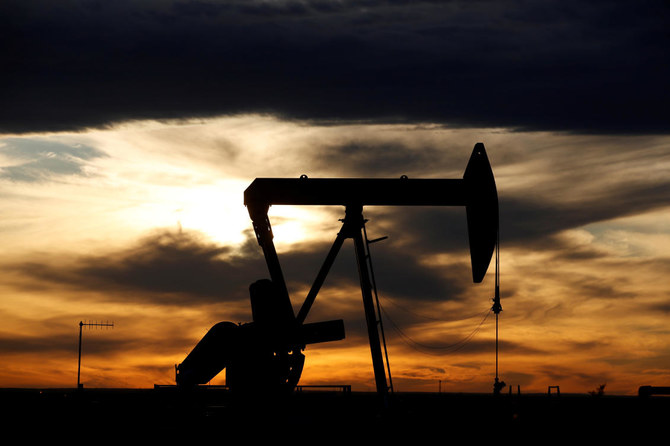
Goldman hikes Brent forecast, sees oil at $80 in third quarter
https://arab.news/brgx8
Goldman hikes Brent forecast, sees oil at $80 in third quarter

- Iran supplies likely to remain 'inelastic'
- Lowers production forecast for OPEC+


Saudi Arabia’s foreign reserves rise to a 6-year high of $475bn
RIYADH: Saudi Arabia’s foreign reserves climbed 3 percent month on month in January to SR1.78 trillion, up SR58.7 billion ($15.6 billion) from December and marking a six-year high.
On an annual basis, the Saudi Central Bank’s net foreign assets rose by 10 percent, equivalent to SR155.8 billion, according to data from the Saudi Central Bank, Argaam reported.
The reserve assets, a crucial indicator of economic stability and external financial strength, comprise several key components.
According to the central bank, also known as SAMA, the Kingdom’s reserves include foreign securities, foreign currency, and bank deposits, as well as its reserve position at the International Monetary Fund, Special Drawing Rights, and monetary gold.
The rise in reserves underscores the strength and liquidity of the Kingdom’s financial position and aligns with Saudi Arabia’s goal of strengthening its financial safety net as it advances economic diversification under Vision 2030.
The value of foreign currency reserves, which represent approximately 95 percent of the total holdings, increased by about 10 percent during January 2026 compared to the same month in 2025, reaching SR1.68 trillion.
The value of the reserve at the IMF increased by 9 percent to reach SR13.1 billion.
Meanwhile, SDRs rose by 5 percent during the period to reach SR80.5 billion.
The Kingdom’s gold reserves remained stable at SR1.62 billion, the same level it has maintained since January 2008.
Saudi Arabia’s foreign reserve assets saw a monthly rise of 5 percent in November, climbing to SR1.74 trillion, according to the Kingdom’s central bank.
Overall, the continued advancement in reserve assets highlights the strength of Saudi Arabia’s fiscal and monetary buffers. These resources support the national currency, help maintain financial system stability, and enhance the country’s ability to navigate global economic volatility.
The sustained accumulation of foreign reserves is a critical pillar of the Kingdom’s economic stability. It directly reinforces investor confidence in the riyal’s peg to the US dollar, a foundational monetary policy, by providing SAMA with ample resources to defend the currency if needed.
Furthermore, this financial buffer enhances the nation’s sovereign credit profile, lowers national borrowing costs, and provides essential fiscal space to navigate global economic volatility while continuing to fund its ambitious Vision 2030 transformation agenda.


