

KAUST & SABB to host virtual Taqadam showcase

Every year, Taqadam utilizes KAUST and SABB’s powerful networks to connect founders with expert mentors and industry leaders in the startup ecosystem.
Short Url
Updated 02 March 2021
Follow

KAUST & SABB to host virtual Taqadam showcase

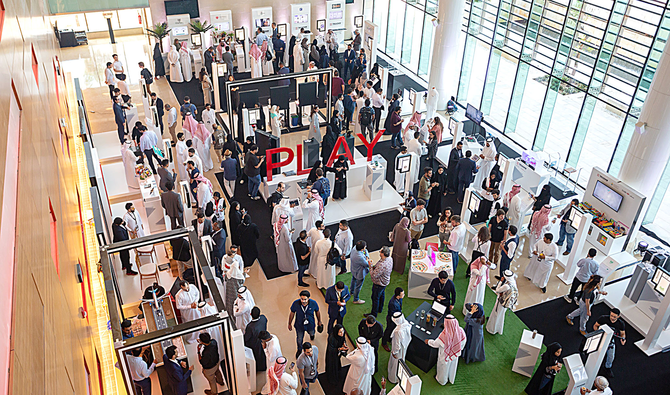
King Abdullah University of Science and Technology (KAUST) will host the Taqadam startup accelerator showcase, where graduates from the program’s 2020 cohort will demonstrate their ventures at a virtual event on March 10. Through three-minute pitches, the graduates will be presenting virtually to a network of top-tier local and international investors and judges. 

The six-month-long startup accelerator program, which is based at KAUST and sponsored by Saudi British Bank (SABB), aims to develop early-stage entrepreneurs and their concepts into new, high-potential startups. The theme of this year’s showcase, “Creativity Crystallized,” reflects the intense pressure entrepreneurs are facing amid the global COVID-19 pandemic. 

“The COVID-19 pandemic made this a very challenging year for our 2020 Taqadam cohort,” said Dr. Kevin Cullen, vice president of innovation and economic development at KAUST. “However, these entrepreneurs rose to that challenge and did an amazing job and thrived under pressure. Their resilience and perseverance reflect the amazing talent we have in our Saudi entrepreneurship ecosystem and we are extremely proud to be a part of and contributing to it as KAUST establishes itself as the deep tech heart of the Saudi economy.” 

The 2020 Taqadam startup accelerator cohort includes 76 founders, representing 37 startup finalists, from diverse industries, including e-commerce, medtech, edtech and fintech. The accepted teams received SR150,000 ($40,000) in zero-equity grant-funding. The competition was fierce for this cohort as more than 561 startups applied with only 59 shortlisted. Of those, 37 top startups graduated from the program.  

Teams usually have access to co-working and lab facilities but had to go virtual in 2020 due to COVID-19. Empowered by mentorship and online collaborative tools, the aspiring entrepreneurs worked to bring their ideas to market through training in topics, such as growth hacking, fundraising, sales, pricing, marketing and more. Taqadam utilizes KAUST and SABB’s powerful networks to connect founders with expert mentors and industry leaders in the startup ecosystem, helping guide them throughout their startup journey. 

Majed Najm, SABB’s deputy managing director of corporate and institutional banking, said: “We’re excited to work with KAUST to offer such a unique opportunity for young entrepreneurs to secure zero-equity funding. Taqadam is all about equipping young entrepreneurs to turn their ideas into successful businesses. Not only are they getting the chance to get feedback on their pitching skills — they could also secure a transformational investment. We wish everyone involved the best of luck.”

At the annual showcase event, startup graduates will be competing for a prize pool of over SR4 million in zero-equity funding. Judges will select 10 winners to receive a prize valued at SR375,000 each. In addition, the audience will vote on a People’s Choice Award for one startup to receive a prize of SR375,000. These awards will support the startups to accelerate operations, grow their business and expand their teams.


Kuwait Fund for Development: Six decades of humanitarian and developmental impact across globe

Updated 22 January 2026
Follow

Kuwait Fund for Development: Six decades of humanitarian and developmental impact across globe

On Dec. 31, the Kuwait Fund for Development marks the anniversary of its establishment, opening a new chapter of success and ambition as one of the most prominent pioneers of development on both regional and global levels. Founded in 1961, the fund became the first and oldest development institution to operate in Arab countries and other developing nations.

Today, after more than six decades of continuous work, the Kuwait Fund for Development remains steadfast in its mission and has never ceased its efforts to support development causes in developing countries. As it celebrates its 64th anniversary, the fund has drawn a national portrait under the theme “Partners in Development,” reflected through its projects spread across the globe, all of which aim to build brighter and more sustainable future.

An external development arm

The establishment of the Kuwait Fund for Development embodied a wise and visionary decision by the leadership of Kuwait at the time. Kuwait was the only developing country that chose to share the challenges of development with other developing nations, cooperating with them through the provision of concessional loans, grants, financial assistance, and technical support tailored to their development priorities.

Since its inception, the Kuwait Fund for Development has served as Kuwait’s external development arm, sparing no effort in supporting development causes and extending assistance to developing countries worldwide.

Vision and early beginnings

In the early 1960s, the late Amir Sheikh Jaber Al-Ahmad Al-Sabah, then head of the financial department, proposed the idea of establishing a development entity that would serve Kuwait’s foreign policy and assist Arab and other developing countries in achieving development across various sectors. The idea received strong support from the late Amir Sheikh Abdullah Al-Salem Al-Sabah, as it aligned with Kuwait’s vision at the time to build a modern state.

Consequently, an Amiri decree was issued on Dec. 31, 1961, establishing the Kuwait Fund for Development with an initial capital of 50 million Kuwaiti dinars ($162.6 million).

Global reach and development impact

The fund’s activities have extended to all corners of the world, contributing to the financing of projects in 106 countries, including 16 Arab countries, 41 African countries, 19 in East and South Asia and the Pacific, 17 in Central Asia and Europe, and 12 in Latin America and the Caribbean.

This support was delivered through 1,037 concessional loans provided to the governments of these countries, with a total value of approximately 7 billion Kuwaiti dinars. In addition, the fund has provided grants and technical assistance to support a wide range of development services, helping beneficiary countries implement their development programs. A total of 420 grants and technical assistance operations were extended, amounting to approximately 401 million Kuwaiti dinars.

Loan agreements

During the past year, the Kuwait Fund for Development signed several loan agreements supporting development across different regions of the world. Among these were two loan agreements with the government of Bahrain. The first loan, valued at 31.25 million Kuwaiti dinars, contributed to financing the Electricity Transmission Networks Development Project. The second loan, valued at 10 million Kuwaiti dinars, supported the Sheikh Jaber Al-Ahmad Al-Sabah Highway Development Project (Phase II).

On the sidelines of the World Bank Group meetings held in Washington, D.C., the fund has also signed a 4 million Kuwaiti dinar-worth loan agreement with Saint Lucia to help finance the Sir Julian R. Hunte Highway Project, as well as another 4 million Kuwaiti dinar-worth loan agreement with Belize to support the George Price Highway Project.

Supporting and assisting refugees

The Kuwait Fund for Development’s contributions to humanitarian action stand out at both regional and international levels. Since its establishment, the fund has represented a unique model in supporting and assisting refugees in countries affected by disasters, conflicts, and wars, in line with Kuwait’s moderate and balanced policy.

These efforts have helped strengthen Kuwait’s relations with Arab and international partners. The fund has played a significant role in the reconstruction of Lebanon and Iraq following periods of crisis, and its assistance to the Palestinian people has never ceased.

International Participation

Over the past year, the Kuwait Fund for Development recorded notable participations in major international forums. These included taking part in the 2025 annual meetings of the World Bank Group and the International Monetary Fund in Washington, D.C., with a delegation headed by the fund’s Acting Director General Walid Shamlan Al-Bahar. The fund also took part in the Tokyo International Conference on African Development, held in Tokyo, Japan.

Additional international engagements included participation in the Third UN Conference on Landlocked Developing Countries, held in Awaza, Turkmenistan, and the Fourth International Conference on Financing for Development, organized by the UN in Seville, Spain.