


LONDON: The UK and Middle Eastern countries should not allow the coronavirus pandemic and its restrictions to distract from the importance of countering extremism, a group of experts said on Monday.
At an event hosted by the UK’s Emirates Society and attended by Arab News, Sir John Jenkins, former British ambassador to Saudi Arabia, said: “The danger of the pandemic is that it distracts our attention (from extremism), and weakens the ability of governments and societies to deal with it and address it honestly and intelligently.”
He added that the appeal of extremist ideologies “hasn’t gone away,” and that all governments need to remain focused on this issue.
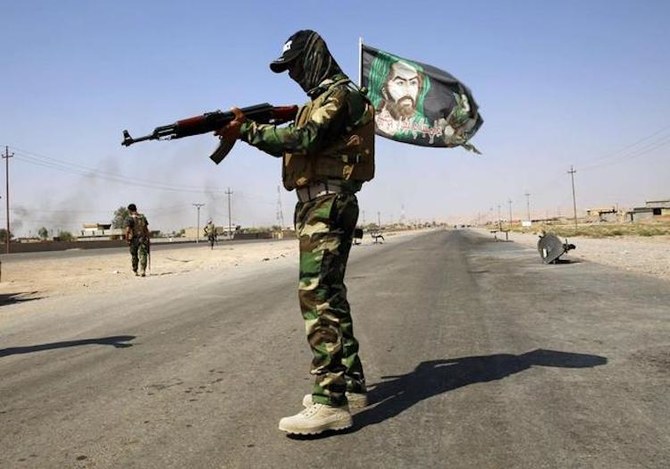
“One of the major threats to the Middle East is the spread of Shiite Islamist militias that have a degree of loyalty not simply to Iran, but to the supreme leader himself — they’re Khameneists, basically,” he said.
“We see it with Hezbollah in Lebanon, we see it in Syria, and we see it extraordinarily in Iraq. The hollowing out of state capacity in large parts of the Middle East, in favor of these predatory militias, is a major long-term threat,” he added. “The key for governments is not to lose focus of all of this.”
John Woodcock, the UK special envoy for countering violent extremism, echoed those concerns over the persistent threat of violent extremism.
“There has been a danger in the last 12 months that national focuses haven’t been on the issue of extremism,” he said.
“I think that’s potentially a far greater issue for the years ahead because of the huge resource pressure that countries will come under in the post-pandemic economic recovery.”
This financial pressure, Woodcock warned, could trickle down to multilateral agencies working in conflict and post-conflict zones, potentially hampering their ability to carry out work that acts as a preventative buffer to the allures of extremism.
His concerns appear to already be playing out in the UK, amid reports on Monday that Britain will cut its aid budget to Yemen, which is embroiled in a civil war involving pro-Iran Houthi militias.
Omar Ghobash, the UAE’s ambassador to France, said his country recognized early that religious extremism presented a real challenge that demanded attention, and was successful in tackling it.
In the UAE, “we saw that there was a very powerful narrative within our own Islamic community that was pulling kids into warzones and into acts of violence,” he added.
“This recognition happened some time ago,” he said, but after the 9/11 attacks “this became much clearer to us.”
To counter this, the UAE “focused on young people in particular and what aspirations they have, asking how we as a government can provide them with the means to achieve those aspirations,” Ghobash added.
The UAE “has continued to develop sensitivity to what young people want to do and what they can do,” he said.
“The approach of the leadership has been to invest in intellectual, legal and physical infrastructure to provide uplifting visions of where the country and its people can go.”
The launch of the Mars Hope probe, Ghobash said, presents just one example to the country’s youth of how Emiratis can operate internationally, bypassing cultural or religious differences.
Initiatives like that, he added, encourage the country’s youth to focus on “improving the lot of mankind, not just our own neighborhood.”


