As online news booms, Balochistan’s blind paperboy is nearly out of work

Muhammad Essa walking the streets with his walking stick and 22 newspapers to sell in Mastung city, Pakistan, on February 26, 2021. (AN Photo)
Short Url
Updated 01 March 2021
Follow

As online news booms, Balochistan’s blind paperboy is nearly out of work

  • Muhammad Essa is a blind newspaper hawker in his 70’s who has walked miles every day to sell papers for 35 years
  • Hit by the pandemic and the growth of news tech, Essa now makes less than $2 on a good day

QUETTA: As the still-cold spring breeze drops morning temperatures to freezing in southwestern Pakistan’s Mastung district, 70-year-old Muhammad Essa begins his daily trek, armed with a shawl and a walking stick, to the city’s newspaper market from his village of Qari Saur in Balochistan.
It’s the same 2.5-mile-long route Essa has walked for 35 years, distributing hundreds of papers in the city during the rising popularity of the press. Now, in the age of social media, Essa sells barely a dozen papers a day. 
In all these years, Essa — born with a visual impairment and now blind — has never read a single news story himself. 
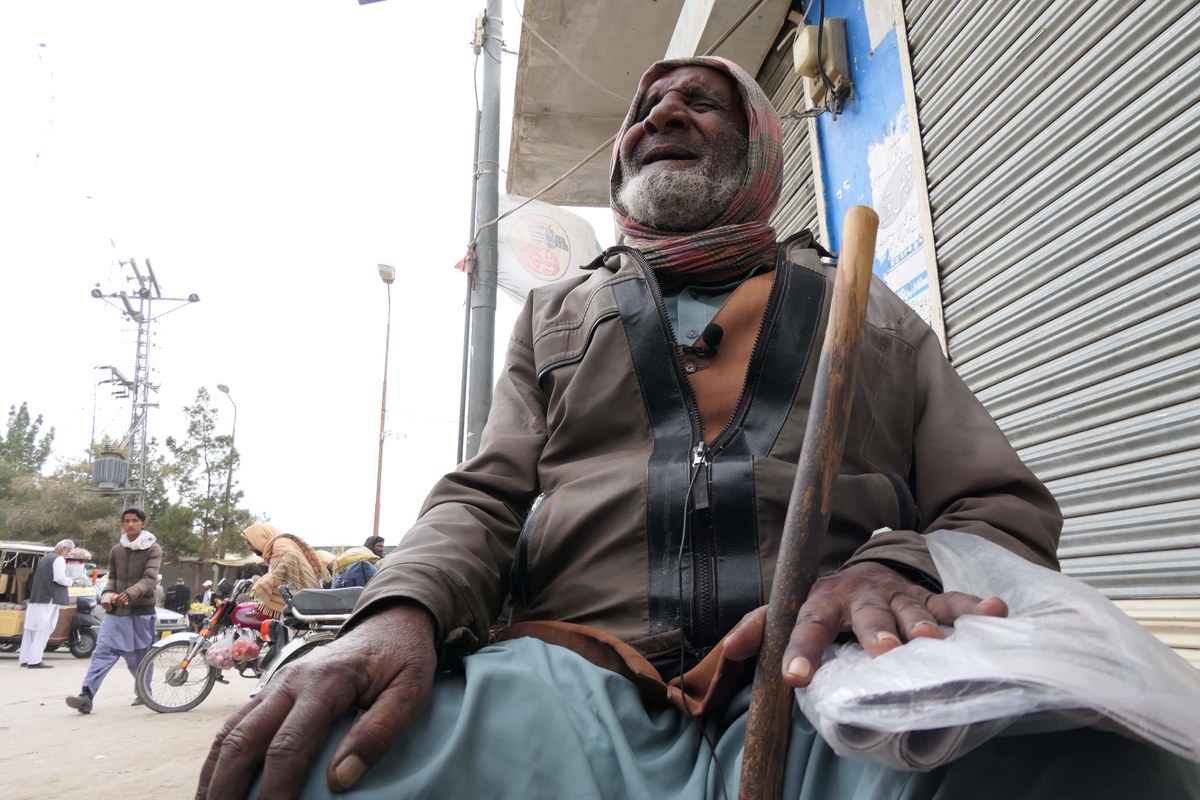


Blind hawker Muhammad Essa sits at a roadside restaurant on Sultan Shaheed Chowk in Mastung City, Pakistan, waiting for a cup of tea, on February 26, 2021. (AN Photo)

“Who will buy the paper from me when everybody is on social media and on their phones?” Essa told Arab News.
“There was a time when I used to earn more than Rs1,500 a day ($9.51) but now, even if I succeed in selling all my 22 newspapers, I’d earn Rs240 ($1.52),” he said.
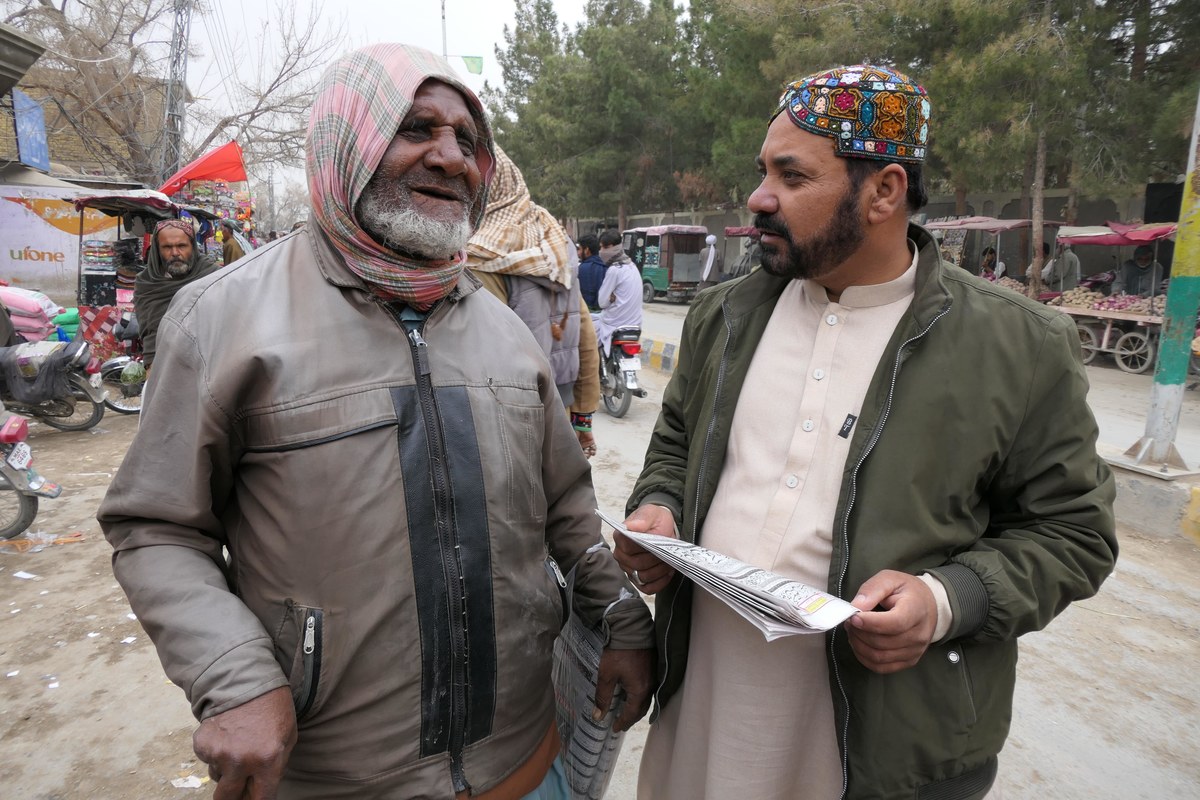


Muhammad Essa with a customer in Mastung city, Pakistan, on February 26, 2021. (AN Photo)

In 1985, Essa was begging on the streets, and it was on the suggestion of a friend that he turned toward news hawking to make a living. 
“I started my job as a newspaper hawker back in 1985 when then President Zia ul Haq announced beggars would be imprisoned in Pakistan,” Essa said, pausing his walk around downtown Mastung for a cup of tea. “A friend suggested I start delivering newspapers in Mastung city rather than sitting around waiting for others to help me, so I started selling daily tabloids.”
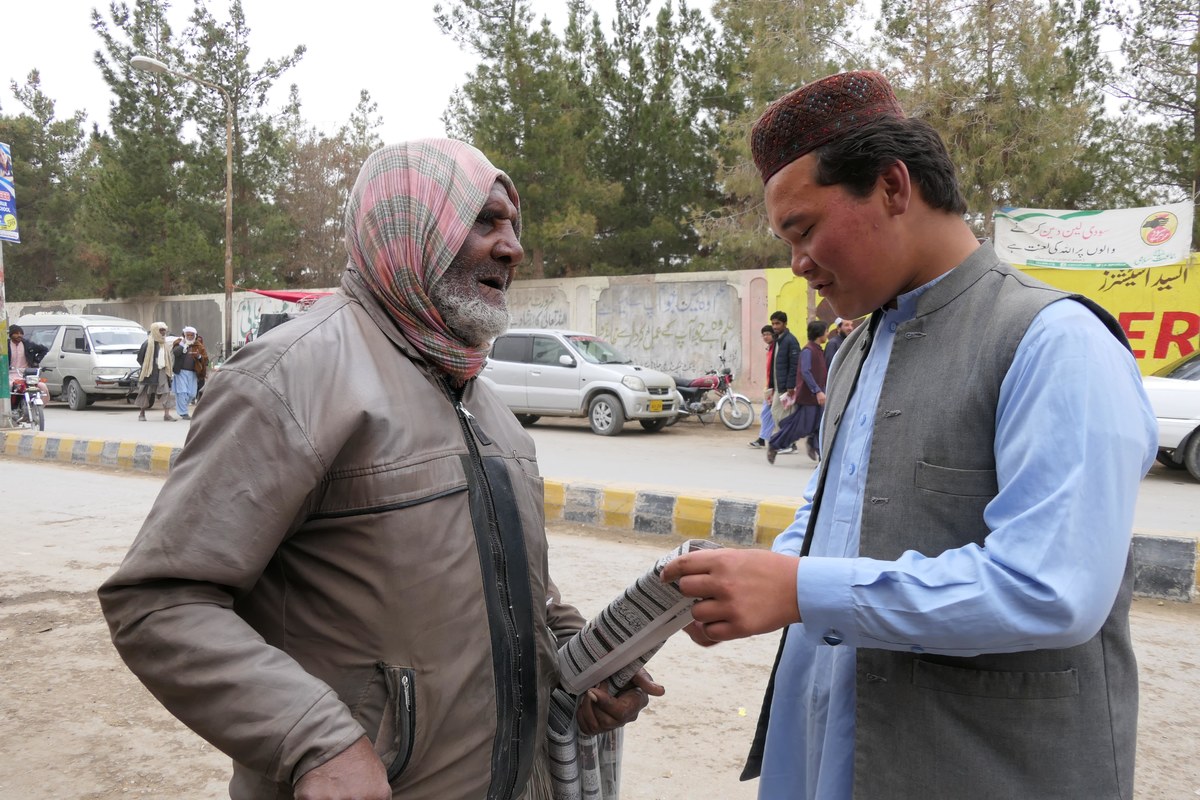


A customer buys a newspaper from hawker Muhammad Essa at Tehseel road in Mastung City, Pakistan, on February 26, 2021. (AN Photo)

It is a job he has always taken very seriously.
Abdul Haskeem, a local stationery shop owner at Mastung’s newspaper market, told Arab News that every morning at 630 am, he finds Essa standing outside his shop before he lifts the shutters. 
“Essa has a contract for 15 newspapers, but he takes five newspapers for himself to sell in the bazar,” Haskeem said. “He walks from dawn to 3pm around the city... which is not an easy job for a blind man in his 70s.”
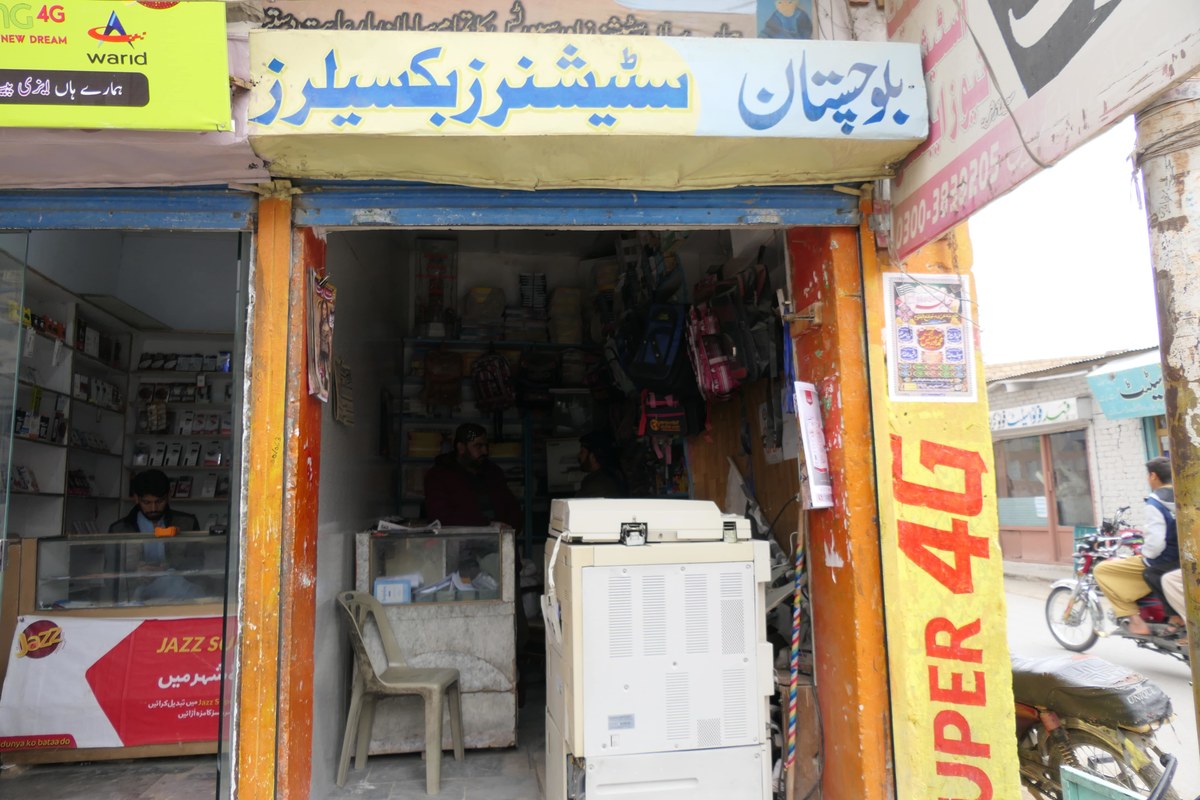


The stationary shop on Tehseel Road in Mastung Bazar, Pakistan, from where Muhammad Essa picks up newspapers to sell every morning. Photo taken on February 26, 2021. (AN Photo)

As he walks, Essa calls out the name of the newspapers he’s holding.
“People in Mastung are woken by the voice of Muhammad Essa,” Haskeem said, laughing.
But the rise of online news, ever increasing cell phone users and the outbreak of the coronavirus pandemic last year, means the hawker’s business has taken a huge hit. 
“I am the eldest of four siblings and I have educated my younger brothers and sisters, even my son, but today I can’t even feed myself because the number of newspaper buyers has decreased at an alarming level,” Essa said.
Pakistan, a country of over 220 million people has 178 million cellphone subscribers and 95 million broadband Internet users, almost all of whom access the web through their cell phones, according to official data from the Pakistan Telecommunication Authority (PTA).
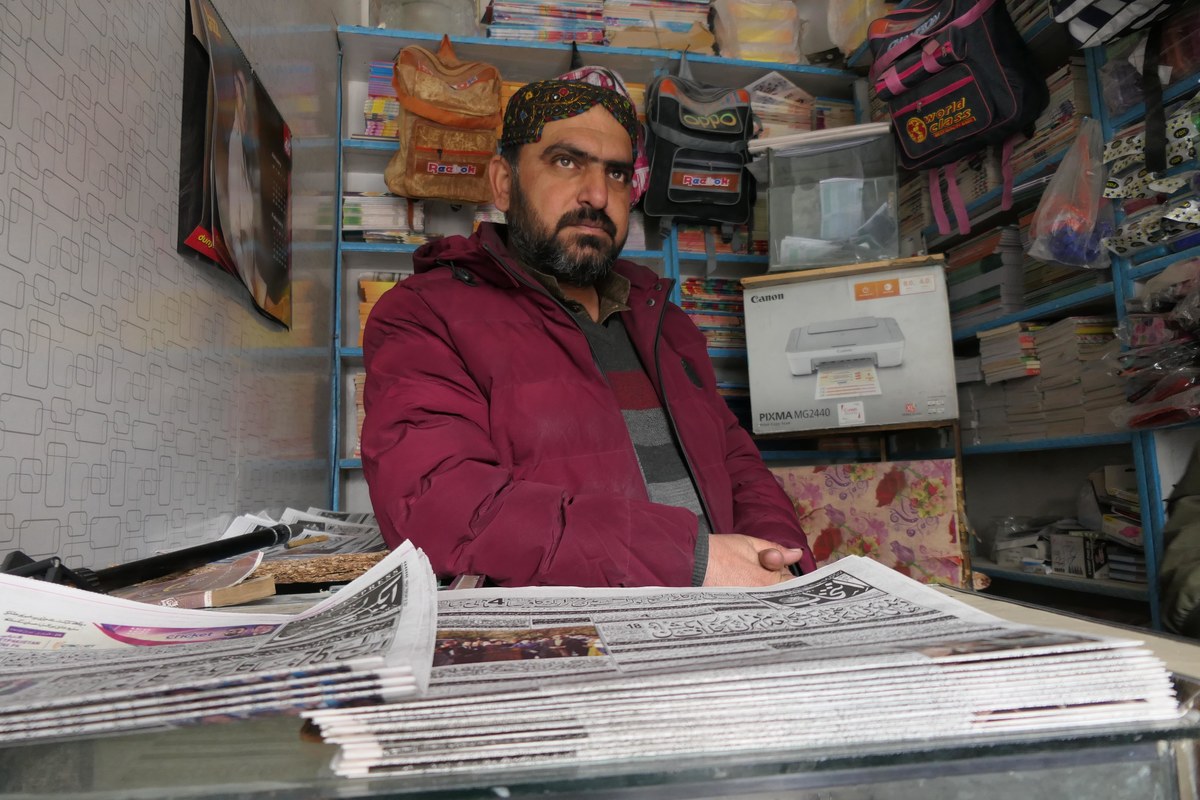


Abdul Hakeem, owner of the stationary store, sits inside his small shop in Mastung's newspaper market, Pakistan, on February 26, 2021. (AN Photo)

But despite the popularity of cell phone technology in the daily lives of many Pakistanis, 24.3 percent of the population continues to live below the poverty line, a fact compounded by the economic fallout of the pandemic.
A recent UNDP study of 70 countries, including Pakistan, estimated that COVID-19 could set poverty levels in these countries back by nine years, with tens of millions more falling into multidimensional poverty.
“I was completely empty-handed during the peak of COVID-19 in the country back in the summer of 2020 when I had nothing to do,” Essa said. “Then, the local elders of district Mastung helped me survive the crisis.”
Sipping his tea, Essa reminisced once more about the glory days of news, when he would walk around streets selling hundreds of national and local dailies. 
“Still,” he added, in between sips, “as long as there’s a single newspaper reader left in Mastung city, I will make my daily walk to deliver the paper.”


Pakistani, Bangladeshi officials discuss trade, investment and aviation as ties thaw

Updated 28 December 2025
Follow

Pakistani, Bangladeshi officials discuss trade, investment and aviation as ties thaw

  • Pakistan and Bangladesh were once one nation, but they split in 1971 as a result of a bloody civil war
  • Ties between Pakistan, Bangladesh have warmed up since last year and both nations have resumed sea trade

ISLAMABAD: Pakistan's High Commissioner to Bangladesh Imran Haider on Sunday met Chief Adviser Muhammad Yunus in Dhaka, the latter's office said on, with the two figures discussing trade, investment and aviation.

Pakistan and Bangladesh were once one nation, but they split in 1971 as a result of a bloody civil war, which saw the part previously referred to as East Pakistan seceding to form the independent nation of Bangladesh.

Ties between Pakistan and Bangladesh have warmed up since former prime minister Sheikh Hasina’s ouster as a result of a student-led uprising in August 2024. Relations remain frosty between Dhaka and New Delhi over India’s decision to grant asylum to Hasina.

Pakistan has attempted to forge closer ties with Bangladesh in recent months and both South Asian nations last year began sea trade, followed by efforts to expand government-to-government commerce.

"During the meeting, both sides discussed ways to expand cooperation in trade, investment, and aviation as well as scaling up cultural, educational and medical exchanges to further strengthen bilateral relations between the two South Asian nations," Yunus's office said in a statement on X.

In 2023-24 Pakistan exported goods worth $661 million to Bangladesh, while its imports were only $57 million, according to the Trade Development Authority of Pakistan. In Aug. this year, the Pakistani and Bangladeshi commerce ministries signed a memorandum of understanding to establish a Joint Working Group on Trade, aiming to raise their bilateral trade volume to $1 billion in the financial year that began in July.

The Pakistani high commissioner noted that bilateral trade has recorded a 20 percent growth compared to last year, with business communities from both countries actively exploring new investment opportunities, according to the statement.

He highlighted a significant increase in cultural exchanges, adding that Bangladeshi students have shown strong interest in higher education opportunities in Pakistan, particularly in medical sciences, nanotechnology, and artificial intelligence. Haider also said that Dhaka-Karachi direct flights are expected to start in January.

"Chief Adviser Professor Muhammad Yunus welcomed the growing interactions between the two countries and emphasized the importance of increased visits as well as cultural, educational and people-to-people exchanges among SAARC (South Asian Association for Regional Cooperation) member states," the statement read.

"Professor Yunus also underscored the need to further boost Bangladesh–Pakistan trade and expressed hope that during Mr. Haider’s tenure, both countries would explore new avenues for investment and joint venture businesses."