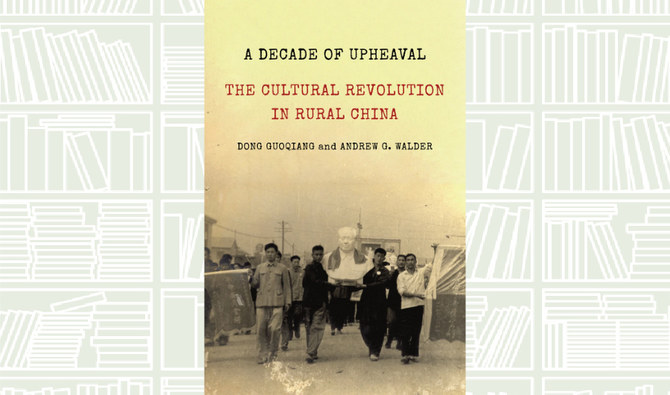

Authors: Dong Guoqiang and Andrew G. Walder
A Decade of Upheaval chronicles the surprising and dramatic political conflicts of a rural Chinese county over the course of the Cultural Revolution.
Drawing on an unprecedented range of sources — including work diaries, interviews, internal party documents, and military directives — Dong Guoqiang and Andrew Walder uncover a previously unimagined level of strife in the countryside that began with the Red Guard Movement in 1966 and continued unabated until the death of Mao Zedong in 1976.
Showing how the upheavals of the Cultural Revolution were not limited to urban areas, but reached far into isolated rural regions, Dong and Walder reveal that the intervention of military forces in 1967 encouraged factional divisions in Feng County because different branches of China’s armed forces took various sides in local disputes.
The authors also lay bare how the fortunes of local political groups were closely tethered to unpredictable shifts in the decisions of government authorities in Beijing, says a review on the Princeton University Press website. Eventually, a backlash against suppression and victimization grew in the early 1970s and resulted in active protests, which presaged the settling of scores against radical Maoism.