

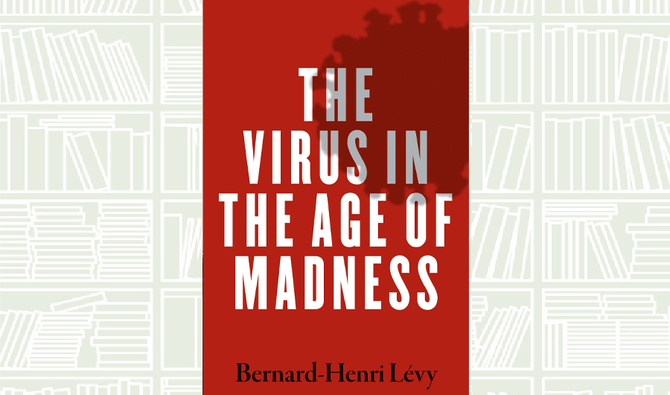
What We Are Reading Today: The Virus in the Age of Madness by Bernard-Henri Lévy

Short Url
Updated 25 February 2021
Follow

What We Are Reading Today: The Virus in the Age of Madness by Bernard-Henri Lévy

In The Virus in the Age of Madness, world-renowned philosopher Bernard-Henri Lévy interrogates the many meanings and metaphors we have assigned to the pandemic — and what they tell us about ourselves.

With medical mysteries, rising death tolls, and conspiracy theories beamed minute by minute through the vast web universe, the coronavirus pandemic has irrevocably altered societies around the world. 

Drawing on the philosophical tradition from Plato and Aristotle to Lacan and Foucault, Lévy asks uncomfortable questions about reality and mythology. He rejects the idea that the virus is a warning from nature, the inevitable result of global capitalism; he troubles the heroic status of doctors, asking us to think critically about the loci of authority and power; he challenges the panicked polarization that dominates online discourse. 

Lucid, incisive, and always original, Lévy takes a bird’s-eye view of the most consequential historical event of our time and proposes a way to defend human society from threats to our collective future.


What We Are Reading Today: The Power of Hope by Carol Graham

Updated 25 February 2026
Follow

What We Are Reading Today: The Power of Hope by Carol Graham

In a society marked by extreme inequality of income and opportunity, why should economists care about how people feel? The truth is that feelings of well-being are critical metrics that predict future life outcomes.

In this timely and innovative account, economist Carol Graham argues for the importance of hope—little studied in economics at present—as an independent dimension of well-being.

Given America’s current mental health crisis, thrown into stark relief by COVID, hope may be the most important measure of well-being, and researchers are tracking trends in hope as a key factor in understanding the rising numbers of “deaths of despair” and premature mortality.

Graham, an authority on the study of well-being, points to empirical evidence demonstrating that hope can improve people’s life outcomes and that despair can destroy them. These findings, she argues, merit deeper exploration.