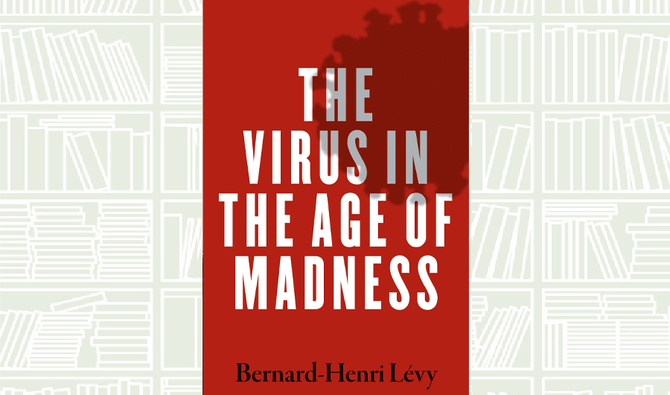
What We Are Reading Today: The Virus in the Age of Madness by Bernard-Henri Lévy

Short Url
Updated 25 February 2021
Follow

What We Are Reading Today: The Virus in the Age of Madness by Bernard-Henri Lévy

In The Virus in the Age of Madness, world-renowned philosopher Bernard-Henri Lévy interrogates the many meanings and metaphors we have assigned to the pandemic — and what they tell us about ourselves.

With medical mysteries, rising death tolls, and conspiracy theories beamed minute by minute through the vast web universe, the coronavirus pandemic has irrevocably altered societies around the world. 

Drawing on the philosophical tradition from Plato and Aristotle to Lacan and Foucault, Lévy asks uncomfortable questions about reality and mythology. He rejects the idea that the virus is a warning from nature, the inevitable result of global capitalism; he troubles the heroic status of doctors, asking us to think critically about the loci of authority and power; he challenges the panicked polarization that dominates online discourse. 

Lucid, incisive, and always original, Lévy takes a bird’s-eye view of the most consequential historical event of our time and proposes a way to defend human society from threats to our collective future.


What We Are Reading Today: Making Waste by Sophie Gee

Updated 02 March 2026
Follow

What We Are Reading Today: Making Waste by Sophie Gee

Why was 18th-century English culture so fascinated with the things its society discarded? Why did Restoration and Augustan writers such as Milton, Dryden, Swift, and Pope describe, catalog, and memorialize the waste matter that their social and political worlds wanted to get rid of—from the theological dregs in “Paradise Lost” to the excrements in “The Lady’s Dressing Room” and the corpses of “A Journal of the Plague Year?” In “Making Waste,” the first book about refuse and its place in Enlightenment literature and culture, Sophie Gee examines the meaning of waste at the moment when the early modern world was turning modern.

Gee explains how English writers used contemporary theological and philosophical texts about unwanted and leftover matter to explore secular, literary relationships between waste and value. She finds that, in the 18th century, waste was as culturally valuable as it was practically worthless—and that waste paradoxically revealed the things that the culture cherished most.