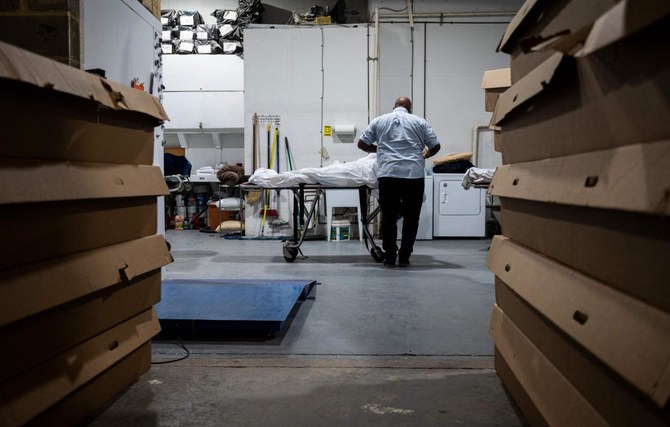
WASHINGTON: The United States stood on the brink of 500,000 COVID-related deaths on Monday, while the vaccination rollout picked up pace globally including with the first shots in Australia.
The catastrophic US toll comes as some signs of hope are emerging in the world’s hardest-hit country, with millions of people now vaccinated and winter’s massive spike in infections dropping.
But deaths are still coming, and President Joe Biden last month warned that “well over” 600,000 people in the US could die from the virus.
“It’s terrible. It is historic. We haven’t seen anything even close to this for well over a hundred years, since the 1918 pandemic of influenza,” Biden’s chief medical adviser Anthony Fauci told NBC’s “Meet The Press.”
“It’s something that is stunning when you look at the numbers, almost unbelievable, but it’s true,” Fauci added.
The US toll stood at 498,897 by Monday morning, according to Johns Hopkins University. Globally, the figure was approaching 2.5 million.
After America’s first COVID-19 death was announced in February last year, it took about three months to pass the 100,000 mark, during a first wave that hit New York particularly hard.
But as the outbreak surged across the country, the pace of deaths increased, with the toll jumping from 400,000 in just over a month after a spike fueled in part by holiday gatherings.
Fauci noted the number of daily new infections was on a steep decline after peaking in January, but he added normal life may still be some way off.
“I think we’ll have a significant degree of normality... as we get into the fall and the winter, by the end of the year,” Fauci said on CNN’s “State of the Union.”
According to the US Centers for Disease Control and Prevention, more than 61 million people have received at least one shot of vaccine in the United States, with some 18 million getting the full two doses.
Biden has made it a priority to get 100 million people vaccinated within the first 100 days of his administration.
In Australia, top officials Sunday were among a small group receiving the first vaccinations, a day before the program starts in earnest.
Prime Minister Scott Morrison got the Pfizer/BioNTech vaccine at a medical center in Sydney, in what the government said was a bid to boost public confidence after some anti-vaccine protests.
And in Gaza on Sunday, some 20,000 Russian-made Sputnik V vaccine doses arrived from the United Arab Emirates.
The jabs came via the Rafah crossing with Egypt, meaning they did not pass through Israel, which has maintained a tight blockade on Gaza since 2007.
Britain’s government has vowed to offer a first dose to every adult by the end of July. More than 17 million people have now received at least a first vaccine dose — one third of the adult UK population.
Prime Minister Boris Johnson was on Monday set to start unwinding England’s third lockdown as a quickening UK-wide inoculation drive relieves pressure on hard-hit hospitals.
Johnson is expected to confirm the reopening of all English schools on March 8 in the first big step toward restoring normal life, nearly a year after he imposed the first stay-at-home order.


![]()

US nears 500,000 COVID-19 deaths as vaccine drives gather momentum
Short Url
https://arab.news/rdch3
US nears 500,000 COVID-19 deaths as vaccine drives gather momentum
- Catastrophic US toll comes as some signs of hope are emerging in the world’s hardest-hit country


Latest updates


© 2026 SAUDI RESEARCH & PUBLISHING COMPANY, All Rights Reserved And subject to Terms of Use Agreement.