



JEDDAH: What began as a Saudi businessman’s project to provide information about the family business to his children has turned into a 3D animation series on dates.
Ibrahim Al-Qidah, owner of the Dates Basket company, said that the events of the three-part series, “Dates Empire,” revolve around the story of an imaginary emperor, Emperor Sukari. Sukari is a date who cares for all other dates and tries to protect them from an enemy that spreads diseases and promotes pesticides.
All dates in the world form alliances with the emperor to confront their mutual enemy. The plot shows the different dramatic and romantic relationships between the characters, as dates have the ability to talk to humans in the movie.
The promo of the movie has spread like wildfire, attracting international advertisement companies wanting to obtain the rights to use some of the characters in their promotion businesses. However, the copyright holders prefer local partners.
As well as owning the Dates Basket company, Al-Qidah is an economic and financial adviser who has lived part of his life in Denver, Colorado, US. He told Arab News that the movie targets children and adults alike, and is meant to introduce as much information about dates as possible.
“Despite the fact that I belong to Qassim, a Saudi agricultural region where palm trees are widely grown, I thought I had enough knowledge about dates,” he said. “However, after deep research, I was astonished to realize that my background in dates was really limited. There are many things about dates that my parents and even grandparents have not known about.”
Al-Qidah said that the idea of the series began with his desire to share helpful information about dates, a fruit that has a special place in the hearts and minds of many people.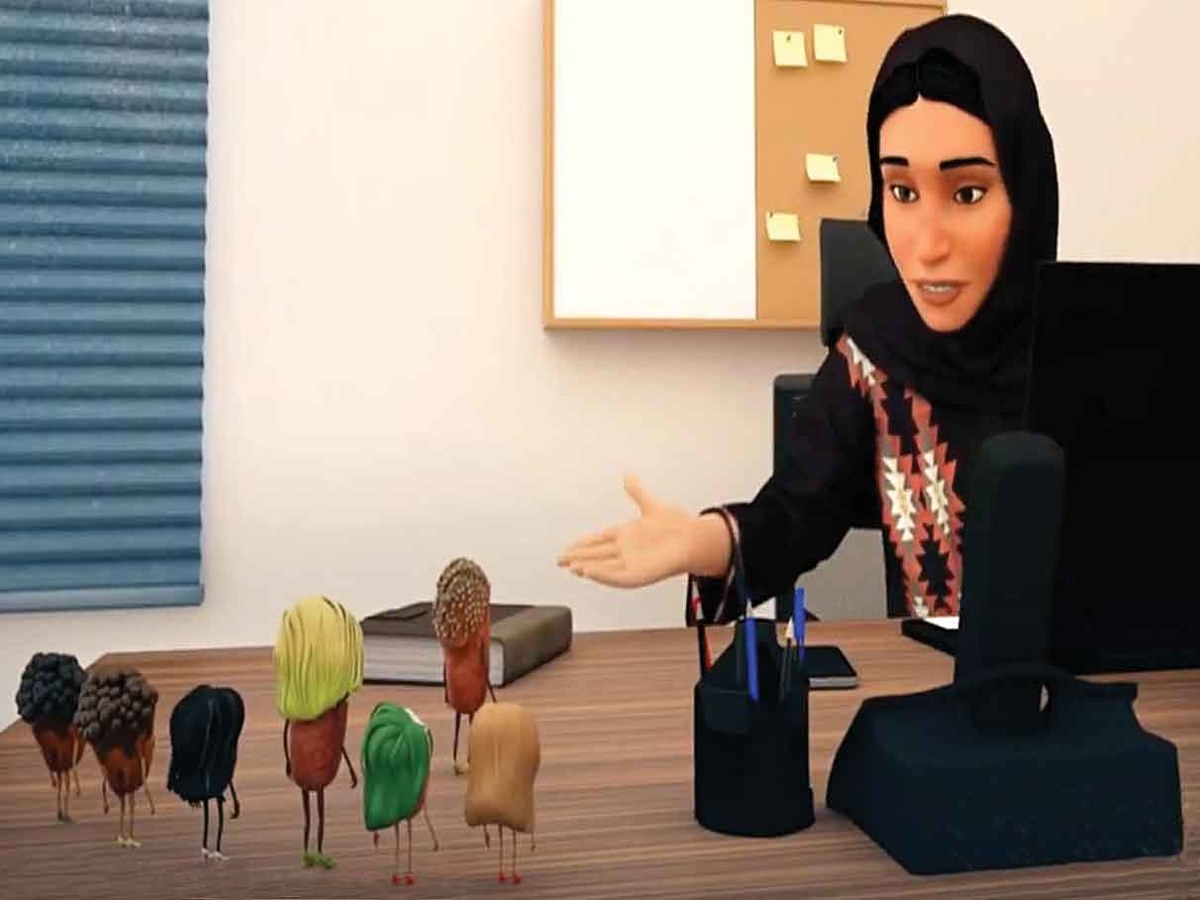
Al-Qidah said that it all began with a contest that the National Center for Palms and Dates (NCPD) organized for the best advertisement for dates.
“We took part in the contest like many others, and we won first place for the best creative promotion ad for dates. We were awarded a cash prize and a shield. This encouraged us to go on promoting this agricultural product, of which Saudi Arabia annually produces more than 1,150,000 tons,” he said.
Explaining why he chose animation as a way to tell the story, Al-Qidah said that children love this type of movie.
HIGHLIGHT
The promo of the movie has spread like wildfire, attracting international advertisement companies wanting to obtain the rights to use some of the characters in their promotion businesses.
“The 3D technology can help in depicting real objects. Unlike the cartoon method, the 3D can, for instance, show what the prophetic saa, an Islamic weight measurement, looks like.”
Al-Qidah said that the palm tree was considered a cultural symbol in countries such as Saudi Arabia, Egypt, Tunisia and Iraq.
He said that there were more than 28,000,000 palm trees in Saudi Arabia with more than 400 different types of dates, and nearly 70 types were famous.
Each type represents a city: Ajwah is found in Madinah, Sukari is grown in Qassim, Khilas is known in Al-Ahsa, Al-Kharj farmers grow a type called Saq’e, while trees producing Sifri are planted in Bisha, he said.
These names were used for the 10 main characters in the animation, in addition to Salma, Hilwut Al-Jouf, Barni, and Al-Siri.
In the story, Al-Qidah presented different places around the world where palm trees are planted, and used voiceover performers from the same region or city where a particular type of date is grown.
“Iraqi and Egyptian voice-over performers, for instance, were hired to perform voice acting for the characters embodying the type of dates grown in their countries,” he said.
One of the characters in the movies is called Salma. Salma is the name of a type of date grown in Hail, he said. The fruit of this type of date is as large as a mango.
In the comedy plot of the movie, Salma enriches the viewers with information about this fruit. Through the narrative, the size, class, weight, nutritional values, and how they should be stored are presented by the character in less than a minute.
With headquarters in the Kingdom’s capital, Dates Basket, established in 2018, is a Saudi company with the first female administration in the domestic agricultural sector.
Amal Al-Dahmashi, executive director of the company, said that she was keen to ensure that her company followed the best international practices in producing fine-quality dates and date-based produce.
“We test the soil, the farms we import dates from to make sure they are free of harmful pesticides and chemicals to ensure that we produce high-quality dates to our local, regional, and global customers,” she told Arab News.
She said that the movie consists of three parts. Each episode is 15 minutes long and the series will to be shown in three languages. “The main character is Sukari, the emperor who wages wars against an enemy, and prince Galaxy is his naughty boy who refuses to marry Salma.”
The idea of the project had succeeded before the movie could be screened, Al-Dahmashi said.
“Winning a prize from a government entity, NCPD, proved that the idea and the movie were a success,” she said. “We have received many calls and messages of appreciation from inside and outside the Kingdom.”
She said that the film is a large national project that sheds light on an important element of the country’s tangible cultural heritage.
Saudi Arabia is the second leading date producer in the world, making up 17 percent of global production.


