

Saudi Arabia to introduce faster interbank instant money transfers this month

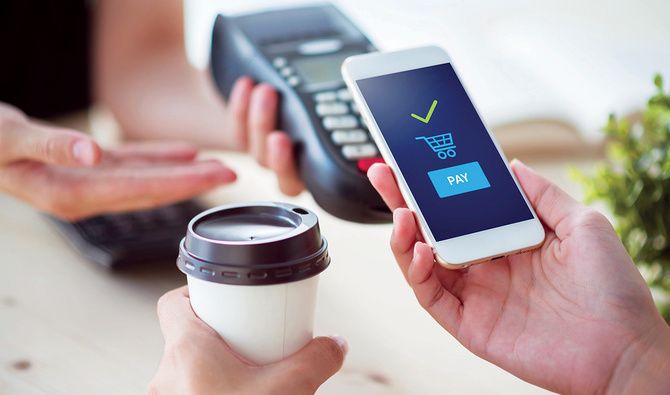
A survey found that 40% of respondents planned to buy more products online. (Shutterstock)
Short Url
Updated 09 February 2021
Follow

Saudi Arabia to introduce faster interbank instant money transfers this month

  • New system will allow payments to be processed 24 hours a day and within seconds

JEDDAH: Saudi Arabia this month will introduce a new inter-bank money transfer system, which will allow payments to be processed faster between local banks, helping to foster growth in the Kingdom’s rapidly developing e-commerce industry.

The system will allow money to be transferred between local banks 24 hours a day and at more advantageous rates.

According to Talat Zaki Hafiz, an economist and board member of the Saudi Financial Association, instant electronic payments are defined by the Euro Retail Payments Board as electronic retail payment solutions that are available 24 hours a day, seven days a week and 365 days a year, with the payments processing between accounts in a matter of seconds.

Hafiz pointed out that the processing of local payments was previously confined to bank business hours and could not take place outside these hours or during weekends and holidays. The new system, when introduced later this month, will mean these restrictions will no longer exist.

The new scheme comes as it was reported last month that digital payment transactions in the Kingdom jumped by 75 percent in 2020 as Saudi consumers embraced online shopping during the coronavirus disease (COVID-19) pandemic.

Point of sale (PoS) refers to a place where customers can execute payments for goods or services. This can be a credit card in a clothes store or a digital payment through a food delivery app.

The total number of PoS operations in 2020 amounted to about 2.8 billion, an increase of 75 percent, while the value of the transactions amounted to about SR349 billion ($93.7 billion), an increase of nearly 24.1 percent compared with the same period in 2019.

Unsurprisingly, the number of PoS devices operating in the Kingdom rose sharply by the end of 2020 to more than 700,000, an increase of about 70 percent since the beginning of the year.

Hafiz told Arab News that the new scheme coming this month would help support the growth of digital payments and the surge in e-commerce. “Such payment solutions will not only speed up the movement of money between clients’ bank accounts but also help e-commerce to grow, since it ensures making speedy payments of goods and services to the merchants, which, in turn, makes shopping much easier and enjoyable,” he said.

Evidence of the growth of the e-commerce sector was seen during the Black Friday sales late last year. A survey carried out by advertising platform Criteo of 900 Saudi online consumers found that around 40 percent of respondents said they planned to buy more products online, with household products, groceries, and beauty and hygiene items proving most popular.

Alistair Burton, country manager, Middle East and Africa, at Criteo, said: “The events of 2020 made it an extraordinary year for e-commerce. Our research shows that this year consumers will swap door-buster deals for online discounts that start sooner and last longer.”

Overall, the research found that 58 percent of Saudi respondents were more comfortable shopping online in 2020 than in-store.

Saudi Arabia, Japan trade rises 38% between 2016 and 2024, minister says

Updated 58 min 57 sec ago
Follow

Saudi Arabia, Japan trade rises 38% between 2016 and 2024, minister says

RIYADH: Trade between Saudi Arabia and Japan has increased by 38 percent between 2016 and 2024 to reach SR138 billion ($36 billion), the Kingdom’s investment minister revealed.

Speaking at the Saudi-Japanese Ministerial Investment Forum 2026, Khalid Al-Falih explained that this makes the Asian country the Kingdom’s third-largest trading partner, according to Asharq Bloomberg.

This falls in line with the fact that Saudi Arabia has been a very important country for Japan from the viewpoint of its energy security, having been a stable supplier of crude oil for many years.

It also aligns well with how Japan is fully committed to supporting Vision 2030 by sharing its knowledge and advanced technologies.

“This trade is dominated by the Kingdom's exports of energy products, specifically oil, gas, and their derivatives. We certainly look forward to the Saudi private sector increasing trade with Japan, particularly in high-tech Japanese products,” Al-Falih said.

He added: “As for investment, Japanese investment in the Kingdom is good and strong, but we look forward to raising the level of Japanese investments in the Kingdom. Today, the Kingdom offers promising opportunities for Japanese companies in several fields, including the traditional sector that links the two economies: energy.”

The minister went on to note that additional sectors that both countries can also collaborate in include green and blue hydrogen, investments in advanced industries, health, food security, innovation, entrepreneurship, among others.

During his speech, Al-Falih shed light on how the Kingdom’s pavilion at Expo 2025 in Osaka achieved remarkable success, with the exhibition receiving more than 3 million visitors, reflecting the Japanese public’s interest in Saudi Arabia.

“The pavilion also organized approximately 700 new business events, several each day, including 88 major investment events led by the Ministry of Investment. Today, as we prepare for the upcoming Expo 2030, we look forward to building upon Japan’s achievements,” he said.

The minister added: “During our visit to Japan, we agreed to establish a partnership to transfer the remarkable Japanese experience from Expo Osaka 2025 to Expo Riyadh 2030. I am certain that the Japanese pavilion at Expo Riyadh will rival the Saudi pavilion at Expo Osaka in terms of organization, innovation, and visitor turnout.”

Al-Falih also shed light on how Saudi-Japanese relations celebrated their 70th anniversary last year, and today marks the 71st year of these relations as well as how they have flourished over the decades, moving from one strategic level to an even higher one.