CAIRO: Saudi Arabia remains committed to the establishment of a Palestinian state, the Kingdom’s foreign minister said on Monday.
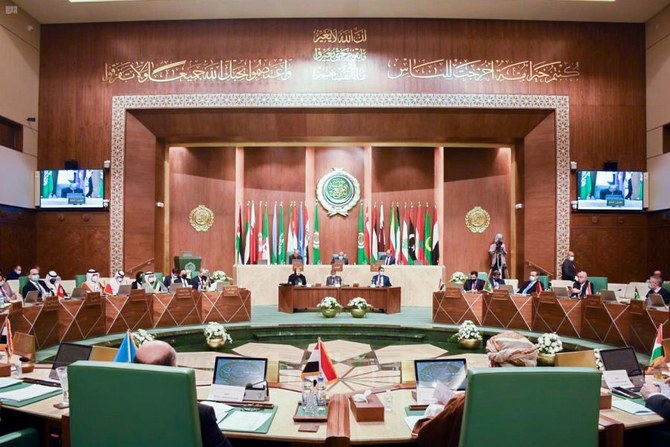
Prince Faisal bin Farhan told Arab League foreign ministers during an emergency meeting in Cairo that the Kingdom stands with the Palestinian people and firmly supports all efforts to reach a just and comprehensive solution. He added said that peace is a strategic option that would guarantee regional stability.
“We call on the international community to exert more efforts to revive the peace process to establish an independent Palestinian state based on the 1967 borders, with East Jerusalem as its capital,” he said.
The Arab League meeting took place as leaders from rival Palestinian factions Hamas and Fatah held reconciliation talks in Egypt.
In their final statement, the ministers affirmed the “Arab rejection of any unilateral Israeli projects or steps that negatively affect the rights of the Palestinian people, violate international law and undermine the two-state solution, for which there is no alternative.”
They urged all international parties — including the UN and the other members of the Middle East Quartet: the US, the EU and Russia — to take all practical steps to launch credible negotiations that can address final-status issues and end the Israeli occupation. They stressed the importance of the Quartet’s role in achieving a peace agreement based on the two-state solution.
The ministers welcomed a ruling by the International Criminal Court on its territorial jurisdiction in Palestine, which concluded that it extends to the territories occupied by Israel since 1967: Gaza and the West Bank, including East Jerusalem. They also praised the decision by the Palestinians to hold elections and the current reconciliation efforts.
During his opening address, Egyptian Foreign Minster Sameh Shoukry said Cairo is working to ensure this reconciliation process between the two sides succeeds, while supporting the legitimate rights of the Palestinian people in facing external challenges.
He added that regional stability will only be achieved when there is a “permanent and comprehensive peace based on a just settlement that fulfills the aspirations and hopes of the Palestinian people.”
Shoukry warned Israel against making any changes to the status of Jerusalem, and stressed the importance of Palestinian refugees’ right of return.
Arab League Secretary-General Ahmed Aboul Gheit said the “Palestinian issue is the focus of Arab consensus,” and warned that Israeli settlement activity in the West Bank and East Jerusalem constitutes a serious obstacle to the two-state solution.
He called for the relaunch of negotiations between Palestinians and Israelis, and renewed the league’s commitment to supporting Palestine until it achieves independence.
“The Palestinian position must be strengthened internally and externally,” he said, adding that while Israel continues to undermine the two-state solution, the Palestinian people are also losing confidence in that outcome.
Ayman Safadi, Jordan’s foreign minister, said the Palestinian issue is the key to stability in the region, and Amman is ready to engage with the new US administration as part of the efforts to achieve peace.
The Kingdom’s Prince Faisal also used his address to condemn attacks by the Iran-backed Houthi militias in Yemen against civilian targets, and hit out at Tehran’s destabilizing activities in the wider region.
“One of the most dangerous threats facing our region is the Iranian regime’s continuous violations of international laws, charters and norms by threatening the security and stability of our countries, interfering in their internal affairs and supporting armed militias that sow chaos, division and devastation in many Arab countries,” he said.
The Saudi foreign minister said the nations most affected by Iranian threats should be among the main participants in any international negotiations with Iran over its nuclear program and other activities that threaten regional security.
“We call on the international community to put an end to Iran’s violations and its threat to the region,” he added.
On the situation in Libya, he warned of the danger of regional interference and said the Kingdom supports the country’s unity and territorial integrity. He also said Saudi Arabia supports Iraq in its efforts to achieve stability at all levels and urged the international community to fulfill its responsibilities to ensure the security of the country.
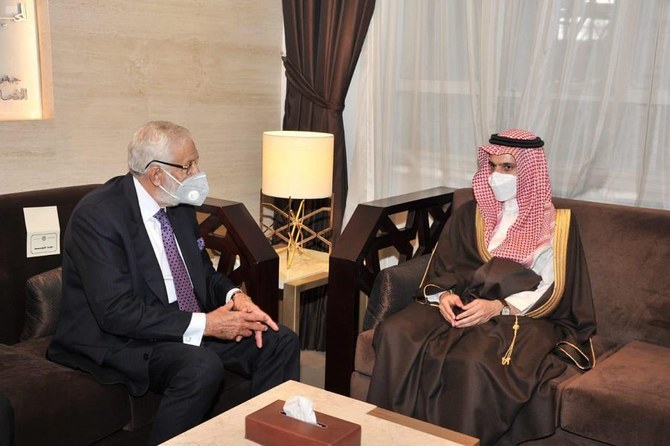
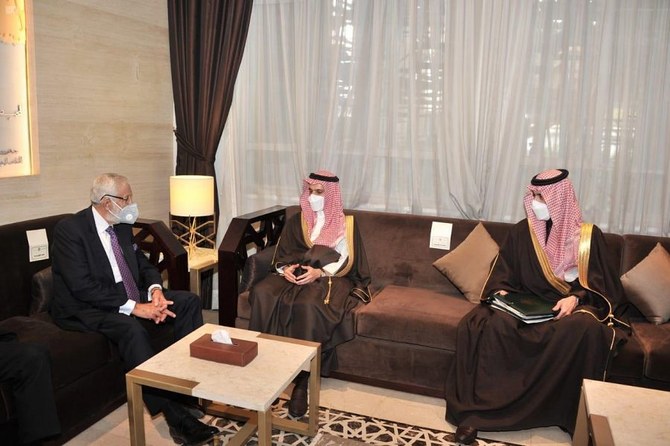
Prince Faisal also held meetings with fellow foreign ministers Riyad Al-Maliki, from Palestine, Fuad Hussein, from Iraq, and Mohamed Taher Siala, from Libya, on the sidelines of the gathering.


![]()
![]()
![]()
![]()
![]()
![]()
![]()
![]()

Saudi Arabia remains committed to Palestinian state, foreign minister tells Arab League




Short Url
https://arab.news/5fhkd
Saudi Arabia remains committed to Palestinian state, foreign minister tells Arab League
- Prince Faisal bin Farhan used his address to condemn attacks by Yemen’s Houthi militia against civilian targets
- Aboul Gheit says Palestinian position must be strengthened internally and externally


Latest updates


© 2026 SAUDI RESEARCH & PUBLISHING COMPANY, All Rights Reserved And subject to Terms of Use Agreement.