SABZKOT SECTOR: Muhammad Fareed, a resident of a village in Azad Kashmir close to the Pakistan-India Line of Control (LoC), was at work in a factory in Dubai when he received the phone-call that changed his life.
“I got a call from my home that my 18-year-old son who was a student of secondary school, has been martyred due to Indian shelling,” Fareed told Arab News on Friday, during a day-long press trip organized to the disputed region’s border towns by the Pakistan military.
Villagers have said the number of attacks from Indian-administered Kashmir have intensified in recent years, resulting in a state of ‘constant fear.’
“Shelling on a bright, sunny day in September last year has ruined my life,” Shabbir Ahmed, who lives in Balloh village just 500 meters from the LoC inside Azad Kashmir, told Arab News.
“One of my children was killed when a shell hit my house. Another son was seriously injured and my daughter has lost a leg,” Ahmed said.
Firing from the Indian side had become ‘routine’ since 2016, though it had been a rarity before, Ahmed continued.
“We are living in a constant state of fear. I am unable to remember when we slept peacefully.”
Indian and Pakistani troops often exchange mortar and artillery shelling along the LoC, which is the de facto border between the two countries. India and Pakistan have fought at least three full-fledged wars over the Himalayan valley with hostilities intensifying most recently since February 2019.
Victims of shelling and firing speak about their experiences living along the LoC at Sabzkot on February 5, 2021. (AN photo)
Both countries claim the region in full, but rule only parts, and often accuse each other of breaching a 2003 cease-fire pact by shelling and firing across the LoC.
According to Pakistan’s foreign office, Indian forces have carried out over 3,150 ceasefire violations in 2020, while Indian security forces have claimed over 5,000 violations from Pakistan during the last year.
“We have to run to take shelter in bomb-proof bunkers prepared for us by the Pakistan army,” Muhammad Iqbal, whose son lost both his legs when three shells hit his house on November 12 last year, told Arab News.
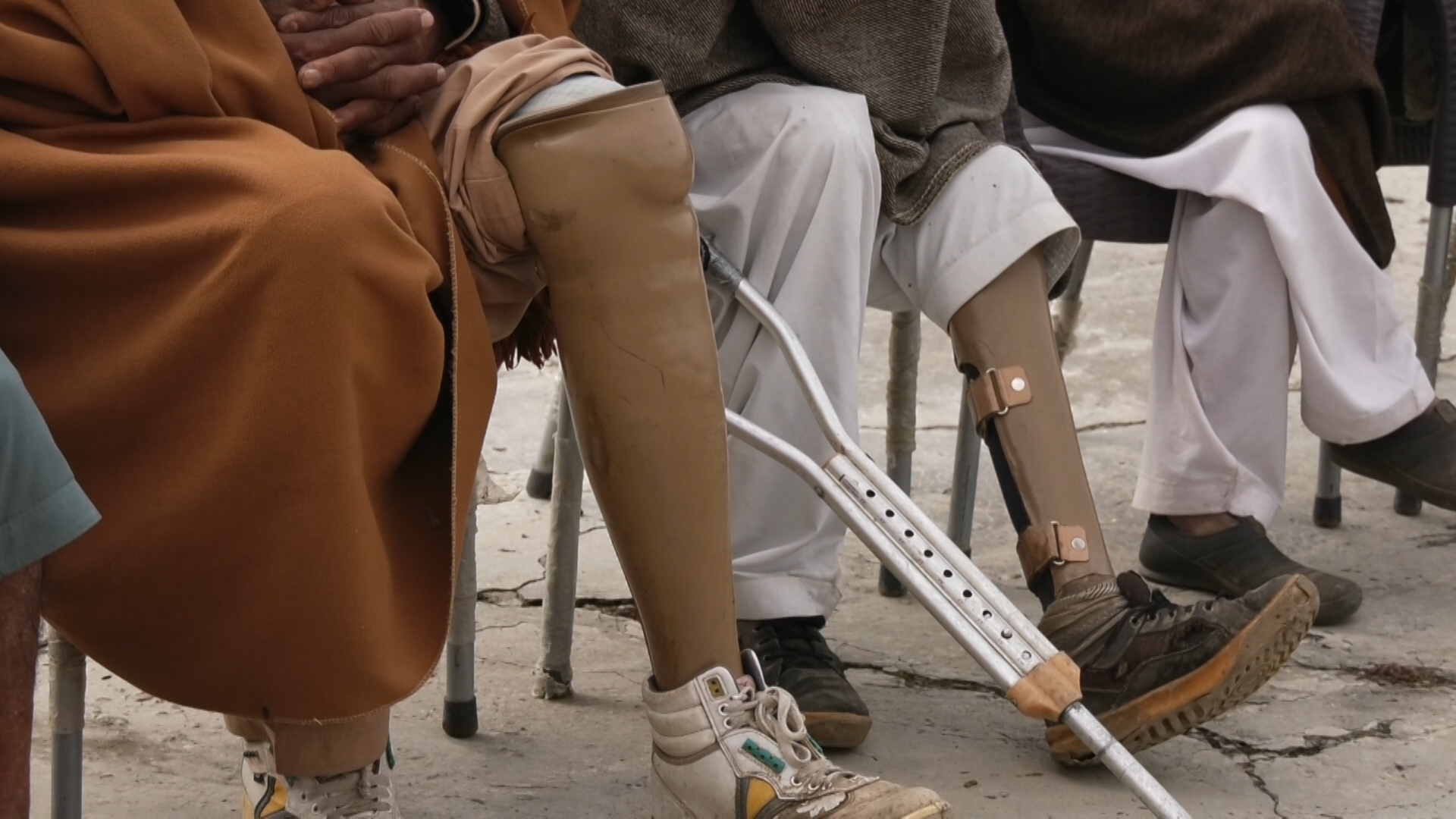
In this photo, victims of shelling and firing on their villages along the LoC speak to the media. February 5, 2021. (AN photo)
Another villager, Nazir Ali, who lives in Basi-pedha village, just 200 meters from the LoC said livestock, agriculture and businesses were destroyed due to the frequent shelling and firing.
“Our children are unable to attend school. Every other child in our village has been hit by bullets,” he said.
Brig. Kashif Humayun, commander Kashmir brigade, said unabated ceasefire violations from India were now a constant phenomenon.
“They usually target the civilians,” he said. “We have constructed 448 community bunkers in this sector so far to save the villagers from Indian firing and shelling.”
Humayun rubbished Indian claims of infiltrations, which he said were nearly impossible as Indians had three layers of checkposts on the LoC, with a fence, infrared and motion sensor devices, cameras, radars and main defense posts.
“The possibility of infiltration through almost 1km of defense layers is absolutely zero,” he said.
Farzana Kauser, who recovered from serious injuries as three shells hit her house in November 2020, described the horror of living in fear in her own home.
“All the time, we live in anxiety and fear that firing could start at any time. What could be worse than this... that you are not feeling secure in your own house?”