

Time to crack down on Iran: European politicians

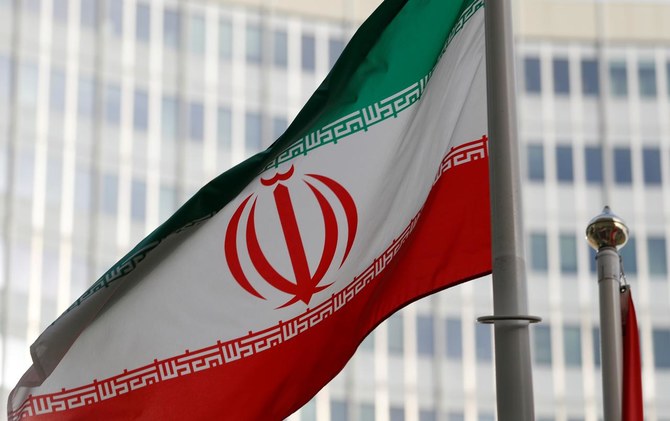
Tehran-backed bomb plot shows European countries must re-evaluate diplomatic ties: French MP. (File: Reuters)
Short Url
Updated 05 February 2021
Follow

Time to crack down on Iran: European politicians

  • Tehran-backed bomb plot shows European countries must re-evaluate diplomatic ties: French MP 
  • British MP: ‘Iranian authorities show contempt for diplomatic conventions by using their embassies and diplomatic missions to export terror’

LONDON: European politicians from across the political spectrum have urged the EU and its member states to take a harder line on Iran’s diplomatic presence on the continent, saying Tehran’s envoys are a security risk.

They cited Thursday’s Belgian court ruling, in which Iranian diplomat Assadollah Assadi was sentenced to 20 years in prison for trying to bomb an Iranian opposition rally in Paris in 2018, as evidence that Tehran’s foreign affairs mission in Europe is a cover for terrorism.

The politicians were speaking at an online event attended by Arab News and hosted by the National Council of Resistance of Iran (NCRI) to discuss the ruling.

British MP Steve McCabe said the verdict was a “historic event” that exposed “how the Iranian authorities show contempt for diplomatic conventions by using their embassies and diplomatic missions to export terror.”

He added: “That’s not how a normal government behaves, even at times of genuine difference, tensions and difficulties. It’s the actions of a pariah state, of a regime that for years has taken advantage of diplomatic privileges and opportunities … to plan, export and support terrorism around the globe.”

Assadi received the sentence that “justice demands,” McCabe said, adding that the sentence must be carried out.

He urged Belgium to ensure there are “no swaps for innocent hostages seized by the mullahs as bargaining chips. This is the time for tougher action — stronger sanctions and reduced diplomatic privileges.”

The urgent need to reduce Iran’s diplomatic privileges on the continent was a sentiment shared by Italian Member of the European Parliament Gianna Gancia.

She hailed the court ruling as an important day in defending the values of a “democratic, prosperous and safe Europe,” but also an important day for the Iranian people and the NCRI’s resistance movement. This day, she said, “could mark the beginning of the end of impunity for the Iranian regime.”

Gancia questioned the EU’s tolerance of Iran’s behavior in Europe up to now, saying: “We need a more firm policy against the threatening activities of Tehran in Europe, and we need to react at a European level.”

She added: “The time has come to downgrade diplomatic relations with Iran, and maybe we should withdraw our own ambassadors from Iran.”

She continued: “I was there in 2018, and today I’m here because this verdict is very important. We have to achieve a situation where Iran’s massacres, both at home and abroad, stop.”

Michèle de Vaucouleurs, a member of the French National Assembly who was also present at the Paris rally, said: “Assadi’s diplomatic immunity status was exploited to plan that attack, and the court has demonstrated clearly that these actions weren’t those of an isolated person, but rather the actions of the Iranian regime.”

She added: “Diplomatic relations between France and Iran should be suspended and only resume when there’s a democratic transition in the country … Europe must stand up and meet this historic moment.”

Soleimani’s shadow
Qassem Soleimani left a trail of death and destruction in his wake as head of Iran’s Quds Force … until his assassination on Jan. 3, 2020. Yet still, his legacy of murderous interference continues to haunt the region

Enter


keywords

Fledgling radio station aims to be ‘voice of the people’ in Gaza

Updated 15 February 2026
Follow

Fledgling radio station aims to be ‘voice of the people’ in Gaza

  • The electricity crisis is one of the most serious and difficult problems in the Gaza Strip, says Shereen Khalifa Broadcaster

DEIR EL-BALAH: From a small studio in the central city of Deir El-Balah, Sylvia Hassan’s voice echoes across the Gaza Strip, broadcast on one of the Palestinian territory’s first radio stations to hit the airwaves after two years of war.

Hassan, a radio host on fledgling station “Here Gaza,” delivers her broadcast from a well-lit room, as members of the technical team check levels and mix backing tracks on a sound deck. “This radio station was a dream we worked to achieve for many long months and sometimes without sleep,” Hassan said.

“It was a challenge for us, and a story of resilience.”

Hassan said the station would focus on social issues and the humanitarian situation in Gaza, which remains grave in the territory despite a US-brokered ceasefire between Israel and Hamas since October.

“The radio station’s goal is to be the voice of the people in the Gaza Strip and to express their problems and suffering, especially after the war,” said Shereen Khalifa, part of the broadcasting team.

“There are many issues that people need to voice.” Most of Gaza’s population of more than 2 million people were displaced at least once during the gruelling war.

Many still live in tents with little or no sanitation.

The war also decimated Gaza’s telecommunications and electricity infrastructure, compounding the challenges in reviving the territory’s local media landscape. “The electricity problem is one of the most serious and difficult problems in the Gaza Strip,” said Khalifa.

“We have solar power, but sometimes it doesn’t work well, so we have to rely on an external generator,” she added.

The station’s launch is funded by the EU and overseen by Filastiniyat, an organization that supports Palestinian women journalists, and the media center at the An-Najah National University in Nablus, in the occupied West Bank.

The station plans to broadcast for two hours per day from Gaza and for longer from Nablus. It is available on FM and online.

Khalifa said that stable internet access had been one of the biggest obstacles in setting up the station, but that it was now broadcasting uninterrupted audio.

The Gaza Strip, a tiny territory surrounded by Israel, Egypt, and the Mediterranean Sea, has been under Israeli blockade even before the attack on Oct. 7, 2023, which sparked the war. Despite the ceasefire, Israel continues to strictly control the entry of all goods and people to the territory.

“Under the siege, it is natural that modern equipment necessary for radio broadcasting cannot enter, so we have made the most of what is available,” she said.