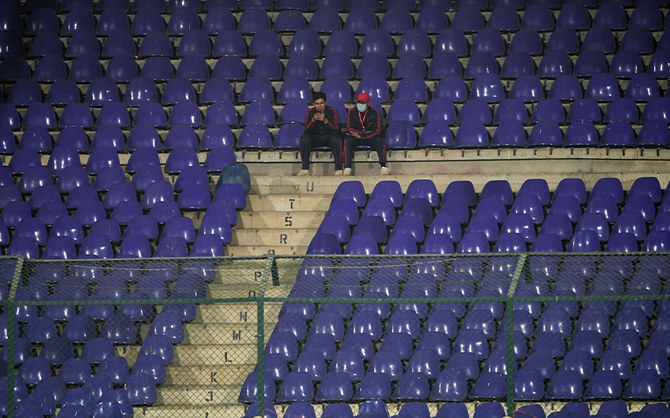
Rawalpindi: The novel coronavirus has hit sports around the world, with teams playing to empty bleachers and international players warning that the prolonged absence of fans could damage games.
But in Pakistan, the virus outbreak and the new normal of empty stadiums occurred just as international cricket had started to make a much-longed for return last year following a deadly militant attack on the Sri Lanka team bus in 2009 that killed six policemen and two civilians. Since then, top teams had refused to travel to the country due to safety concerns.
Indeed, cricket-starved fans in Pakistan would ordinarily turn out in droves to cheer on their team, but the limited-overs series with Zimbabwe last October was a subdued affair, with games taking place behind closed-doors in a ‘bio-bubble’ designed to keep players separated from the public.
This January, South Africa returned to Pakistan for the first time since the attack on the Sri Lanka team, playing to empty stadiums in Karachi.
But perhaps the worst blow was when the wildly popular Pakistan Super League (PSL) was postponed due to coronavirus fears last March. The franchise Twenty20 league’s matches had previously always been held abroad due to security fears and last year was the first time the entire series was held on home soil.
“I feel like something is missing in the equation, not being able to go physically and root for one’s own team, especially when international cricket is happening after ages,” Mahnoor Shafiq, who regularly tweets about cricket, told Arab News.
“In one word: pain,” Arhum Latif, whose Twitter feed is a source for live commentary on cricket, said when asked how she felt about not being able to watch matches in stadiums.
“My favorite players of that time, Mohammad Yousaf and Younis Khan, are now the coaches of our team, while Mark Boucher who was considered the most destructive player of South Africa, is now the coach of their [South African] team,” said Muhammad Zain. “The love for the game has increased but the pain of missing the matches between my favorite players will never go away. It’s exactly what I want but not the way I wished for.”
But journalist Ahmer Naqvi said while coronavirus restrictions were disappointing, “they’re possibly not as disappointing as the experience of the past decade has been.”
“Obviously, we would have wished to attend the matches,” the culture and cricket writer said. “But the very fact that teams are now comfortable visiting Pakistan, purely from a cricket fan perspective, is a big step forward.”


![]()

Coronavirus robs Pakistanis of chance to savor emotional return of international cricket
Short Url
https://arab.news/zpdtf
Coronavirus robs Pakistanis of chance to savor emotional return of international cricket
- The new normal of empty stadiums occurred just as international cricket made a return to Pakistan following a militant attack on Sri Lanka team bus in 2009
- Since then, top teams had refused to travel to the country due to safety concerns but Zimbabwe and South Africa have both visited in the last few months
Latest updates


© 2026 SAUDI RESEARCH & PUBLISHING COMPANY, All Rights Reserved And subject to Terms of Use Agreement.