

Hundreds of Yemeni patients dial into tele-clinic launched by Pak-Saudi venture

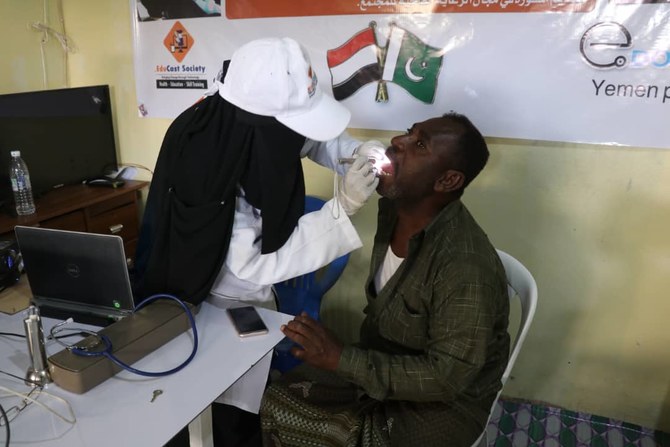
A paramedic at an Educast telemedicine centre examines a patient at a facility in Abyan, Yemen in this undated photo. (Photo courtesy: Educast)
Short Url
Updated 02 February 2021
Follow

Hundreds of Yemeni patients dial into tele-clinic launched by Pak-Saudi venture

  • Educast runs Pakistan’s eDoctor project that re-trains and returns to the health care industry hundreds of Pakistani women doctors who never join the profession or stop practicing 
  • Now, the Pakistani doctors located in over a dozen countries around the world are providing free online consultation at Educast’s Maternal and Child Telecenter in Yemen

KARACHI: Over two hundred patients in the Abyan Governorate of Yemen have visited a pilot telemedicine center in less than one week since its launch by Educast Society, the not-for-profit arm of a Saudi-Pakistan online platform, officials at the company said. 
Educast is an online training and education platform that runs Pakistan’s eDoctor project, launched in 2019 to re-train and return to the health care industry hundreds of Pakistani women doctors who never joined the profession due to family pressure or stopped practicing once they got married or relocated abroad. 

Now, the doctors, located across Pakistan and 15 other countries, including Saudi Arabia, Oman, Qatar, Canada, and the UAE, provide free online consultation at Educast’s Maternal and Child Telecenter in Yemen. 

“Educast ... has established multipurpose telecenters in deeply affected areas of Abyan, Marib and Hadhramaut,” Educast CEO Abdullah Butt told Arab News on Sunday. “The facility, inaugurated on Wednesday, is offering live tele-consultation to women and children through remote Pakistani female doctors using high-tech medical equipment like tele-fetal dopplers, digital stethoscopes, portable ultrasound, live consultation platform, and skin and eye examiners.” 


In this undated photo, women and children attend a consultation session at a newly-inaugurated telemedicine center in the Abyan Governorate of Yemen. (Photo courtesy: Educast)

Maryam Abdullah Saleh Ahmed, an operator nurse at the Yemeni facility, said the clinic had seen an “overwhelming response” since the start of operations.
“We have provided consultancy and treatment to over 200 patients within a week,” Ahmed said. 

The telemedicine clinic in Yemen is linked with a high-tech backup center in Karachi where a go-between, fluent in Arabic and English, coordinates between patients who visit the Yemeni facility and doctors residing in different countries.
Ghulam Mustafa Tabbasum, the Aden-based head of Yemen operations, told Arab News the facility was also focused on mental health, for which a Pakistani doctor living in Canada had been engaged. 
According to the World Health Organization, one in five people living in conflict zones have mental health conditions, ranging from stress, depression, anxiety, post-traumatic stress disorder to psychosis.. 
 
“We will be providing information sessions about post exposure stress syndromes, which would be in the native language for better understanding and greater outcomes,” said Dr. Tayyiba Khan, a mental health specialist based in Calgary. “These information sessions will allow the participants to express their concerns and get answers to their questions as they need to be heard. We will explain the normal responses to war zone stress, psychiatric symptoms, and practical coping strategies.”
 
Midwives are also being trained at the Yemen facility and online teaching offered to local female health workers.

Doctors associated with the program said helping the people of Yemen in this difficult time was an ‘honorable thing.”
 
“Serving poor women in Yemen and providing them and their children health care services is a major achievement,” said Dr. Rehana Din Muhammad, who is based in Muscat, Oman. 
 
“Serving the people of Yemen in their difficult times, when they are passing through a crisis, is an honorable thing to do,” said Dr. Saima Shamim Ahmed, who is based in Dubai. “I feel excited and elated.”

“The war-torn country and its people need our help,” Saudi-based Dr. Mishaal Tanvir said. “I am honored to extend my services.”



No casualties as blast derails Jaffar Express train in Pakistan’s south

Updated 26 January 2026
Follow

No casualties as blast derails Jaffar Express train in Pakistan’s south

  • Passengers were stranded and railway staffers were clearing the track after blast, official says
  • In March 2025, separatist militants hijacked the same train with hundreds of passengers aboard

QUETTA: A blast hit Jaffar Express and derailed four carriages of the passenger train in Pakistan’s southern Sindh province on Monday, officials said, with no casualties reported.

The blast occurred at the Abad railway station when the Peshawar-bound train was on its way to Sindh’s Sukkur city from Quetta, according to Pakistan Railways’ Quetta Division controller Muhammad Kashif.

No group immediately claimed responsibility for the bomb attack, but passenger trains have often been targeted by Baloch separatist outfits in the restive Balochistan province that borders Sindh.

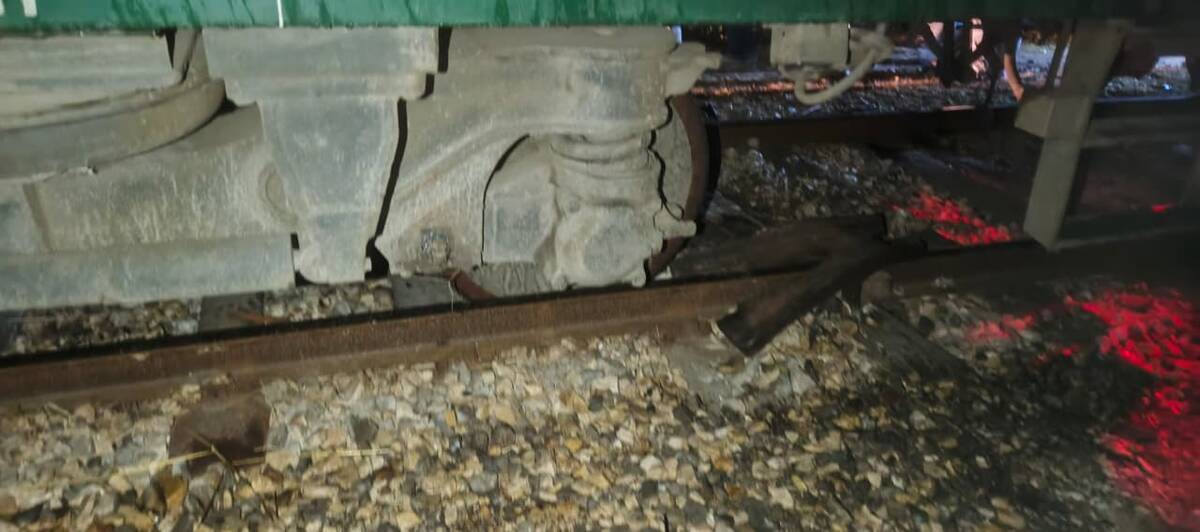
“Four bogies of the train were derailed due to the intensity of the explosion,” Kashif told Arab News. “No casualty was reported in the latest attack on passenger train.”

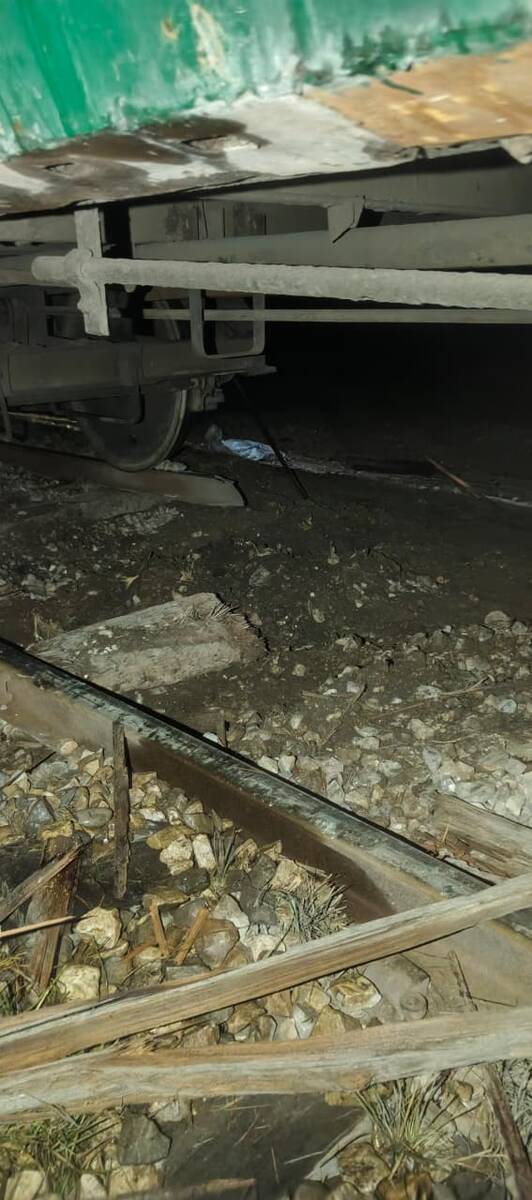
The Jaffar Express stands derailed near Abad Railway Station in Jacobabad following a blast on January 26, 2026. (AN Photo/Saadullah Akhtar)

Another railway employee, who was aboard the train and requested anonymity, said the train was heading toward Sukkur from Jacobabad when they heard the powerful explosion, which derailed power van among four bogies.

“A small piece of the railway track has been destroyed,” he said, adding that passengers were now standing outside the train and railway staffers were busy clearing the track.

In March last year, fighters belonging to the Balochistan Liberation Army (BLA) separatist group had stormed Jaffar Express with hundreds of passengers on board and took them hostage. The military had rescued them after an hours-long operation that left 33 militants, 23 soldiers, three railway staff and five passengers dead.

The passenger train, which runs between Balochistan’s provincial capital of Quetta and Peshawar in the country’s northwest, had been targeted in at least four bomb attacks last year since the March hijacking, according to an Arab News tally.

The Jaffar Express stands derailed near Abad Railway Station in Jacobabad following a blast on January 26, 2026. (AN Photo/Saadullah Akhtar)

Pakistan Railways says it has beefed up security arrangements for passenger trains in the province and increased the number of paramilitary troops on Jaffar Express since the hijacking in March, but militants have continued to target them in the restive region.

Balochistan, Pakistan’s southwestern province that borders Iran and Afghanistan, is the site of a decades-long insurgency waged by Baloch separatist groups who often attack security forces and foreigners, and kidnap government officials.

The separatists accuse the central government of stealing the region’s resources to fund development elsewhere in the country. The Pakistani government denies the allegations and says it is working for the uplift of local communities in Balochistan.