
Huawei smartphone sales plunge as US sanctions bite

It is possibly Huawei’s toughest time as it is restrained to even serve its home market, said Nicole Peng, a researcher at Canalys. (Supplied)
Short Url
Updated 30 January 2021
Follow

Huawei smartphone sales plunge as US sanctions bite

BEIJING: Sales of smartphones made by Chinese telecom giant Huawei plunged in the latest quarter of 2020 as they were hit by US sanctions on its suppliers, research firm Canalys said on Friday.
Domestic sales fell 44 percent to 18.8 million units in October-December, according to data released by research firm Canalys. That comes after separate figures earlier this week from industry tracker International Data Corp. (IDC) showed overseas shipments plunged 43 percent to 32 million.
“It is possibly Huawei’s toughest time as it is restrained to even serve its home market,” Nicole Peng, a researcher at Canalys, wrote in a research note.
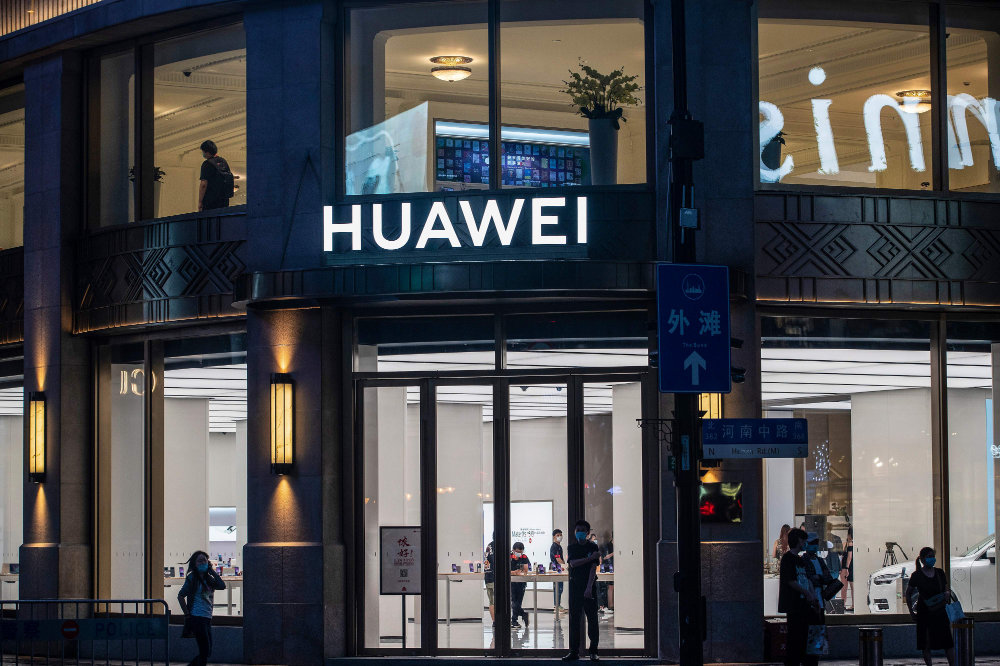


This file photo taken on June 23, 2020 shows a Huawei global flagship store ahead of its opening in Shanghai. (AFP)

Sales were hit as Huawei was unable to meet high demand “as a result of US sanctions,” the note said.
The administration of former US President Donald Trump barred Huawei from the US market, pressured allies to shun its telecom networking gear and imposed a succession of escalating sanctions including cutting off access to vital components.

The Trump administration had said Huawei’s telecom equipment installed globally could be used by China for espionage.
Huawei has repeatedly denied the allegation, saying the US government had never produced evidence of the charge and suggesting the moves were motivated more by national economic competition in the tech field.

FASTFACT

18.8m Chinese telecom giant Huawei’s domestic sales fell 44 percent to 18.8 million units in October-December, according to data released by research firm Canalys.
Huawei last year briefly became the world’s top mobile phone seller but its market share shrank to just 8 percent in the fourth quarter, falling behind Apple, Samsung and even Chinese rivals Xiaomi and Oppo, according to IDC.
The company barely held on to its top position in the Chinese market, where its share fell to 22 percent from 38 percent in the same period the year before, Canalys said.
Huawei announced in November it had sold its Honor brand of budget smartphones, citing “tremendous” supply chain pressures caused by US sanctions.


Saudi Arabia’s industrial output rises 10.4% in November: GASTAT 

Updated 11 January 2026
Follow

Saudi Arabia’s industrial output rises 10.4% in November: GASTAT 

RIYADH: Saudi Arabia’s industrial output rose at its fastest rate in months, climbing 10.4 percent year on year in November, supported by stronger manufacturing activity and higher oil production, official data showed. 

The Industrial Production Index increased to 114.4, up from 103.6 a year earlier, according to the General Authority for Statistics, though the index slipped 0.7 percent from October.

The latest figures highlight continued momentum in the Kingdom’s industrial sector as Saudi Arabia pursues economic diversification under its Vision 2030 agenda.

In its latest report, GASTAT stated: “Preliminary results indicate an increase of 10.4 percent in the IPI in November 2025 compared to the same month of the previous year, supported by the rise in mining and quarrying activity, manufacturing activity and water supply, sewerage and waste management and remediation activities.”  

The sub-index of mining and quarrying activity increased by 12.6 percent year on year in November, supported by Saudi Arabia’s decision to raise oil production to 10.1 million barrels per day, compared to 8.9 million bpd a year earlier. 

Manufacturing activity rose by 8.1 percent compared to November 2024, driven by a 14.5 percent increase in the production of coke and refined petroleum products. The manufacture of chemical products also recorded a 10.9 percent annual rise.

In contrast, the sub-index of electricity, gas, steam, and air conditioning supply declined by 4.3 percent year on year, while water supply, sewerage and waste management and remediation activities rose by 10.2 percent. 

On a month-on-month basis, the overall IPI fell by 0.7 percent in November. 

Mining and quarrying activity rose by 0.5 percent from October, while manufacturing activity edged up by 0.3 percent.

However, electricity, gas, steam, and air conditioning supply recorded a sharp monthly decline of 28.6 percent. Water supply, sewerage and waste management and remediation activities fell by 3.1 percent over the same period. 

Overall, the index of oil activities advanced by 12.9 percent year on year in November, while non-oil activities increased by 4.4 percent. 

Compared to October, oil activities rose by 0.4 percent, while non-oil activities declined by 3.4 percent. 

The IPI measures changes in industrial output based on the International Standard Industrial Classification framework and covers mining, manufacturing, utilities, and waste management sectors.