

Pakistan bourse lists debt instruments by Abu Dhabi Group bank

President and CEO of Bank Alfalah, Atif Bajwa (3R), at the bank’s launching ceremony of its Medium Term Note Programme at the Pakistan Stock Exchange in Karachi, Pakistan, on January 28, 2021. (AN Photo)
Short Url
Updated 02 March 2021
Follow

Pakistan bourse lists debt instruments by Abu Dhabi Group bank

  • Pakistan stock exchange on Thursday formally listed the first Medium-Term Finance Certificates worth Rs11 billion issued by Bank Alfalah
  • A Term Finance Certificate is a corporate debt instrument issued by companies in Pakistan to generate short and medium-term funds

KARACHI: The Pakistan stock exchange on Thursday formally listed its first Medium Term Finance Certificates (MTFCs) worth Rs11 billion, issued by Bank Alfalah — a subsidiary of the Emirati Abu Dhabi Group.
A Term Finance Certificate is a corporate debt instrument issued by companies in Pakistan to generate short and medium-term funds. The amount raised through the instrument will be primarily utilized to invest in government issued securities, including treasury bills, Pakistan Investment Bonds and Ijarah Sukuk.
“We have taken the first step for the growth of Pakistan’s capital market,” Atif Bajwa, the president and CEO of Bank Alfalah, said at a gong ceremony held to mark the listing. “The instrument has received overwhelming response from investors and it was oversubscribed from its value of Rs11 billion.”
Alfalah Bank is majority owned and operated by the Abu Dhabi Group which has 49.03% ownership. The International Finance Corporation (IFC), an investment arm of the World Bank, partnered with the Bank in 2014 and holds a 14.74% stake in the bank.
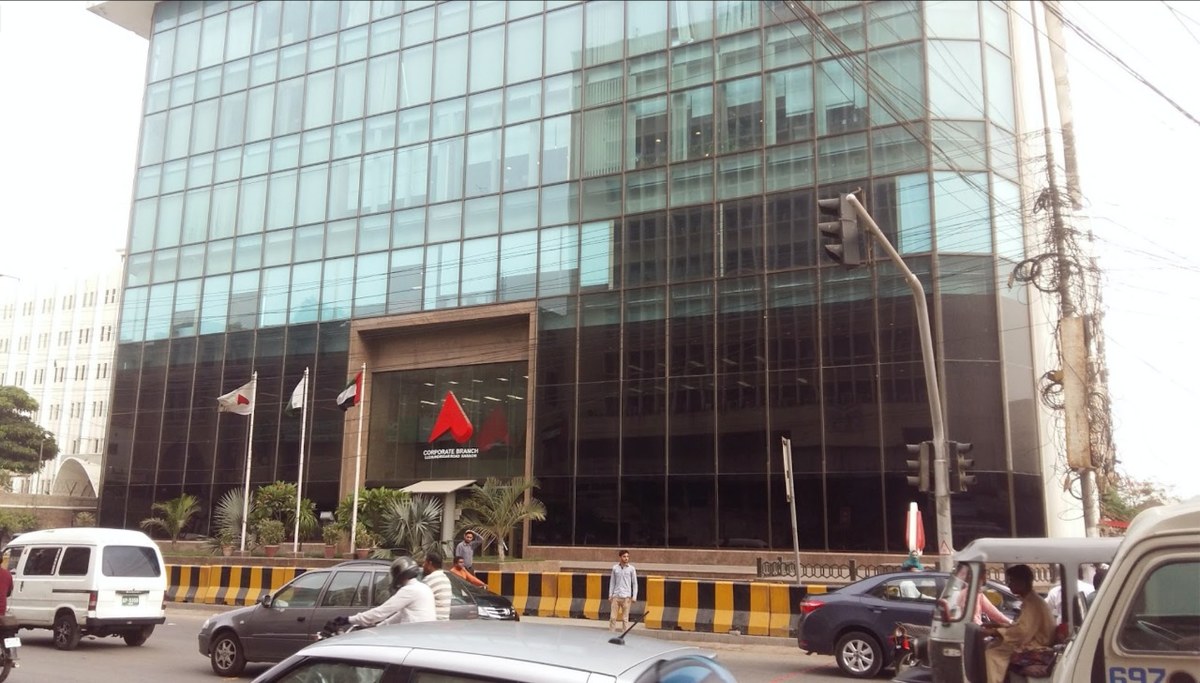


This photo shows the exterior view of Bank Alfalah's head office in Karachi in August 2016 (Photo courtesy: Social Media)

The bank has a total approved issue size of up to Rs50 billion which would be floated in multiple tranches over a period of five years. Out of a tranche A issue of Rs 11 billion, TFCs of Rs 9 billion have already been subscribed by Pre- (Initial Public Offering) IPO investors.
The Bank’s CEO said the economy was reviving, particularly the construction and housing sectors, as was evident from expansion in the allied sectors of cement and steel.
“These sectors will see further growth in the future but it needs long-term and sustainable funding which is being raised through debt instruments like the Medium-Term Note Program,” Bajwa added.
Speakers at the ceremony said the recent growth of Pakistan’s stock market had made it an attractive avenue for investment, with higher returns compared to regional peers.
In recent months, Pakistan’s stock market has emerged as one of the best performing markets in the Asian region despite the coronavirus pandemic. 


Pakistan pitches digital finance reforms to foreign fintech investors

Updated 4 sec ago
Follow

Pakistan pitches digital finance reforms to foreign fintech investors

  • Khurram Schehzad highlights progress on digital banking and plans for regulating blockchain and virtual assets
  • Visiting delegation welcomes policy clarity, sees scope for long-term investment and partnerships in Pakistan

KARACHI: Pakistan on Saturday pitched its digital finance and fintech reforms to foreign investors as part of a broader effort to attract capital after macroeconomic stabilization, with a senior official highlighting progress on digital banking, payments infrastructure and regulatory overhaul.

The outreach came as Islamabad seeks to sustain reform momentum following a period of economic stress, positioning technology-led financial inclusion as a pillar of its recovery and growth strategy while courting international investors.

Khurram Schehzad, adviser to the finance minister, briefed a delegation of international fintech investors on Pakistan’s reform agenda and digital growth plans at a meeting in federal capital, according to a statement from the finance ministry.

“Consistent policy implementation and structural reforms have strengthened macroeconomic fundamentals and improved Pakistan’s investment outlook,” he said, highlighting the “renewed global confidence” in the economy.

Officials said the discussions focused on the government’s Digital Pakistan Vision, including efforts to expand digital payments, build public digital infrastructure and digitize government transactions to widen financial inclusion and formalize the economy.

Schehzad cited the role of Raast, Pakistan’s instant payment system, which enables real-time, low-cost and interoperable digital payments nationwide, as well as regulatory reforms introduced by the State Bank of Pakistan to modernize retail digital banking.

Under the new framework, easypaisa Digital Bank has been operational for nearly a year, while Mashreq Digital Bank has also begun operations, with several other digital banks moving toward launch, the statement said.

The adviser also outlined Pakistan’s plans to develop a regulatory framework for blockchain, Web3.0 and virtual assets, saying authorities were engaging with global platforms to support innovation while ensuring compliance and investor protection.

The investor delegation was led by John Sfakianakis, chairman of Fintech Solutions Holding, alongside the company’s chief executive Kirill Smolin, and was facilitated by local technology firm Tech Avenue.

The investors welcomed the “clarity of reforms and policy direction,” saying Pakistan’s combination of macroeconomic stabilization, digital infrastructure and emerging technologies offered opportunities for long-term investment and strategic partnerships, the finance ministry said.