

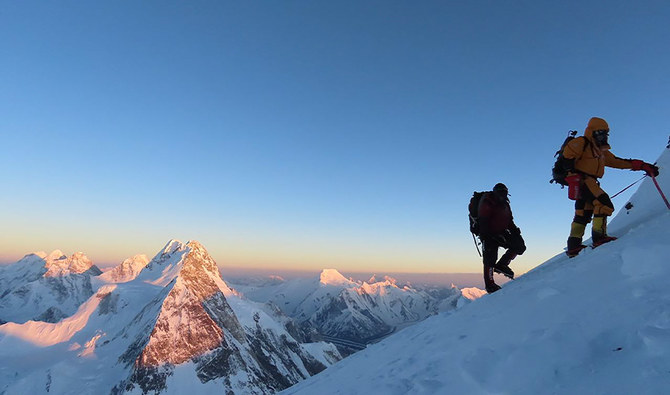

Katmandu: Nepali mountaineers have for decades toiled in the shadows as foreign climbers win accolades for conquering the world’s most treacherous peaks, but now a team has carved the Himalayan nation a place in history by achieving the first-ever winter summit of K2.
Their ascent in mid-January of the world’s second-highest mountain — the notoriously challenging 8,611-meter (28,251-feet) “savage mountain” of Pakistan — shone a much-deserved spotlight on their own climbing prowess.
“This is not just our success — it is for all Nepalis, so that our future generations can look back and be proud about achievements of Nepali climbers,” one of the 10 summiteers, Mingma Gyalje Sherpa, told AFP.
Kami Rita Sherpa, who has climbed Everest a record 24 times, said the recognition was long overdue.
“The Western climbers did not set the records without the help of Sherpas,” he told AFP in Katmandu.

In this photograph taken on January 19, 2021, Nepal's mountaineer Kami Rita Sherpa, who has climbed Everest a record 24 times, poses along with his certificates in his rented room at Boudhanath Stupa area on the outskirts of Kathmandu. (AFP)
“All the routes are set by us, the food is cooked by us, their loads are carried by our brothers — they haven’t done it alone.”
To reflect their immense pride in making the achievement in their country’s name, the team sang the Nepali anthem, with their distinctive national flag fluttering in one of their hands, as they neared K2’s savage summit.
Since the first British teams set their sights on summiting Everest in the 1920s, Nepali climbers — mostly from the Sherpa ethnic group — have been by their side.
But they did not aspire to reach for the heavens — among Nepal’s poorest communities, they risked life and limb to help foreign climbers achieve their life-long ambitions because they needed to feed their families.
Ang Tharkay, who was part of the successful 1950 French expedition to Annapurna — the first recorded ascent of a peak above 8,000 meters — refused to be part of the summit team.
For him, being part of the record books was less important than running the risk of losing his fingers and toes to frostbite, which would jeopardize his livelihood.
The industry has since grown into a lucrative sector, attracting hundreds of foreign climbers each year and bringing in millions of dollars in revenue for the government.
An experienced guide can make up to $10,000 — many times the country’s average annual income — for several months of hazardous work.
The risks remain high despite the commercialization of the sector, with Nepalis hired by foreign climbers making up a quarter of deaths on Himalayan mountains, according to the authoritative Himalayan Database.
In 2014, an avalanche killed 16 Nepalis who were hauling gear up Everest, triggering an unprecedented shutdown of the season and demands for better compensation and benefits.
The exploits of the K2 team, which included Nirmal Purja, who last year smashed the speed record for summiting the world’s 14 highest peaks, reflect the changing approach of modern-day Nepali climbers.
In 1953, Tenzing Norgay Sherpa achieved international recognition when he completed the first summit of Everest with New Zealand mountaineer Edmund Hillary.
But in the following decades, only four other Nepalis have claimed first summits of the 14 peaks above 8,000 meters, compared to nearly 70 mostly European mountaineers.
In recent years, however, climbers like Purja have set record after record, and are hopeful their feats will inspire the next generation of Nepali mountaineers.
Meanwhile, local expedition groups — instead of playing second fiddle to foreign climbing agencies — now bring the bulk of paying clients into Nepal.
Italy’s legendary Reinhold Messner has seen the transformation first-hand.
“When I heard the K2 news I thought ‘finally!’,” Messner told AFP, recalling that in his first ascent of Everest without supplemental oxygen in 1978, the Sherpas would follow him as he navigated upwards.
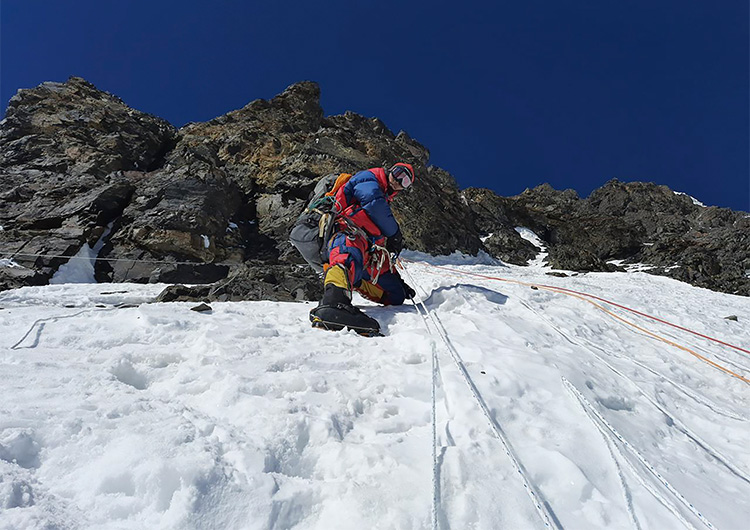
This handout photo taken on January 16, 2021 and released by Seven Summit Treks, shows Nepali mountaineers on their way to the summit of Mt K2, which is the second highest mountain in the world, in the Gilgit-Baltistan region of northern Pakistan. (AFP)
In contrast, today’s Sherpas are in front of the climbers, setting routes and guiding them.
“It is an evolution... and this is also important for the future economy of the country.”
Alpine journalist Ed Douglas, who has called for better protections for the high-altitude workers, said the climbers deserve credit for “taking control of their own industry.”
The K2 winter summit showed that Nepalis “are now mountaineers in their right,” added Dawa Steven Sherpa, who runs Asian Trekking, an expedition company.
“There is no question about whether they deserve to have that place on the podium with all the other celebrated mountaineers that have come before us.”


