



Rawalpindi: There are so many reasons to be excited about 2021 (coronavirus vaccines!) but chief among them are exciting works of fiction by Pakistani authors — from journalist-turned-actor Mira Sethi to academic and documentary filmmaker Saba Karim Khan.
Here are Arab News Pakistan’s six most interesting fiction picks of the coming year, which offer something for every reader:
Mira Sethi — Are You Enjoying?

This is an undated photo of Mira Sethi: actress, model, and author of the book — Are You Enjoying? (Photo courtesy: Mashable Pakistan website)
Expected to hit shelves in April this year, journalist-turned-actor Mira Sethi’s debut collection of short stories “Are You Enjoying?” has been named one of the most anticipated books of 2021 by Vogue, as well as made it on Refinery29’s 50 books to read in the coming year.
Vogue called Sethi an “assured storyteller” with a powerful book that has a light touch, and Refinery29 described her stories as “raucous and bracingly sharp,” full of characters that Sethi treats with fun, sensitivity and passion. There are the best friends who agree to marry in order to keep their sexual identities a secret; a divorced man who has an affair with his diplomat neighbor; and a young actress negotiating power dynamics on and off set — all stories about the pains of negotiating longing and desire in a place as complicated as Pakistan.
“My stories are about the comedy and heartache of what it means to transgress in a society that demands conformity,” Sethi told Arab News in a phone interview, saying she was both “excited and terrified” about her book’s May release by Bloomsbury.
Saba Karim Khan — Skyfall

This is an undated photo of Saba Karim Khan: documentary filmmaker, writer and author of the book — Skyfall (Photo courtesy: Saba Karim Khan)
Released in the last few days of 2020, Abu Dhabi-based instructor and documentary filmmaker Saba Karim writes the vivid story of Rania, a resident of Pakistan’s once famed Red Light District in the central city of Lahore who fights to take her life into her own hands.
Renowned author of the Ice-Candy Man, Bapsi Sidhwa, has described Karim’s debut as a “soulful and timely debut.” Karim herself described “Skyfall” as a “complex coming of age story” that navigates the pains of being an immigrant, of feeling trapped by one’s place and position of birth, and of the complicated relationship with sexuality, home and family.
“It is part surreal, part relief, and part numbness — that’s how I felt when I clutched and smelled and felt ‘Skyfall’ in my hands for the first time,” Karim told Arab News. “I don’t think that feeling has gone away yet.”
Taha Kehar and Sana Munir — The Stained Glass Window: Stories of the Pandemic from Pakistan
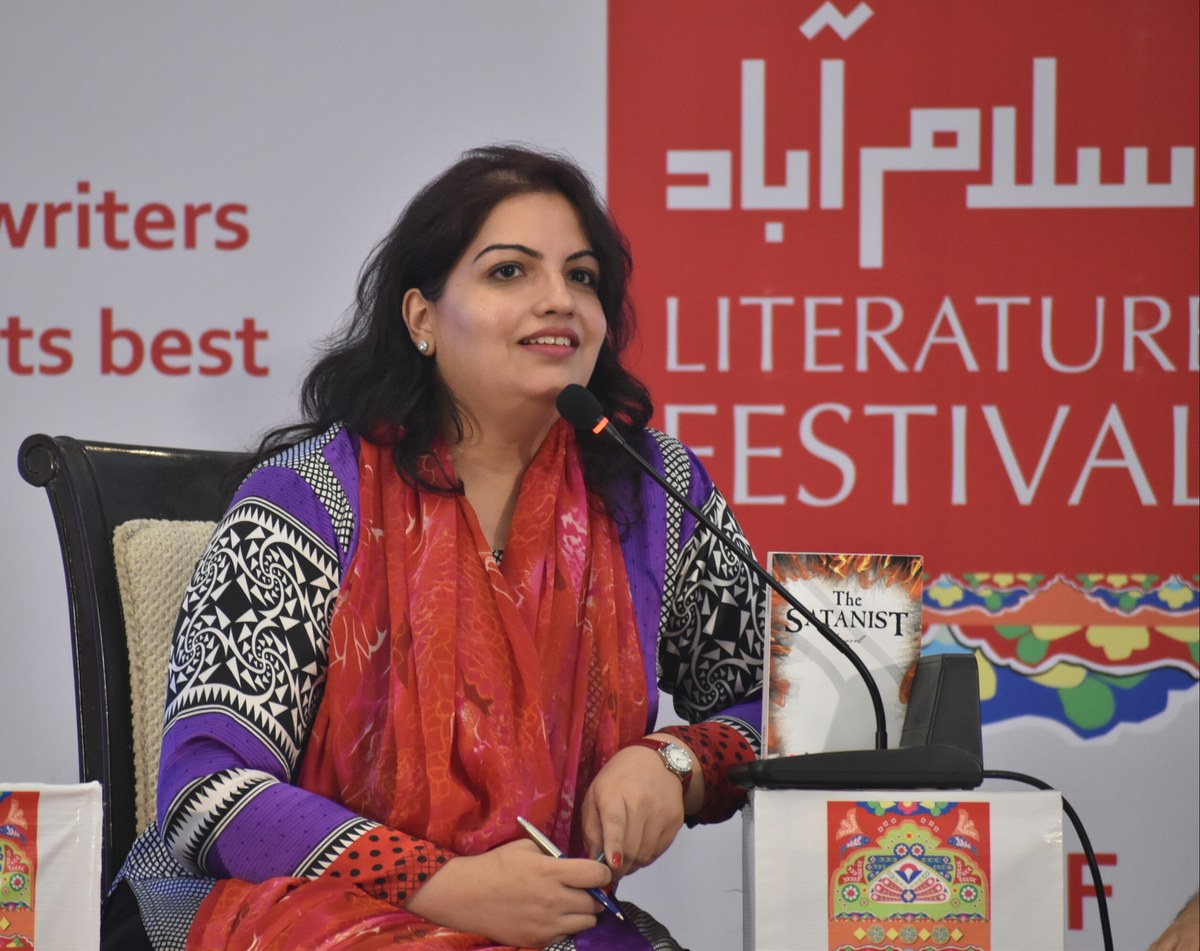
This is an undated photo of Sana Munir: co-author of the book — The Stained Glass Window: Stories of the Pandemic from Pakistan (Photo courtesy: Mashable Pakistan website)
In “The Stained Glass Window” Stories of the Pandemic from Pakistan,” released in late 2020, Taha Kehar and Sana Munir compile the stories of 27 Pakistanis, and become “caretakers of these unique literary voices,” co-editor Kehar told Arab News over the phone.
“This compilation was fueled by a curiosity to understand how the pandemic impacted the individual arcs of people’s lives in Pakistan,” she said. The tales cover feelings of isolation in lockdown, anxieties triggered by the virus, and musings about how to escape COVID-19 restrictions.
Using the medium of fiction, Kehar said, “seemed more appealing — and less depressing — than the cold facts that were doing the rounds about the nature, duration and intensity of the virus.”
Kehar has also written Typically Tanya and Of Rift and Rivalry, and Munir’s other works include The Satanist and Unfettered Wings: Extraordinary Stories of Ordinary Women.
Osman Haneef — Blasphemy: The Trial of Danesh Masih

This is an undated photo of Osman Haneef: author of the book — Blasphemy: The Trial of Danesh Masih (Photo courtesy: COLBY Magazine website)
Osman Haneef’s debut novel tells the story of a young Christian boy accused of blasphemy — a crime punishable by death in Pakistan — and a young lawyer named Sikander Ghaznavi who returns to Pakistan after many years abroad, and takes on the defense of the boy. Haneef told Arab News he was inspired to write the story because of the real case of an illiterate 11-year-old boy named Salamat Masih who was wrongly accused of blasphemy in Pakistan in 1993.
“The injustice of an obviously innocent young boy wrongfully convicted stayed with me. I couldn’t write anything else,” Haneef said over email. “The biggest advantage of fiction is that an author can shift points of view and reveal the underlying true motivations and insecurities of a character. When done well, it can feel truer than the most well researched non-fiction ... It is ironic, but the best way to communicate something that is true and authentic, is to make up a story.”
Haneef’s book was published in April 2020 by Readomania.
Sonya Rehman — Wolfie

This is an undated photo of Sonya Rehman: author of the book — Wolfie (Photo courtesy: Sonya Rehman/ Facebook)
Journalist Sonya Rehman, originally from Lahore and currently living in Islamabad, decided to use her time in quarantine to write a book for kids aged 8-10 years about an issue close to her heart: the treatment of stray animals in Pakistan. “Wolfie” is a semi-autobiographical work about her own rescue pup of the same name.
“It’s such an exciting genre to be in as a writer; you can change minds and bring so many lovely, wonderful, magical things to young readers,” Rehman said about writing for children. Her book is being published by the independent Pakistani publishing house Zuka Books and will be available in Fall 2021.
Sabdezar Irfan’s — Grey Matter
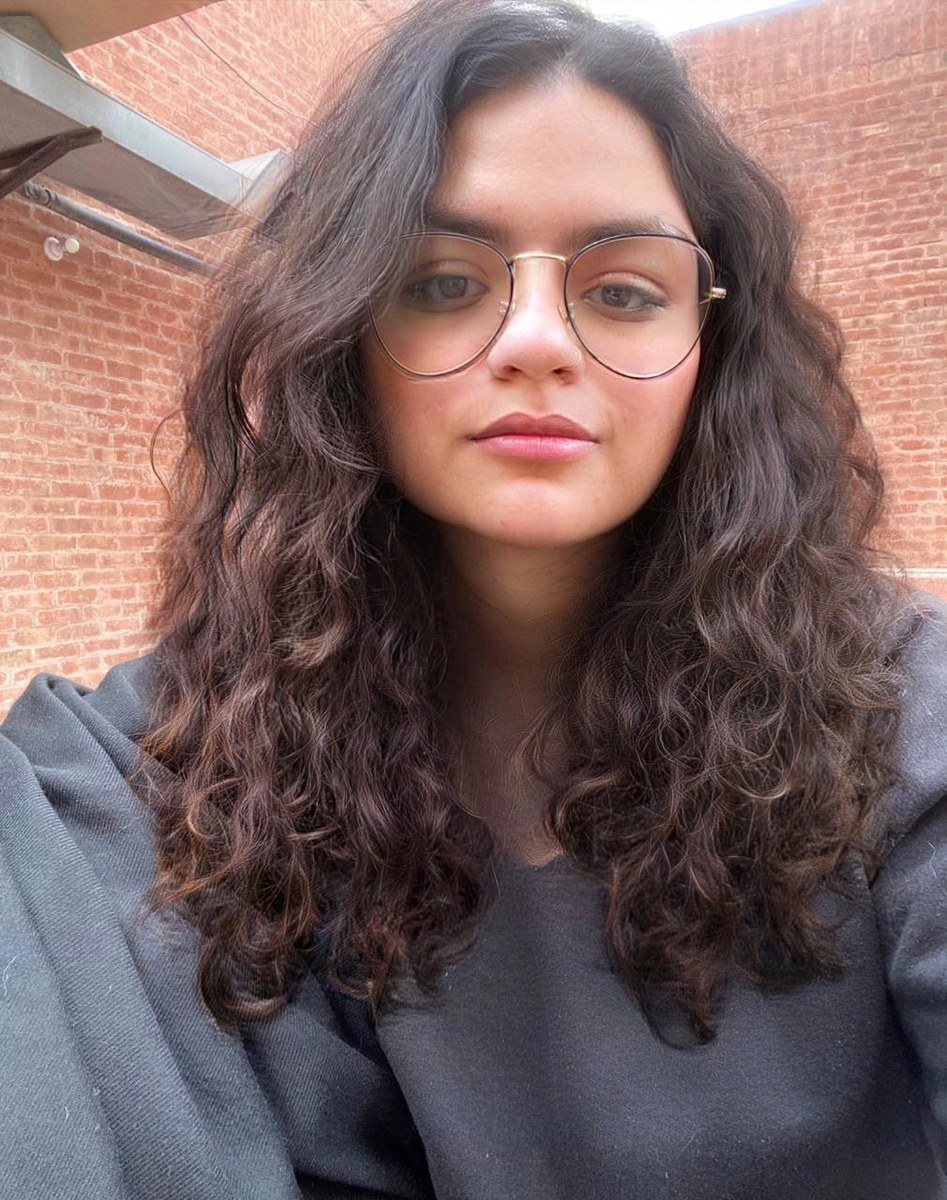
This is an undated photo of Sabdezar Irfan: author of the book — Grey Matter (Photo courtesy: Sabdezar Irfan)
Sabdezar Irfan’s graphic novel “Grey Matter” tells the story of a week in the life of a girl called Fera who suffers a major loss and has to find herself again.
“It’s a love letter to myself without being entirely autobiographical,” Irfan, a 22-year-old visual communications designer, told Arab News over the phone. “It has been incredibly cathartic to write and read.”
Grey Matter is being published by Zuka Books and comes out in February 2021.


