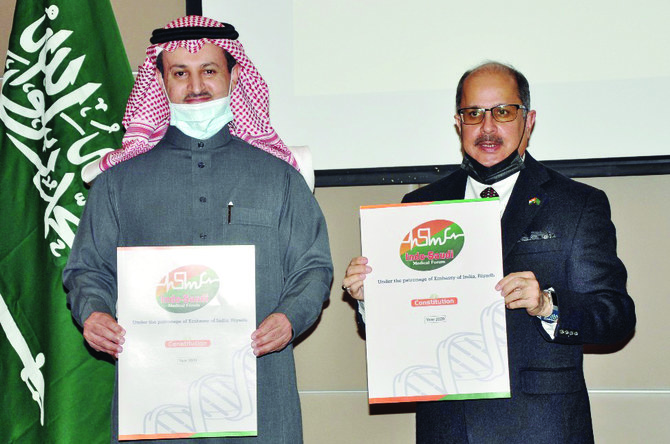
RIYADH: The Riyadh chapter of the Indo-Saudi Medical Forum (ISMF) was recently inaugurated at the Diplomatic Quarters by Ambassador of India Dr. Ausaf Sayeed. The ISMF will consist of prominent Indian and Saudi doctors, health experts, businessmen associated with the pharmaceutical sector and other stakeholders from the medical field.
The inauguration ceremony was attended by Dr. Faisal Al-Sugair, president and CEO of the Saudi Center for International Strategic Partnerships; Dr. Ahmed Assiri, assistant supervisor of the Clinical Excellence General Directorate at the Ministry of Health; and Dr. Fawaz Al-Hussain, consultant and professor at the College of Medicine at King Saud University, who will also be the first president of the Riyadh chapter of the ISMF.
Executive council members, city coordinators and members of the ISMF joined the inauguration ceremony, both in person and virtually.
The idea for the ISMF was originally conceived by the then Indian consul general in Jeddah and now the ambassador of India in Riyadh to foster collaboration between the medical fraternities of India and Saudi Arabia.
It strives to create an institutional structure for medical professionals from both countries to forge alliances and encourage cooperation in the fields of healthcare, medicine, pharmaceuticals and related sectors. The launch of the ISMF was rendered even more necessary because of the renewed focus on healthcare, especially after the coronavirus disease (COVID-19) pandemic. Across the globe, healthcare organizations are now enjoying a new direction and momentum.
The success of the Jeddah chapter has paved the way for the revamping and upscaling of the ISMF to a pan-Saudi organization.
The ISMF will be divided into three regional chapters — Jeddah, Dammam and Riyadh — which will each be led by regional executive councils.
The Jeddah chapter was inaugurated by the Indian ambassador on Dec. 25, 2020, and the Dammam chapter will also be inaugurated in the next few months.


![]()

DiplomaticQuarter: Indian ambassador inaugurates joint medical forum in Riyadh
Short Url
https://arab.news/rksrr
DiplomaticQuarter: Indian ambassador inaugurates joint medical forum in Riyadh


Latest updates



© 2026 SAUDI RESEARCH & PUBLISHING COMPANY, All Rights Reserved And subject to Terms of Use Agreement.