


Hezbollah threatens Lebanese journalist working with US-funded Alhurra News channel

1 / 3
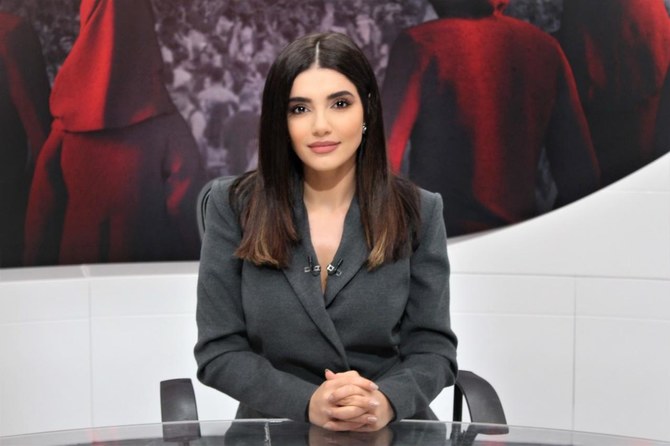
Layal Alekhtiar is latest victim of cyber bullying by the Iran-backed terror group. (Screenshot)
2 / 3
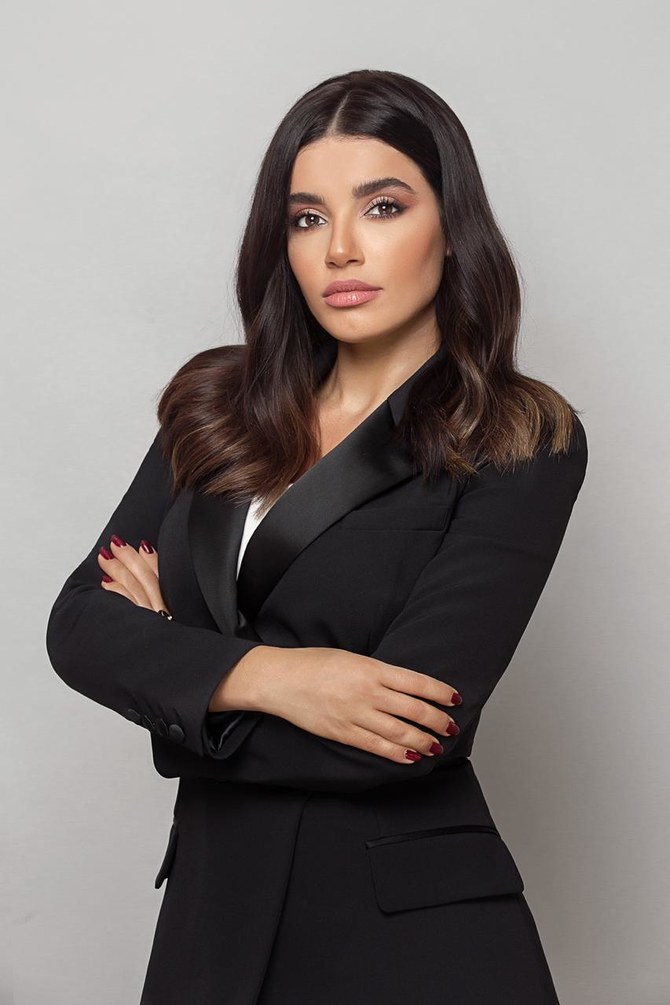
Layal Alekhtiar is latest victim of cyber bullying by the Iran-backed terror group. (Screenshot)
3 / 3
Layal Alekhtiar is latest victim of cyber bullying by the Iran-backed terror group. (Screenshot)
Short Url
Updated 08 January 2021
Follow

Hezbollah threatens Lebanese journalist working with US-funded Alhurra News channel

  • Layal Alekhtiar is latest victim of cyber bullying by the Iran-backed terror group
  • Committee to Protect Journalists slams online harassment of female reporters, says must be investigated

LONDON: Lebanese news anchor Layal Alekhtiar is the latest victim of a Hezbollah-led campaign to silence free media in and out of the country.

The journalist, who works for US State Department-funded Alhurra, received death threats via text following an incitement campaign launched by viewers loyal to Hezbollah. The Committee to Protect Journalists (CPJ) told Arab News that these threats must be investigated. 

The campaign comes after Alekhtiar tweeted a video of the unveiling of the newly erected statue of the late Iranian Gen. Qassem Soleimani with a line from Ayat Al-Anbya (The Prophets) from the Qur’an that said: “What are these statues to which you are so devoted?”

Alekhtiar told Arab News: “I didn’t provoke them specifically in any way, all I did was place this Ayat as a matter of freedom of speech, nothing more. I didn’t demean them, nor did I do it in any impolite way.

“So, they let their whole army loose on me, and all those from Al-Manar and Al-Mayadeen and all their news channels and I didn’t understand why, there is nothing to it.

“I tweeted the Ayat regarding the statues because what grabbed my attention was that there were Shiite religious men there. Anyway, to me, any statue that would be erected for someone not Lebanese — especially since he has a political agenda — paid by the Lebanese, should not be placed. Whoever it may be, not just Qassem Soleimani,” she said.

Shortly after, a senior member of the Israeli Army tweeted the same Ayat which added fuel to the fire.

“So, they begin to create a link between my tweet and his and they begin to photoshop both tweets together and spread it and say that I am a foreign agent and that I am an Israeli spy,” she added.

Speaking to Arab News, Sherif Mansour, Middle East and North Africa Program Coordinator for the Committee to Protect Journalists (CPJ) said: “the use of online harassment against women journalists is abhorrent tactic that aims to silence their reporting and opinions. 
“Threats by non state actors and their supporters online must not go unnoticed and must be throughly investigated.”

Alekhtiar is not the first journalist to be harassed and targeted by Hezbollah and accused of spying for Israel and will surely not be the last — this includes Lebanese  journalists who are also Shiite Muslims, but don’t agree with Hezbollah’s political beliefs. 

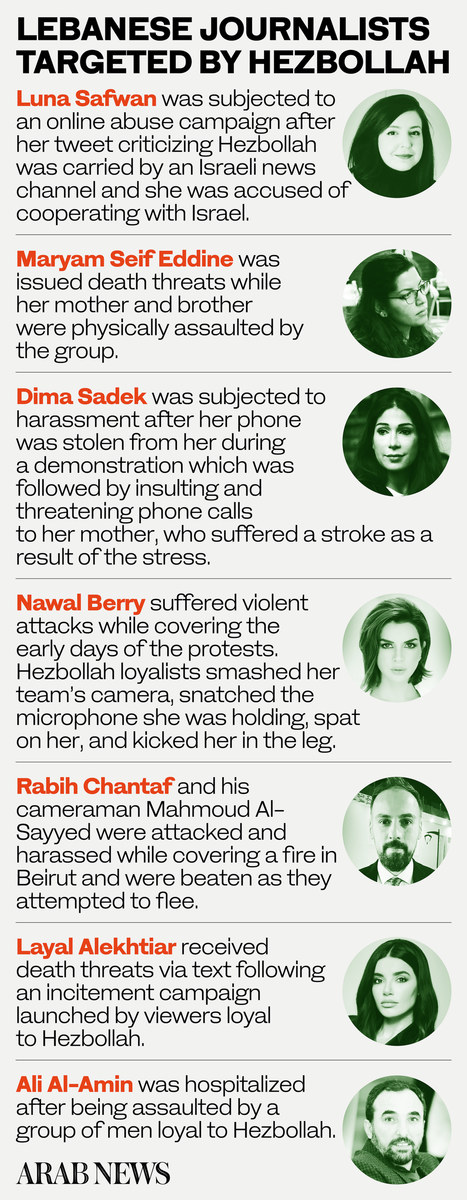
Late last year, journalist Luna Safwan, who happens to be Shiite, was subjected to an online abuse campaign after her tweet criticizing Hezbollah was carried by an Israeli news channel and she was accused of cooperating with Israel.

Similarly, Lebanese journalist Maryam Seif Eddine, known for her staunch criticism of Hezbollah despite being Shiite, had been issued death threats by the group while her mother and brother were physically assaulted, the latter being left with a broken nose. Hezbollah loyalists had targeted her family home in Burj El-Barajneh, in the Hezbollah-dominated southern suburbs of Beirut.

Before that, as the country witnessed unprecedented nationwide protests in 2019, former LBC news anchor Dima Sadek, another Shiite journalist, was subjected to harassment by the Lebanese militia group after her phone was stolen from her during a demonstration. The harassment, she said, was followed by insulting and threatening phone calls to her mother, who suffered a stroke as a result of the stress.

And prior to that, MTV television reporter Nawal Berry, also a Shiite, suffered violent attacks by supporters of Hezbollah and its allies while covering the early days of the protests. Loyalists smashed her team’s camera, snatched the microphone she was holding, spat on her, and kicked her in the leg.

Alekhtiar said: “Now, they continued with their campaign, but the principle is that we, in Lebanon, the foundation is freedom of expression and the democracy that puts it apart from other countries.

“We don’t want to become a part of another country, nor do we want the nationality of our country to change no matter who is coming.”

Activist and journalist Ali Al-Amin, who claimed that he had been attacked on more than one occasion by Hezbollah-linked people, in a previous interview told Arab News: “Hezbollah has always resorted to accusing its opponents of working for Israel, the US, or foreign embassies.

“It has mobilized its electronic armies to launch (online) campaigns against them over the past 15 years. There is much evidence for this.”

Alekhtiar, who remains unfazed by the threats, said: “An opinion must stay an opinion, no matter what happens, because without freedom of expression, journalism has no point, and the media has no point.”

Soleimani’s shadow
Qassem Soleimani left a trail of death and destruction in his wake as head of Iran’s Quds Force … until his assassination on Jan. 3, 2020. Yet still, his legacy of murderous interference continues to haunt the region

Enter


keywords


Disinformation the new enemy in disaster zones, says Red Cross

Updated 05 March 2026
Follow

Disinformation the new enemy in disaster zones, says Red Cross

  • “Harmful information and dehumanizing narratives” undermines humanitarian aid and putting lives of aid workers at risk
  • Between 2020 and 2024, disasters affected nearly 700 million people, displaced over 105 million, and killed more than 270,000 — doubling the number in need of humanitarian aid

GENEVA: The rise of disinformation is undermining humanitarian aid and putting lives at risk, while disasters are affecting ever more people, the Red Cross warned Thursday.
“Between 2020 and 2024, disasters affected nearly 700 million people, caused more than 105 million displacements, and claimed over 270,000 lives,” the International Federation of Red Cross and Red Crescent Societies said.
The number of people needing humanitarian assistance more than doubled in the same timeframe, the IFRC said in its World Disasters Report 2026.
But the world’s largest humanitarian network said that “harmful information and dehumanizing narratives” were increasingly undermining trust, putting the lives of aid workers at risk.
“In polarized and politically-charged contexts, humanitarian principles such as neutrality and impartiality are increasingly misunderstood, misrepresented or deliberately attacked online,” it said.
The IFRC has more than 17 million volunteers across more than 191 countries.
“In every crisis I have witnessed, information is as essential as food, water and shelter,” said the Geneva-based federation’s secretary general Jagan Chapagain.
“But when information is false, misleading or deliberately manipulated, it can deepen fear, obstruct humanitarian access and cost lives.”
He said harmful information was not a new phenomenon, but it was now moving “with unprecedented speed and reach.”
Chapagain said digital platforms were proving “fertile ground for lies.”
The IFRC report said the challenge nowadays was no longer about the availability of information but its reliability, noting that the production and spread of disinformation was easily amplified by artificial intelligence.

- ‘Life and death’ -

The report cited numerous recent examples of harmful information hampering crisis response.
During the 2024 floods in Valencia, false narratives online accused the Spanish Red Cross of diverting aid to migrants, which in turn fueled “xenophobic attacks on volunteers,” the IFRC said.
In South Sudan, rumors that humanitarian agencies were distributing poisoned food “caused people to avoid life-saving aid” and led to threats against Red Cross staff.
In Lebanon, false claims that volunteers were spreading Covid-19, favoring certain groups with aid and providing unsafe cholera vaccines eroded trust and endangered vulnerable communities, the IFRC said.
And in Bangladesh, during political unrest, volunteers faced “widespread accusations of inaction and political alignment,” leading to harassment and reputational damage, it added.
Similar events were registered by the IFRC in Sudan, Myanmar, Peru, the United States, New Zealand, Canada, Kenya and Bulgaria.
The report underlined that around 94 percent of disasters were handled by national authorities and local communities, without international interventions.
“However, while volunteers, local leaders and community media are often the most trusted messengers, they operate in increasingly hostile and polarized information environments,” the IFRC said.
The federation called on governments, tech firms, humanitarian agencies and local actors to recognize that reliable information “is a matter of life and death.”
“Without trust, people are less likely to prepare, seek help or follow life-saving guidance; with it, communities act together, absorb shocks and recover more effectively,” said Chapagain.
The organization urged technology platforms to prioritize authoritative information from trusted sources in crisis contexts, and transparently moderate harmful content.
And it said humanitarian agencies needed to make preparing to deal with disinformation “a core function” of their operations, with trained teams and analytics.