

Egypt sees 13 percent surge in oil, gas finds

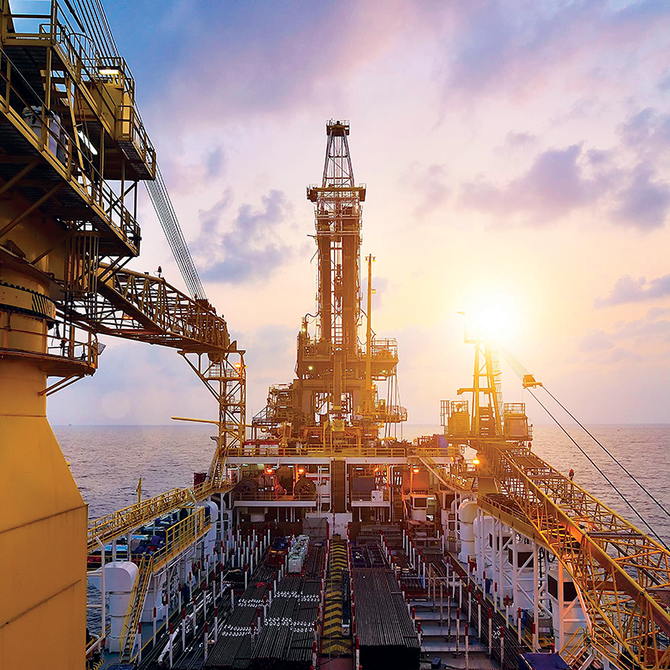
The 47 crude oil and 15 natural gas reserves were found in the Western Desert, the Eastern Desert, Gulf of Suez, Nile Delta and the Mediterranean Sea. (Reuters)
Short Url
Updated 07 January 2021
Follow

Egypt sees 13 percent surge in oil, gas finds

  • Petroleum Ministry embarking on plans to repay foreign debts

CAIRO: Egypt has witnessed a 13 percent surge in the discovery of oil and gas reserves in 2020 compared with the previous year.

According to the country’s Ministry of Petroleum and Mineral Resources, 62 oil and gas reserves were found in 2020, a year in which the global economy struggled due to the coronavirus pandemic.

The 47 crude oil and 15 natural gas reserves were found in the Western Desert, the Eastern Desert, Gulf of Suez, Nile Delta and the Mediterranean Sea. 

In 2019, Egypt discovered 40 crude oil and 15 natural gas reserves in the Mediterranean, the Western Desert, the Eastern Desert, Gulf of Suez, Nile Delta and Sinai. 

The ministry said that these “positive results” indicate the success of research and exploration in current oil fields, and suggest the existence of further petroleum resources that are yet to be discovered.

Modern technologies and advanced geological theories have contributed to better research results, it added.

The ministry plans to increase production of crude oil and counter the phenomenon of the natural diminishment of wells and old fields by investing in programs for research, exploration, drilling and development of wells.

In 2020, Cairo signed 22 agreements with global firms such as ExxonMobil and Chevron to make investments worth $1.6 billion to develop the reserves and deals worth $139 million for oil well drilling at 74 sites. 

An official at the General Authority for Petroleum said the Mediterranean Sea is one of the sites rich in crude and gas reserves.

Egypt’s largest Zohr offshore gas field in the Mediterranean Sea, which was discovered by Italy’s giant Eni in 2015, greatly contributes to the country’s natural gas production as it produces about 2.7 billion cubic feet on a daily basis.

He said that these deals will help the Egyptian government overcome economic challenges.

The official said the Petroleum Ministry is successfully embarking on its plans to repay debts to foreign oil companies, which stood at $6.3 billion in 2013.

He said that by the end of June 2020 the debts had fallen to $850 million.


European gas prices soar almost 50% as Iran conflict halts Qatar LNG output

Updated 02 March 2026
Follow

European gas prices soar almost 50% as Iran conflict halts Qatar LNG output

  • Analysts warn prolonged disruption could push prices higher
  • Some shipments of oil, LNG through Strait of Hormuz suspended
  • Benchmark Asian LNG price up almost 39 percent

LONDON: ​Benchmark Dutch and British wholesale gas prices soared by almost 50 percent on Monday, after major liquefied natural gas exporter Qatar Energy said it had halted production due to attacks in the Middle East.

Qatar, soon to cement its role as the world’s second largest LNG exporter after the US, plays a major role in balancing both Asian and European markets’ demand of LNG.

Most tanker owners, oil majors and ‌trading houses ‌have suspended crude oil, fuel and liquefied natural ​gas shipments ‌via ⁠the ​Strait of ⁠Hormuz, trade sources said, after Tehran warned ships against moving through the waterway.

Europe has increased imports of LNG over the past few years as it seeks to phase out Russian gas following Russia’s invasion of Ukraine.

Around 20 percent of the world’s LNG transits through the Strait of Hormuz and a prolonged suspension or full closure would increase global competition for other ⁠sources of the gas, driving up prices internationally.

“Disruptions to ‌LNG flows would reignite competition between ‌Asia and Europe for available cargoes,” said ​Massimo Di Odoardo, vice president, gas ‌and LNG research at Wood Mackenzie.

The Dutch front-month contract at the ‌TTF hub, seen as a benchmark price for Europe, was up €14.56 at €46.52 per megawatt hour, or around $15.92/mmBtu, by 12:55 p.m. GMT, ICE data showed.

Prices were already some 25 percent higher earlier in the day but extended gains ‌after QatarEnergy’s production halt.

Benchmark Asian LNG prices jumped almost 39 percent on Monday morning with the S&P Global ⁠Energy Japan-Korea-Marker, widely used ⁠as an Asian LNG benchmark, at $15.068 per million British thermal units, Platts data showed.

“If LNG/gas markets start to price in an extended period of losses to Qatari LNG supply, TTF could potentially spike to 80-100 euros/MWh ($28-35/mmBtu),” Warren Patterson, head of commodities strategy at ING, said. The British April contract was up 40.83 pence at 119.40 pence per therm, ICE data showed.

Europe is also relying on LNG imports to help fill its gas storage sites which have been depleted over the winter and are currently around 30 percent full, the latest data from Gas Infrastructure ​Europe showed. In the European carbon ​market, the benchmark contract was down €1.10 at €69.17 a tonne