

Pakistan telecoms regulator launches portal for public to report ‘illegal’ content for blocking

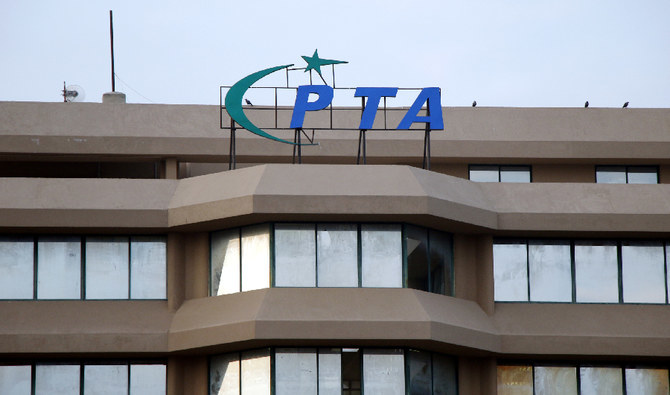
A view of Pakistan Telecommunication Authority (PTA) building in Islamabad, Pakistan, January 22, 2020. (AN photo)
Short Url
Updated 05 January 2021
Follow

Pakistan telecoms regulator launches portal for public to report ‘illegal’ content for blocking

  • Unlawful to share online content against integrity, security or defense of Pakistan or against public order, PTA says 
  • Digital rights activists say Pakistan, using new digital legislation, has sought to rein in free expression on the Internet in recent months

ISLAMABAD: Pakistan Telecommunication Authority on Tuesday launched a portal where members of the public could report for blocking online content that was “against Pakistan’s defense, integrity and security or public order.”

Digital rights activists say Pakistan, using new digital legislation, has sought to rein in free expression on the Internet in recent months, blocking or ordering the removal of content deemed immoral as well as critical of the state.

Last November, Pakistan approved new rules for regulating cyberspace that rights groups and Internet companies like Google, Facebook, Yahoo and eBay have said could be used to stifle dissent and free speech. Under the new regulations, social media companies would be obliged to help law enforcement agencies access data and to remove online content deemed unlawful. Companies that do not comply with the rules risk being blocked in Pakistan.

“Be a responsible Pakistani,” PTA said on Twitter. “Uploading/sharing of content online against the integrity, security or defense of Pakistan or against public order is unlawful. Report such links for blocking to PTA at: https://complaint.pta.gov.pk/RegisterComplaint.aspx 

Many journalists have recently complained of receiving notices from the cybercrime wing of the Federal Investigation Agency for social media posts that “defamed” the army or the government. 

Last October, Pakistan’s telecommunications regulator announced it had banned TikTok over failing to remove “immoral” content from its platform. The ban was subsequently lifted after a court order. 

In August, Pakistan blocked five dating apps, namely Tinder, Tagged, Skout, Grinder and SayHi. On July 21, PTA said it had banned the Singaporean live-streaming app Bigo over “immoral, obscene and vulgar content” and issued a last warning to Tiktok for “similar” reasons. Bigo was subsequently unbanned. The hugely popular online game PUBG also remained banned in Pakistan through last July. 


Pakistan Navy launches fourth Hangor-class submarine ‘Ghazi’ in China 

Updated 6 sec ago
Follow

Pakistan Navy launches fourth Hangor-class submarine ‘Ghazi’ in China 

  • As per Islamabad’s agreement with Beijing, four of eight submarines will be built in China and the rest in Pakistan
  • Navy says all four submarines under construction in China undergoing sea trials, in final stages of being handed over

ISLAMABAD: The Pakistan Navy announced on Wednesday it has launched the fourth Hangor-class submarine named “Ghazi” at a Chinese shipyard in Wuhan, saying the development will help maintain peace in the region.

Pakistan’s government signed an agreement with China for the acquisition of eight Hangor-class submarines, the navy said in its press release. Under the contract, four submarines are being built in China while the remaining four will be constructed in Pakistan by the Karachi Shipyard and Engineering Works Ltd. company.

“With the launching of GHAZI, Pakistan Navy has achieved another significant milestone where all four submarines under construction in China are now undergoing rigorous sea trials and are in the final stages of being handed over to Pakistan,” the navy said. 

It further said that these submarines will be fitted with advanced weapons and sensors capable of engaging targets at standoff ranges. 

“Hangor-class submarines will be pivotal in maintaining peace and stability in the region,” the navy added. 

Pakistan’s agreement with China is set to strengthen its naval defenses, especially as ties with arch-rival India remain tense. 

India and Pakistan were involved in a four-day military confrontation in May this year before Washington intervened and brokered a ceasefire. Four days of confrontation saw the two countries pound each other with fighter jets, exchange artillery fire, missiles and drone strikes before peace prevailed. 

Pakistan’s air force used Chinese-made J-10 fighter jets in May to shoot down an Indian Air Force Rafale aircraft, made by France.

The altercation between the nuclear-armed neighbors surprised many in the military community and raised questions over the superiority of Western hardware over Chinese alternatives.

Islamabad has long been Beijing’s top arms customer, and over the 2020-2024 period bought over 60 percent of China’s weapons exports, according to data from the Stockholm International Peace Research Institute.