

Saudi Arabia’s AlUla, city of ancient cultures, hosts 41st GCC Summit

1 / 6
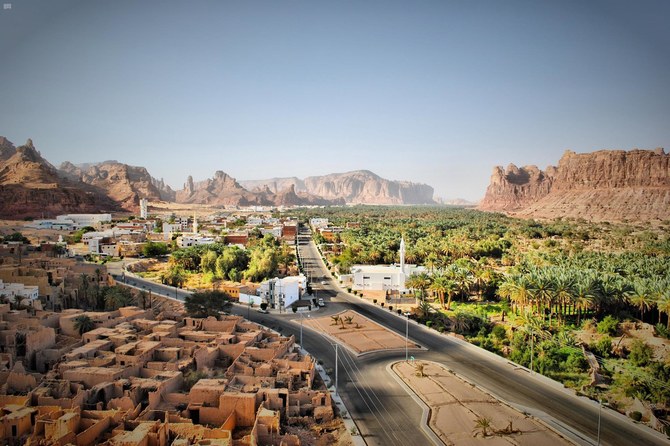
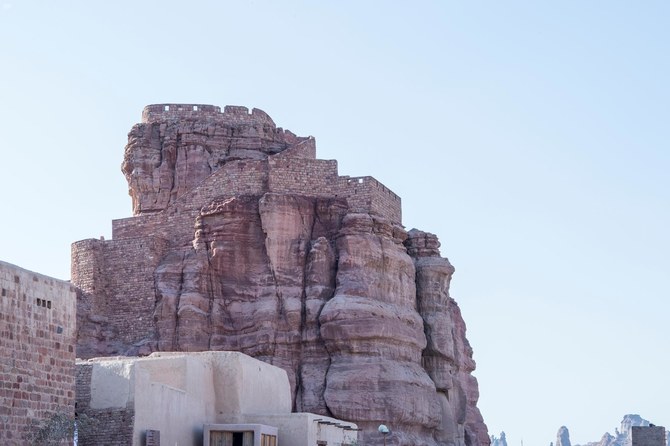
The ruins of the ancient city of Dadan is seen side by side with modern structures in AlUla. (SPA)
2 / 6
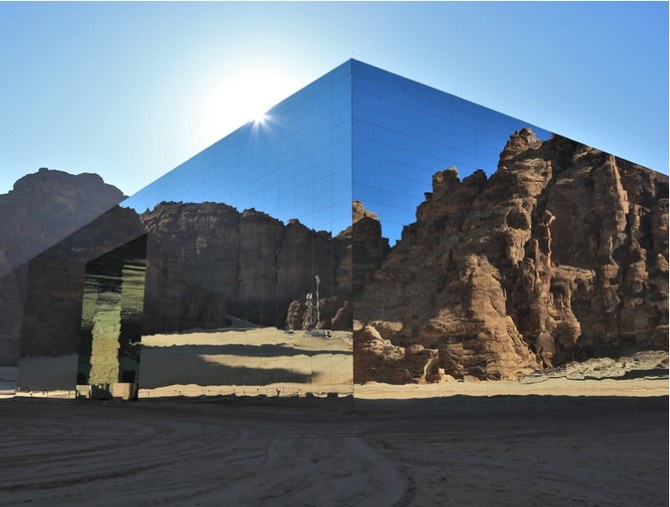
The GCC summit will take place at Maraya Concert Hall, a cube-shaped structure covered by more than 9,500 square meters of mirrors. (Supplied)
3 / 6
The Kingdom is hosting the GCC summit for the 10th year. AlUla Valley contains a number of historic sites that were once home to the ancient Dadan and Lihyan civilizations. The Royal Commission for AlUla has made it its mission to return it to its rightful place as a cultural oasis. (Photos/SPA,RCU)
4 / 6
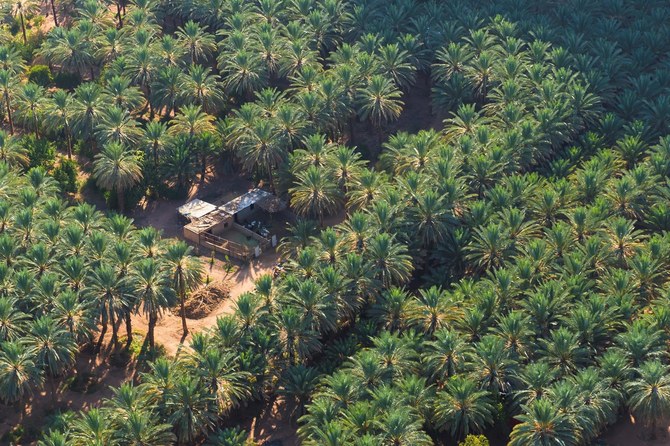
An oasis in AlUla. (SPA)
5 / 6
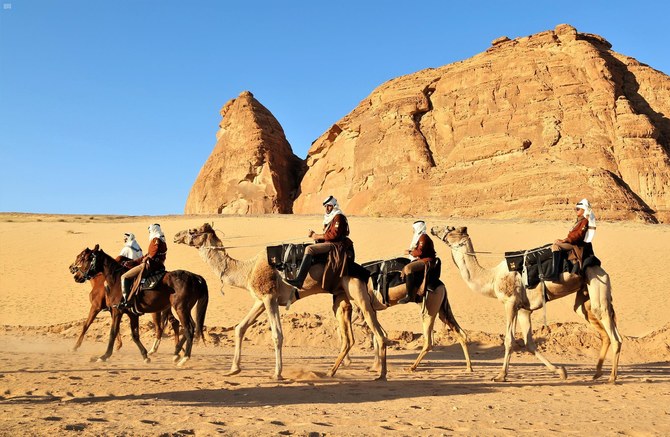
Camel rides across sandstone ancient sandstone architecture are among the attractions offered in AlUla to visitors. (SPA)
6 / 6
AlUla showcases the architectural feats of an ancient civilization. (SPA)
Short Url
Updated 04 January 2021
Follow

Saudi Arabia’s AlUla, city of ancient cultures, hosts 41st GCC Summit

  • AlUla Valley will host the event at Maraya Concert Hall, a cube-shaped structure covered by mirrors

JEDDAH: Saudi Arabia is set to host the 41st Gulf Cooperation Council (GCC) Summit at the ancient capital of historic civilizations, AlUla.

Once at the crossroads of antiquity, AlUla Valley will host the summit on Jan. 5 at Maraya Concert Hall, a cube-shaped structure covered by more than 9,500 square meters of mirrors reflecting the striking surrounding landscape.
Inaugurated in 2019 and dubbed the “mirrored wonder” due to the giant sheets of glass attached to the structure, the hall is located in Wadi Ashaar near the volcanic freeway, where it is surrounded by mountainous terrain. It can can seat up to 500 guests and has hosted a number of cultural events since its opening.
The location of the summit is significant. Tucked away in the shadows of the Hijaz Mountains that span the length of the western region, AlUla was once a city bustling with activity and its influence reached across the Arabian Peninsula and beyond.

Opinion

This section contains relevant reference points, placed in (Opinion field)

Today, AlUla is rediscovered and thriving, and the former trade capital of ancient kingdoms will hold one of the most important summits of the region, re-establishing its significance in the modern world.
In his weekly Cabinet meeting, King Salman said that he hoped the summit would succeed in promoting joint action and expanding cooperation and integration among member states. At King Salman’s request, the secretary-general of the GCC, Nayef Falah Al-Hajjraf, invited the leaders of the member states to the summit. The six member states of the GCC are Saudi Arabia, UAE, Bahrain, Oman, Qatar and Kuwait.

“The 41st summit marks the beginning of a new chapter for the GCC as it enters its fifth decade,” Al-Hajjraf said.
Sheikh Ali Al-Khalid Al-Sabah, the Kuwaiti ambassador to Saudi Arabia, underscored the significance of the 41st session of the Gulf summit due to the region’s recent political developments.

The envoy said that the summit hosted by the Kingdom would have a positive and fraternal atmosphere. The atmosphere among GCC leaders reflected “the spirit of responsibility and sincere belief in the importance of strengthening Gulf solidarity in facing common challenges and establishing peace and stability for the benefit” of the council.

BACKGROUND

Inaugurated in 2019 and dubbed the ‘mirrored wonder’ due to the giant sheets of glass attached to the structure, the hall is located in Wadi Ashaar near the volcanic freeway, where it is surrounded by mountainous terrain.

The region was facing great political and economic challenges, he said. GCC leaders would discuss these issues with a united vision that stemmed from their belief in a common destiny and a keenness to preserve the interests of the region’s countries and their peoples.
The Kingdom is hosting the GCC summit for the 10th year. AlUla Valley contains a number of historic sites that were once home to the ancient Dadan and Lihyan civilizations. The Royal Commission for AlUla has made it its mission to return it to its rightful place as a cultural oasis.
Inaugurated in 1981, the GCC Summit was hosted by Sheikh Zayed Al Nahayan in Abu Dhabi and paved the way for the region to enhance and strengthen cooperation and ties among member states.

The rebirth of AlUla
Hegra, ancient city of the Nabataeans in Saudi Arabia’s historic AlUla Valley, is emerging from the mists of time to take its rightful place as one of the wonders of the world

Enter


keywords


Canada eyes stronger ties with Saudi Arabia in 2026

Updated 7 sec ago
Follow

Canada eyes stronger ties with Saudi Arabia in 2026

  • Minister of International Trade Maninder Sidhu highlights connectivity, investment, and business opportunities between the two countries
  • More than 150 Canadian companies already active in Saudi Arabia as ties deepen in tech, mining, and defense

RIYADH: On the sidelines of OpenText’s regional headquarters opening in Riyadh, Canada’s Minister of International Trade Maninder Sidhu told Arab News that Saudi-Canadian cooperation will “speed up” under Prime Minister Mark Carney’s new government.

“You are going to see a quick speeding up of this relationship in 2026,” Sidhu said.

“This was my first visit to the region, and I did that on purpose because this region plays a vital role to Canada. This is about friendship and, of course, allyship,” he added.

During the visit, Sidhu will hold meetings in Qatar, Saudi Arabia, and the UAE with a Canadian senior-level business delegation.

When asked about the primary goal of the visit to the Kingdom, he said: “Well, for this visit, I think it is about connectivity — making sure conversations happen between the Saudi ecosystem, Saudi businesses, and Canadian businesses.

“But of course, government-to-government is very important to establish initiatives that enable more businesses.”

The minister noted that two-way trade between Saudi Arabia and Canada currently stands at $4 billion, with room to grow.

“Right now, I am focused on opening doors for businesses on both sides, but also to show collaboration. You are seeing a lot more coming. Companies set up their regional hubs here to create economic opportunities.”

During his visit, Sidhu met with Saudi Minister of Investment Khalid Al-Falih to discuss advancing Saudi-Canadian industry and investment partnerships and supporting both countries’ trade diversification efforts.

In November 2025, a high-level Saudi delegation led by Al-Falih visited Ottawa, during which both sides announced the reactivation of the Joint Economic Commission.

More than 150 Canadian companies are currently active in the Kingdom, in sectors such as artificial intelligence, mining, creative economy, healthcare, and defense.

Sidhu aims to use his visit to further business-to-business cooperation, both in the Kingdom and in Canada.

“We are also welcoming Saudi companies to come to Canada because the physical distance between our two nations is very wide, and we serve different regions,” Sidhu said.

“And so there is a lot of complementary opportunities that we should be looking at. In Canada, we have 15 trade agreements with 51 countries. We welcome Saudi companies to set up there, just as OpenText has done in the region, to continue collaborating.”

During the interview, the minister also highlighted mining as a key area of cooperation and said he hopes to further develop it.

Sidhu noted that more than 100 Canadian companies are participating in the Future Minerals Forum, running until Jan. 15 in Riyadh.

The minister also said that defense cooperation will expand, noting that while 40 Canadian companies participated in 2025, this year’s World Defense Show will welcome 80.

Sidhu also met with Minister of Communications and Information Technology Abdullah Al-Swaha to discuss strengthening bilateral partnerships in AI, innovation, and advanced technologies, supporting Saudi Arabia’s goal to become a global hub for AI and the digital economy.

Closing the interview, Sidhu noted the many similarities between the two countries: “We (Saudi Arabia and Canada) are roughly 40 million people, and we have a lot of alignment in education, healthcare, and tourism.”