


RIYADH: A youth-led cultural exchange founded by a 14-year-old student is returning to Riyadh next year.
The Diamond Repurposing Journey program, part of the Superbund Alpha Project founded by student Alia Kong, aims to build bridges between students in Hong Kong, Canada and Saudi Arabia.
The initiative has collaborated with the Saudi Tourism Authority and held strategic meetings with key Saudi stakeholders, including the Al-Hokair Group.
Unlike traditional exchange programs that focus on classroom-based learning or sightseeing, the Superbund initiative introduces what it describes as the “Gen Alpha Connections Exchange,” an immersive virtual experience hosted in the metaverse.
In April 2026, the program will bring Generation Alpha students from Hong Kong and Canada to Riyadh, after having previously hosted exchanges virtually.
The April visit to Riyadh has been carefully planned to blend cultural immersion, technology and cross-border creativity.
Students will participate in an “Interesting Human” experience, creating personalized digital avatars that reflect their second identities on the Superbund Bonding Space platform.
The program includes 3D design, digital storytelling, intercultural dialogue, clean-energy workshops, and Arabic–Chinese language exchanges aimed at strengthening mutual understanding.
Participants are also expected to engage with major technology and innovation platforms such as LEAP and DeepFest 2026, alongside a friendly mock esports challenge at the Esports World Cup venue.
Cultural exploration is central to the exchange, with visits planned to Diriyah, Al-Masmak Fortress, traditional souqs and desert destinations known for camel riding, offering students an authentic connection to Saudi heritage.
Organizers say the initiative enhances tourism by integrating virtual cultural showcases and metaverse-based project creation.
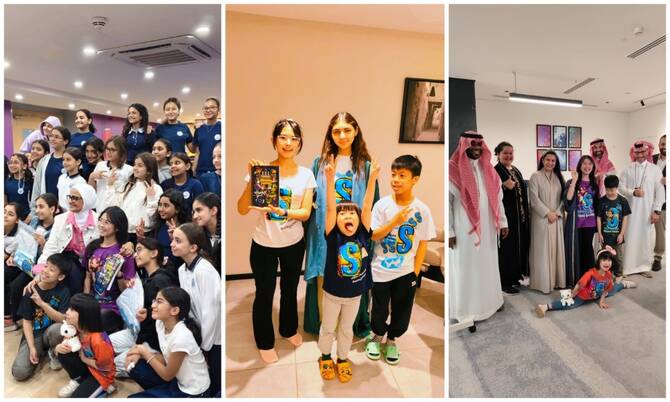
The program recently engaged students at Modern Global International School, owned by the Al-Hokair Group, after the Superbund team was introduced by Majed Al-Hokair.
Reflecting on the visit, Soha Zidan, academic director at MGIS, said: “The future isn’t coming … Gen Alpha is building it with Superbund.
“We were thrilled to welcome Superbund to MGIS, where they delivered an inspiring talk about the Gen Alpha virtual society.
“Our students explored how young creators can innovate, connect, and express themselves in the digital world.”
The collaboration with the STA was initiated after the Superbund team met Hamza Jeddawi, chief domestic tourism officer at the authority.
Following presentations and discussions, both sides identified a shared vision aligned with Saudi Vision 2030, leading to the formalization of the partnership.
Jeddawi told Arab News: “We are thrilled to see global youth engaging with Saudi through a forward-looking exchange that strengthens cultural understanding and builds genuine connections.
“The initiative delivers shared value: Participants gain fresh perspectives on our fast-evolving tourism landscape, while the sector benefits from a generation inspired to explore and engage with Saudi’s diverse cultural and tourism dimensions.
“The growing interest in Saudi culture, creativity, and innovation reflects the remarkable transformation our tourism sector is witnessing under Saudi Vision 2030.
“As such, we at STA remain committed to championing initiatives that deepen global connections and open meaningful opportunities for young generations.”
Having already presented to international schools under the MENA Education Co., the Superbund Alpha Project has received an enthusiastic response from both students and educators, who have praised its cross-cultural and technology-driven learning value and expressed excitement about collaborating with peers from Hong Kong and Canada.
The initiative hosted a virtual cultural exchange in August involving 76 students from Hong Kong and Riyadh, guided by five speakers of different ages.
It is led by young founders and ambassadors, including Kong; ambassador Elyse Chow, 7; ambassador and co-founder Ryder Chow, 11, based in Canada; and Zeina Rabah, 16, the project’s prodigy in Saudi Arabia.



