

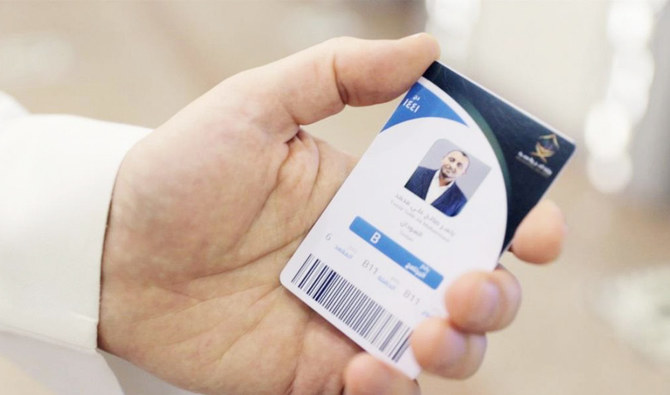

Hajj Ministry launches new smart cards for pilgrims

1 / 4
The smart cards will be managed via a unified control center for all services. (SPA)
2 / 4
The smart cards will be managed via a unified control center for all services. (SPA)
3 / 4
The smart cards will be managed via a unified control center for all services. (SPA)
4 / 4
The smart cards will be managed via a unified control center for all services. (SPA)
Short Url
Updated 29 December 2020
Follow

Hajj Ministry launches new smart cards for pilgrims

  • The launch of the smart cards follows the distribution of 50,000 smart cards to pilgrims during Hajj two years ago

JEDDAH: New smart cards will be provided for pilgrims in the coming Hajj season as part of the Ministry of Hajj and Umrah’s efforts to ease services for worshippers using advanced tech features.
The ministry launched the Hajj smart platform and card as part of this year’s Makkah Cultural Forum, held under the title: “How to be an example in the digital world.”
The smart ID cards will contain barcodes holding personal, medical, and residence information, and will also help guide pilgrims to their residences in Mashaer through kiosks distributed throughout the area.
The smart card relies on near-field communication technology, which makes the card readable via the self-service devices deployed in the Holy Mashaer.
The launch of the smart cards follows the distribution of 50,000 smart cards to pilgrims during Hajj two years ago. The smart cards will be managed via a unified control center for all services with the participation of government and civil agencies.


What makes the Taif Rose such a precious fragrance product?

Perfume artisan involvement aligns with Jazan Festival’s initiative repositioning traditional crafts as dynamic. (SPA)
Updated 09 January 2026
Follow

What makes the Taif Rose such a precious fragrance product?

  • These farms produce nearly 550 million roses annually, all harvested during a brief season of no more than 45 days, from early March to the end of April

TAIF: Taif roses, renowned for their exceptional aroma and the meticulous care required in cultivation, harvesting, and processing, are among the Kingdom’s most valuable natural perfume products and stand out as prominent agricultural and cultural symbols deeply connected to the region’s heritage and tourism.

Taif rose farms, numbering over 910 and spread across Al-Hada, Al-Shafa, Wadi Muharram, Al-Wahat, Al-Wahit, and Wadi Liya, are home to approximately 1,144,000 rose bushes covering about 270 hectares of agricultural land. 

FASTFACT

Taif rose farms, numbering over 910 and spread across Al-Hada, Al-Shafa, Wadi Muharram, Al-Wahat, Al-Wahit, and Wadi Liya, are home to approximately 1,144,000 rose bushes covering about 270 hectares of agricultural land.

These farms produce nearly 550 million roses annually, all harvested during a brief season of no more than 45 days, from early March to the end of April.

This harvest yields around 20,000 tolas of Taif rose oil. Producing a single tola requires approximately 12,000 roses, which are picked manually at dawn and distilled within 24 hours to preserve the purity and quality of the scent before reaching the market.