



DAUR, SINDH: Winter is the sweetest season for sugar workers in Pakistan’s south, bringing a harvest and livelihood to its rural areas, and to South Asian dining tables one of the most beloved condiments — gur.
Gur, or jaggery, is made from sugarcane juice boiled to a sweet syrup, set, and later formed into dark yellow balls. They are the source of sweetness and flavor of many a comfort food in the Indian Subcontinent. Without gur, there is no jalebi, motichoor ladoo, let alone busri — the traditional butter bread of Sindh — or tahiri, a favorite sweet rice dish that is the region’s winter delight.
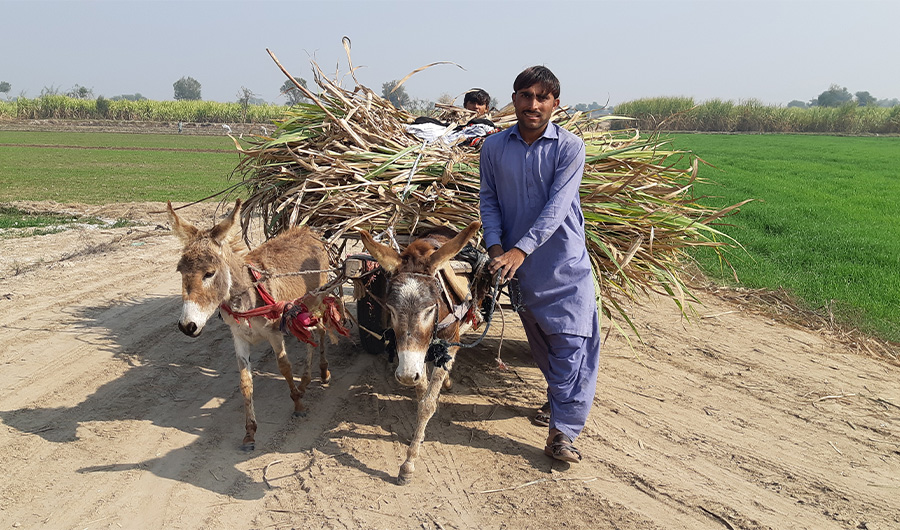
A man pushes a donkey-cart laden with fresh sugarcane crop near Daur town in Shaheed Benazirabad district in Pakistan’s Sindh on December 23, 2020. Harvest season for sugarcane in Sindh runs from December through January. (AN photo by Zulfiqar Kunbhar)
When the harvest season arrives to Daur in Shaheed Benazirabad district in the central part of Sindh, small production plants are installed at sugarcane fields to produce gur. Cane is cut, cleaned, and workers bring it for crushing to extract the juice.

A man crushes sugarcane to produce fresh juice at a jaggery plant near Daur town in Shaheed Benazirabad district in Pakistan’s Sindh on December 23, 2020. (AN photo by Zulfiqar Kunbhar)
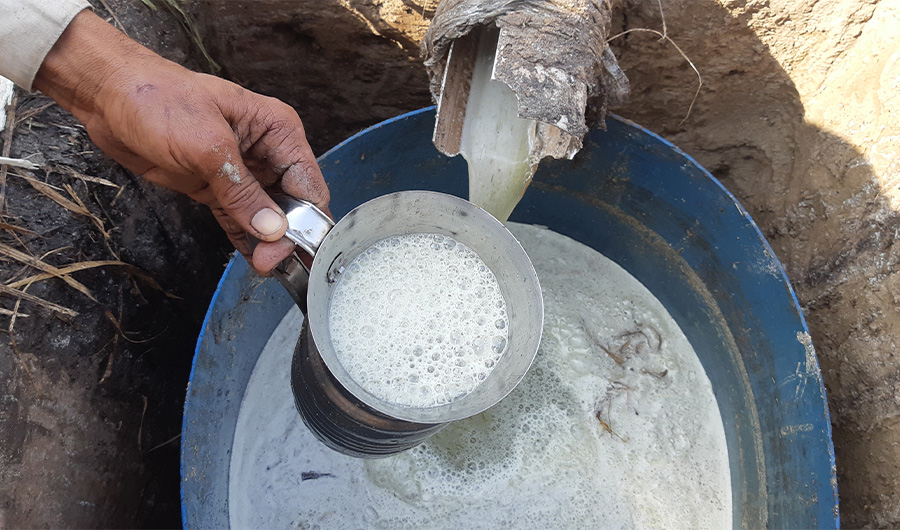
A worker collects fresh sugarcane juice in a vessel at a jaggery plant near Daur town in Shaheed Benazirabad district in Pakistan’s Sindh on December 23, 2020. (AN photo by Zulfiqar Kunbhar)
Collected in large vessels, the liquid is then brought to the side for long heating on a furnace.
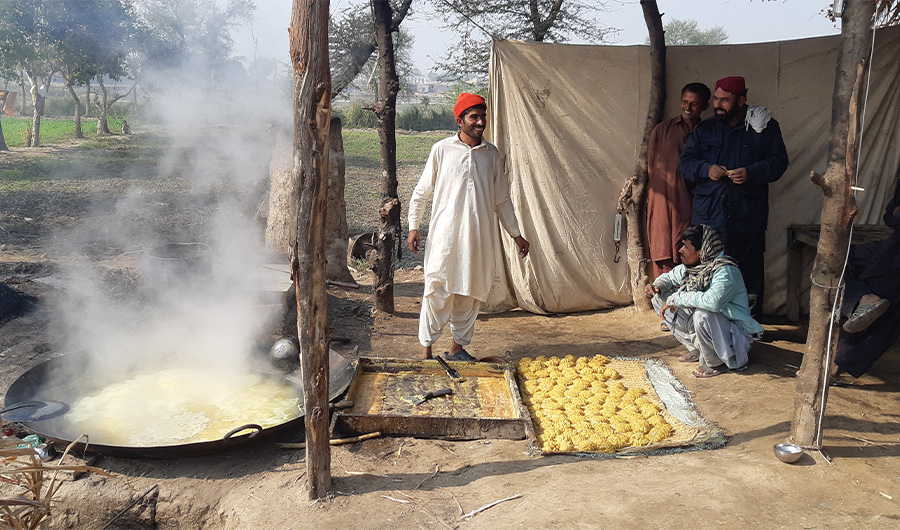
A private jaggery plant near Daur town in Shaheed Benazirabad district in Pakistan’s Sindh on December 23, 2020. (AN photo by Zulfiqar Kunbhar)
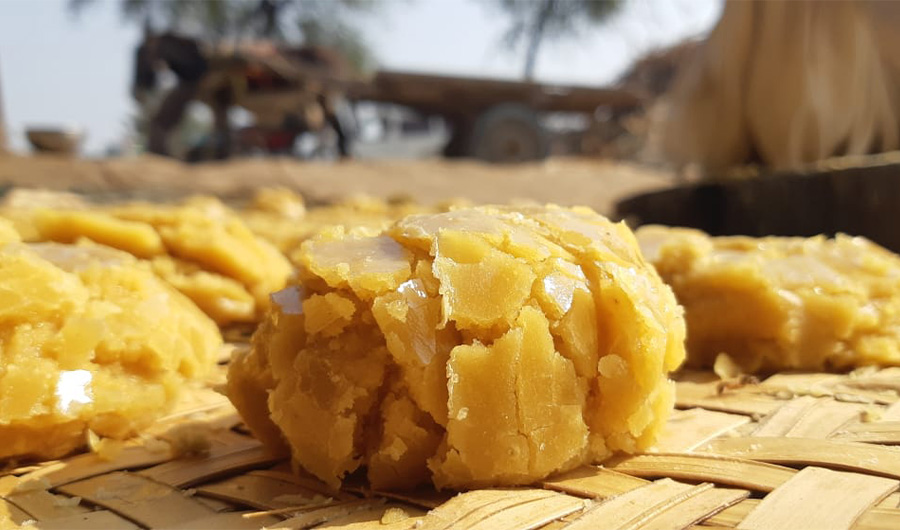
Gur balls are left for cooling at a jaggery plant near Daur town in Shaheed Benazirabad district in Pakistan's Sindh on December 23, 2020. (AN photo by Zulfiqar Kunbhar)
Sugar workers say that gur is “meetha” (sweet) and it brings “dihari” (wage), even though only during the harvest season that runs from December through January.
“For us laborers it is like ‘meethi dihari’ (sweet livelihood),” one of the men harvesting cane on the outskirts of Daur told Arab News.
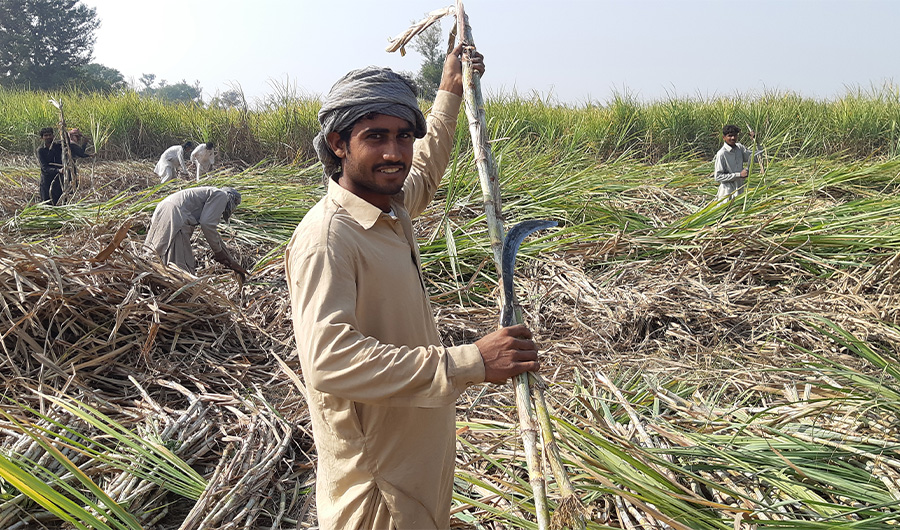
A laborer poses for a photo while harvesting sugarcane near Daur town in Shaheed Benazirabad district in Pakistan’s Sindh on December 23, 2020. (AN photo by Zulfiqar Kunbhar)
More than 70 percent of the world’s jaggery is produced in South Asia, mainly in India and Pakistan. Although much healthier than processed sugar and indispensable for the cuisine that is popular across the globe, gur is produced mostly for local consumption.
If it travels abroad, it goes mostly to Gulf countries in the luggage of Pakistani expats missing the flavor of home, according to Muhammad Chuttal Khoso who owns an 15-acre sugarcane field near Daur and has been making gur for over three decades.
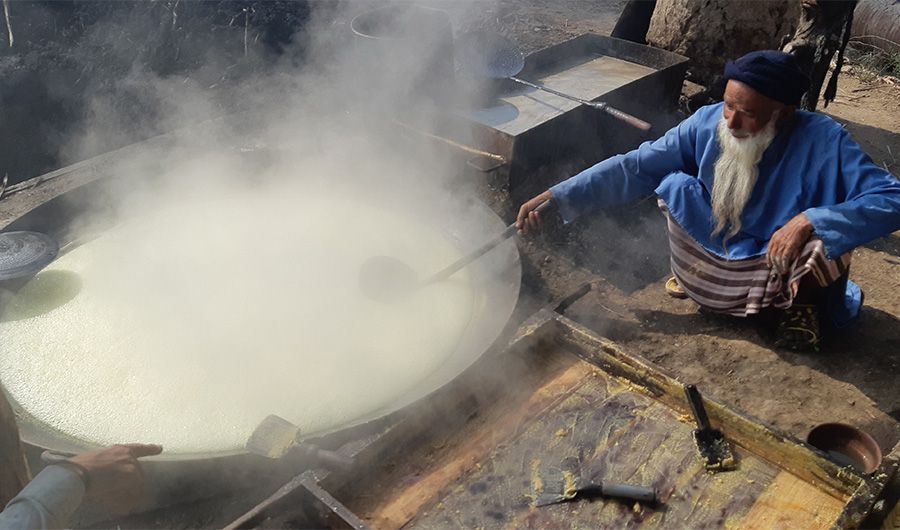
Muhammad Chuttal Khoso, 57, stirs thick sugarcane syrup at his jaggery plant near Daur town in Shaheed Benazirabad district in Pakistan’s Sindh on December 23, 2020. (AN photo by Zulfiqar Kunbhar)
“Despite limited luggage allowed by airlines, expats are keen to carry gur during air travel creating some space sometimes extending to few kilograms to distribute as souvenirs to Pakistani friends there.”
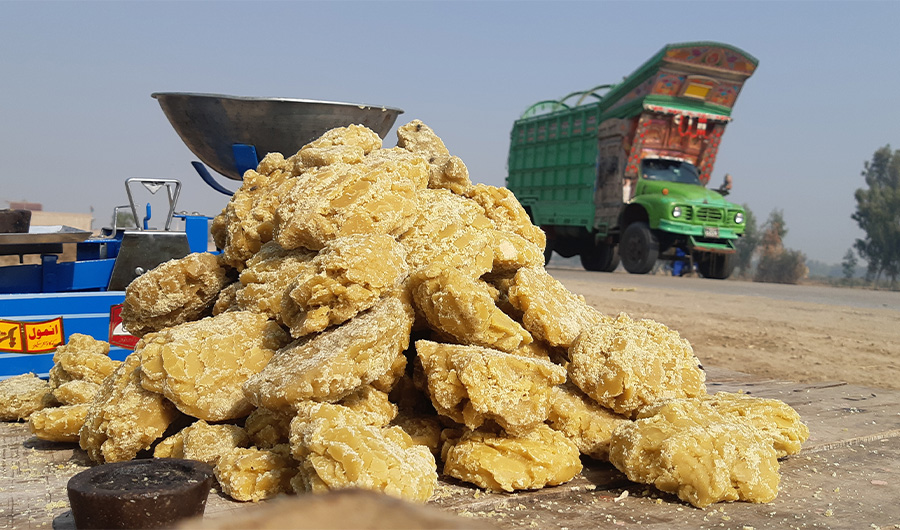
Fresh gur is showcased for roadside selling near Daur town in Shaheed Benazirabad district in Pakistan’s Sindh on December 23, 2020. At Rs150 ($1) per kilogram it costs nearly double the price of white sugar. (AN photo by Zulfiqar Kunbhar)


