US agri firm Cargill acquires 25% stake in Pakistani bulk terminal 

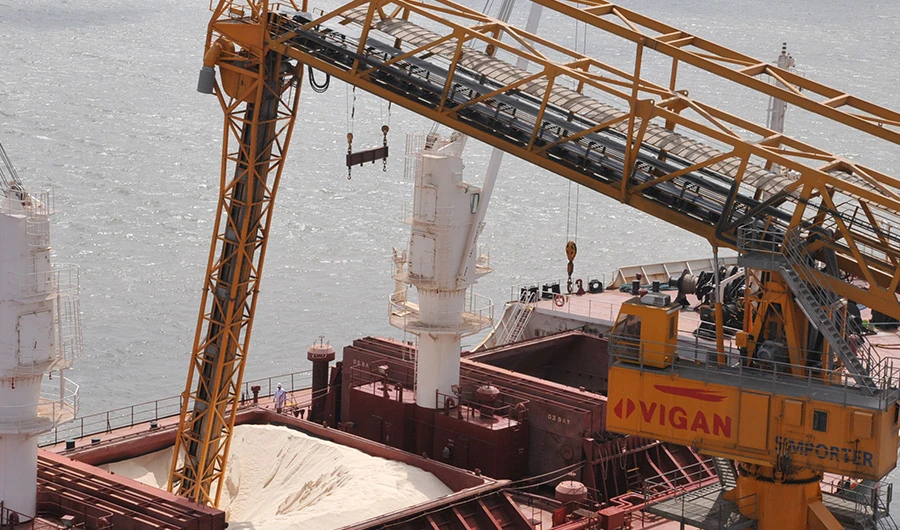
This undated photo shows a marine terminal of Fauji Akbar Portia in Port Mohammad Bin Qasim, Karachi, Pakistan (Photo Courtesy FAP)
Short Url
Updated 02 March 2021
Follow

US agri firm Cargill acquires 25% stake in Pakistani bulk terminal 

  • Cargill has made its first investment in Pakistan out of a promised $200 million by acquiring minority stake in Fauji Akbar Portia Marine Terminal
  • FAP facility at Karachi’s Port Bin Qasim is a fully automated grain and fertilizer terminal capable of handling four million metric tons of dry cargo a year

KARACHI: American agricultural company Cargill has made its first investment in Pakistan out of a promised $200 million by acquiring 25 percent stakes in Fauji Akbar Portia Marine Terminal (FAP), Pakistani officials said this week.
The FAP facility at Karachi’s Port Bin Qasim is a fully automated grain and fertilizer terminal capable of handling four million metric tons of dry cargo per annum.
Last week, Cargill and the Pakistan army-run Fauji Foundation signed a long term strategic partnership, under which the American firm has acquired a minority equity stake in FAP, a bulk terminal, and will handle grains, cereals, rice, oilseeds and fertilizers at Karachi city’s Port Qasim.
“Cargill has acquired 25% shares of the FAP to expand the operations of the terminal to handle more cargo,” Mahmood Moulvi, an adviser to the ministry of maritime affairs, told Arab News on Tuesday.
FAP, which started operations in 2010, is a joint venture between Fauji Foundation, Akbar Group of Companies and National Bank of Pakistan (NBP). Cargill is one of the largest importers of soybean, palm oil and palm oil products into Pakistan.
In a meeting with Prime Minister Imran Khan in mid-January 2019, an executive team of Cargill had announced a $200 million investment in Pakistan over the next five years. FAP’s equity purchase is part of the promised investment, according to an official at Cargill Pakistan who declined to be named as he was not authorized to speak to the media on the matter.
“It is the first investment which the company had promised last year,” the official said. “It will augment the company’s investment strategy of expansion including increasing handling and storage capacity. More investment will be made in the future as the company is exploring options in commodity trading, feed milling, dairy and poultry processing, oilseed crushing.”
Cargill, headquartered in Minneapolis, United States, has a presence in over 70 countries. Its global expertise, other than in commodity trade, lies in areas including farming, feed milling, meat processing, oilseed crushing. Cargill owns and operates, either wholly or partly, more than 30 ports around the world, of which four are in Asia.
“To conclude this transaction at this point in time is a clear signal and validation of the Pakistan opportunity seen by the world’s leading player in agriculture commodities,” Waqar Malik, chairman of Fauji Foundation said in a statement, adding ”With its global port experience, Cargill will help drive greater operational efficiencies for the port to reach its potential of handling agri-cargo safely and efficiently.”

IMF board to approve Pakistan reviews today ‘if all goes well,’ say officials

Updated 4 sec ago
Follow

IMF board to approve Pakistan reviews today ‘if all goes well,’ say officials

  • IMF’s executive board is scheduled to meet today to discuss the disbursement of $1.2 billion
  • Economists say the money will boost Pakistan’s forex reserves, send positive signals to investors

KARACHI: The International Monetary Fund’s (IMF) executive board is scheduled to meet today, Monday, to approve the release of about $1.2 billion for Pakistan under the lender’s two loan facilities, said IMF officials who requested not to be named.

The IMF officials confirmed the executive board was going to decide on the Fund’s second review under the $7 billion Extended Fund Facility (EFF) and first review under the $1.4 billion Resilience and Sustainability Facility (RSF), a financing tool that provides long-term, low-cost loans to help countries address climate risks.

“The board meeting will be taking place as planned,” an IMF official told Arab News.

“The board is on today yes as per the calendar,” said another.

A well-placed official at Pakistan’s finance ministry also confirmed the board meeting was scheduled today to discuss the next tranche for Pakistan.

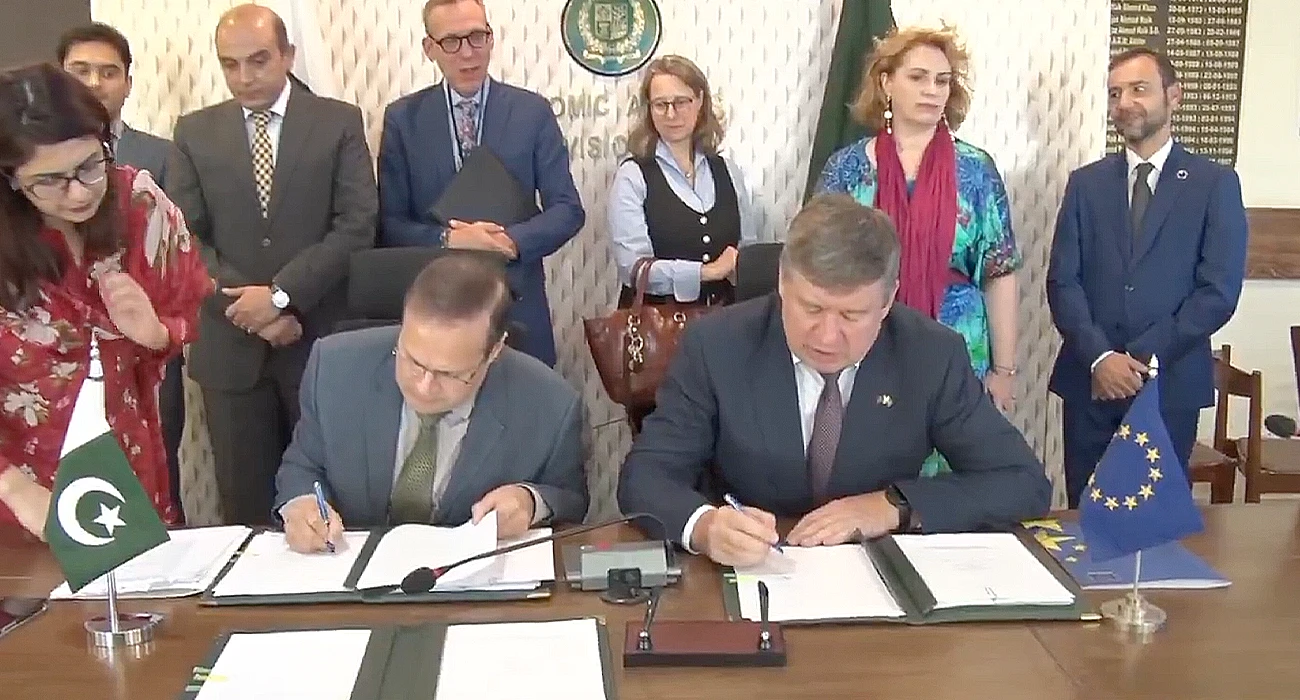
The IMF executive board’s meeting comes nearly two months after a staff-level agreement (SLA) was signed between the two sides in October.

Procedurally, the SLAs are subject to approval by the executive board, though it is largely viewed as a formality.

“If all goes well, the reviews should pass,” said the second IMF official.

On approval, Pakistan will have access to about $1 billion under the EFF and about $200 million under the RSF, the IMF said in a statement in October after the SLA.

The fresh transfer will bring total disbursements under the two arrangements to about $3.3 billion, it added.

Experts see smooth sailing for Pakistan in terms of the passing of the two reviews, saying the IMF disbursements will help the cash-strapped nation to strengthen its balance of payments position.

Samiullah Tariq, group head of research at Pakistan Kuwait Investment Company Limited, said the IMF board’s approval will show that Pakistan’s economy is on the right path.

“It obviously will help strengthen [the country’s] external sector, the balance of payments,” he told Arab News.

Until recently, Pakistan grappled with a macroeconomic crisis that drained its financial resources and triggered a balance of payments crisis.

Pakistan has reported financial gains since 2022, recording current account surpluses and taming inflation that touched unprecedented levels in mid-2023.

Economists also viewed the IMF’s bailout packages as crucial for cash-strapped Pakistan, which has relied heavily on financing from bilateral partners such as Saudi Arabia, China and the United Arab Emirates, as well as multilateral lenders.

Saudi Arabia, through the Saudi Fund for Development, last week extended the term of its $3 billion deposit for another year to help Pakistan boost its foreign exchange reserves, which stood at $14.5 billion as of November 28, according to State Bank of Pakistan statements.

“In our view this [IMF tranche] will be approved,” said Shankar Talreja, head of research at Karachi-based brokerage Topline Securities Limited.

“This will help strengthen reserves and will eventually help a rating upgrade going forward,” he said.

The IMF board’s nod, Talreja said, would also send a signal to the international and local investors regarding the continuation of the reform agenda by Pakistan’s government.