

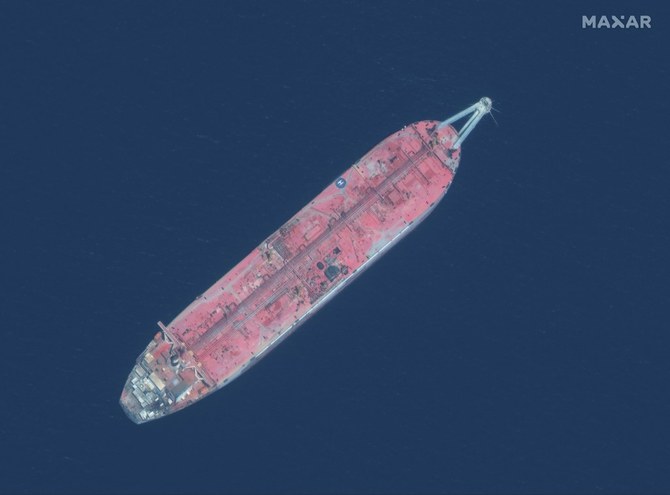

LONDON: A decaying tanker moored off Yemen’s Houthi-controlled coast is on the verge of creating one of the world’s biggest oil spills, scientists have warned.
The Safer tanker holds one million barrels of oil — four times the amount that leaked from the Exxon Valdez in the catastrophic 1989 spill in Alaska.
The Houthi militia has repeatedly blocked experts from accessing the ship, which was abandoned in 2015.
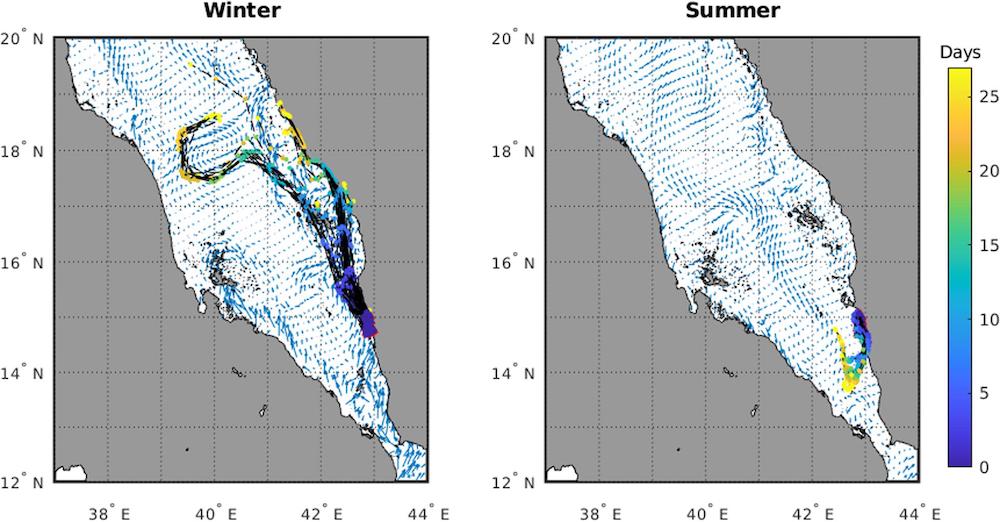
Models showing the spread of oil from a leak from the Safer in both winter and summer. (Frontiers in Marine Science)
A paper published on Tuesday by a group of international experts warned that unless action was taken immediately, there would be a “regional environmental and humanitarian disaster.”
The scientists developed a computer model of how the oil would disperse if a major leak unfolds during winter. Currents at this time of year would spread the oil much further along the Red Sea coast than in summer. The tanker, which was used as a storage and offloading vessel, is moored off the coast of Hodeidah, a key battleground in Yemen’s conflict between the Iran-backed Houthis and the internationally recognized government.
“The time is now to prevent a potential devastation to the region’s waters and the livelihoods and health of millions of people living in half a dozen countries along the Red Sea’s coast,” said Karine Kleinhaus, an associate professor of the School of Marine and Atmospheric Sciences at Stony Brook University, who led the team of scientists. “If a spill from the Safer is allowed to occur, the oil would spread via ocean currents to devastate a global ocean resource, as the coral reefs of the northern Red Sea and Gulf of Aqaba are projected to be among the last reef ecosystems in the world to survive the coming decades.”
She said that the region’s reefs can survive in much warmer waters compared to other coral around the world, which is being wiped out by rising temperatures due to climate change.
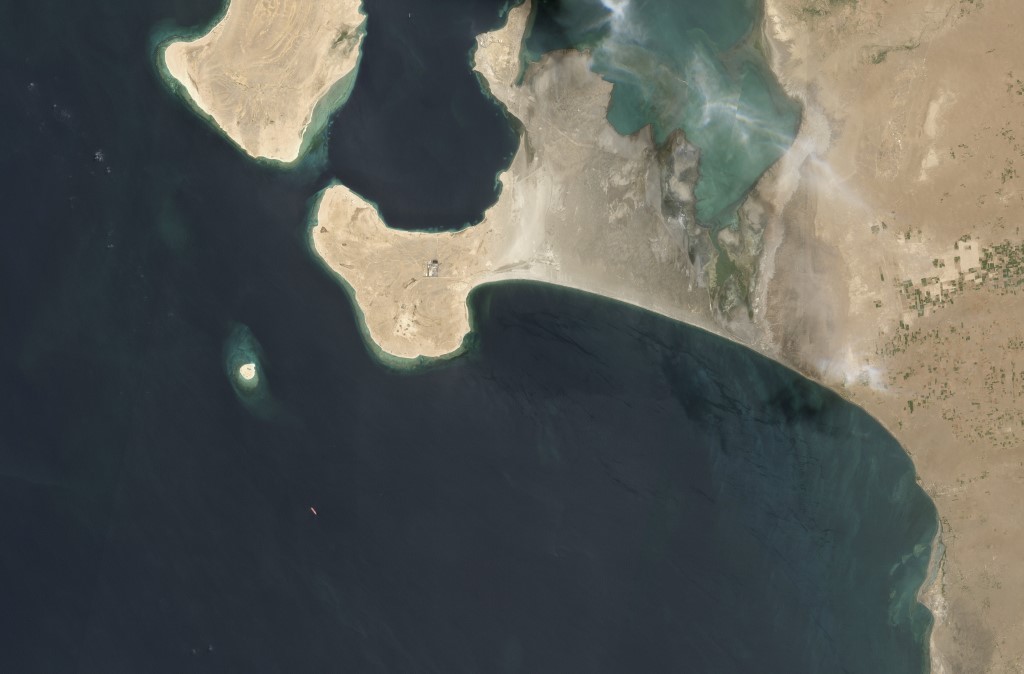
The Safer is moored off the coast of a Houthi controlled area of Yemen. The militia has denied international experts access to the ship. (AFP/Maxar)
The paper, published by “Frontiers in Marine Science,” called for the UN and its International Maritime Organization to take emergency action to remove the oil despite regional political tensions.
“Officials should act immediately to secure the livelihood of the Red Sea’s peoples and the world’s largest marine refuge from climate change,” the paper said.
According to the scientists, no one has yet accessed the vessel despite the UN saying last month that it had reached a deal with the Houthis for its experts to go onboard.
In May, water breached the ship’s hull and entered the engine room and oil spots were seen near the tanker in September.
“The Safer has been stranded and deteriorating off Yemen’s coast since 2015, giving the world the most advanced warning ever of a major oil spill,” the scientists said. “But this unique opportunity is being squandered.”
Last week, a US official said that the Houthis refusal to allow access to the tanker was similar to the behavior of a terrorist goup.
The militia, which sparked the Yemen war in 2014 when it seized the capital Sanaa, has been accused of a string of attacks against shipping in the Red Sea.
The group was widely suspected in Tuesday’s attack on a ship as it unloaded fuel at Jeddah port. A small boat laden with explosives drove into the Singapore-flagged BW Rhine, sparking an explosion and fire but causing no casualties.


