

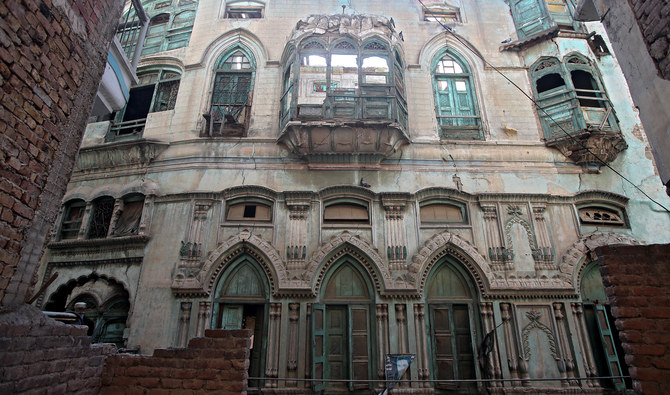

PESHAWAR: Authorities in northwestern Pakistan have approved a plan to buy the dilapidated ancestral homes of two Bollywood legends and turn them into museums, an official confirmed on Sunday.
The two houses in Peshawar, Khyber Pakhtunkhwa province, stand next to Qissa Khwani, the city's oldest and most famous road known as the "Street of Storytellers," and belonged to the families of Bollywood greats Raj Kapoor and Dilip Kumar who were born and raised there. They migrated to India before Pakistan was created from the British Raj in 1947.
“We are now in process to arrange the amount to acquire the buildings. We plan conservation and rehabilitation of the two buildings to turn them into museums to highlight the connection Bollywood has with Peshawar,” Dr. Abdul Samad, director of archeology and museums in the province, told Arab News.
#LISTEN: As @KPDOAMOfficial prepares to buy, save, and restore ancestral homes of two Bollywood legends, Dr. Abdul Samad highlights the plan to covert the abodes into a museum || #RajKapoor @TheDilipKumar
-
Read Special by: @RehmatMehsuds: https://t.co/GSOn61Qinx pic.twitter.com/0dj3cnm3GC— Arab News Pakistan (@arabnewspk) December 14, 2020
The Peshawar district administration, he added, estimates the total value of the houses at Rs24 million ($150,000). The price of Kumar’s house has been estimated at Rs8 million, while of Kapoor’s at Rs15 million.
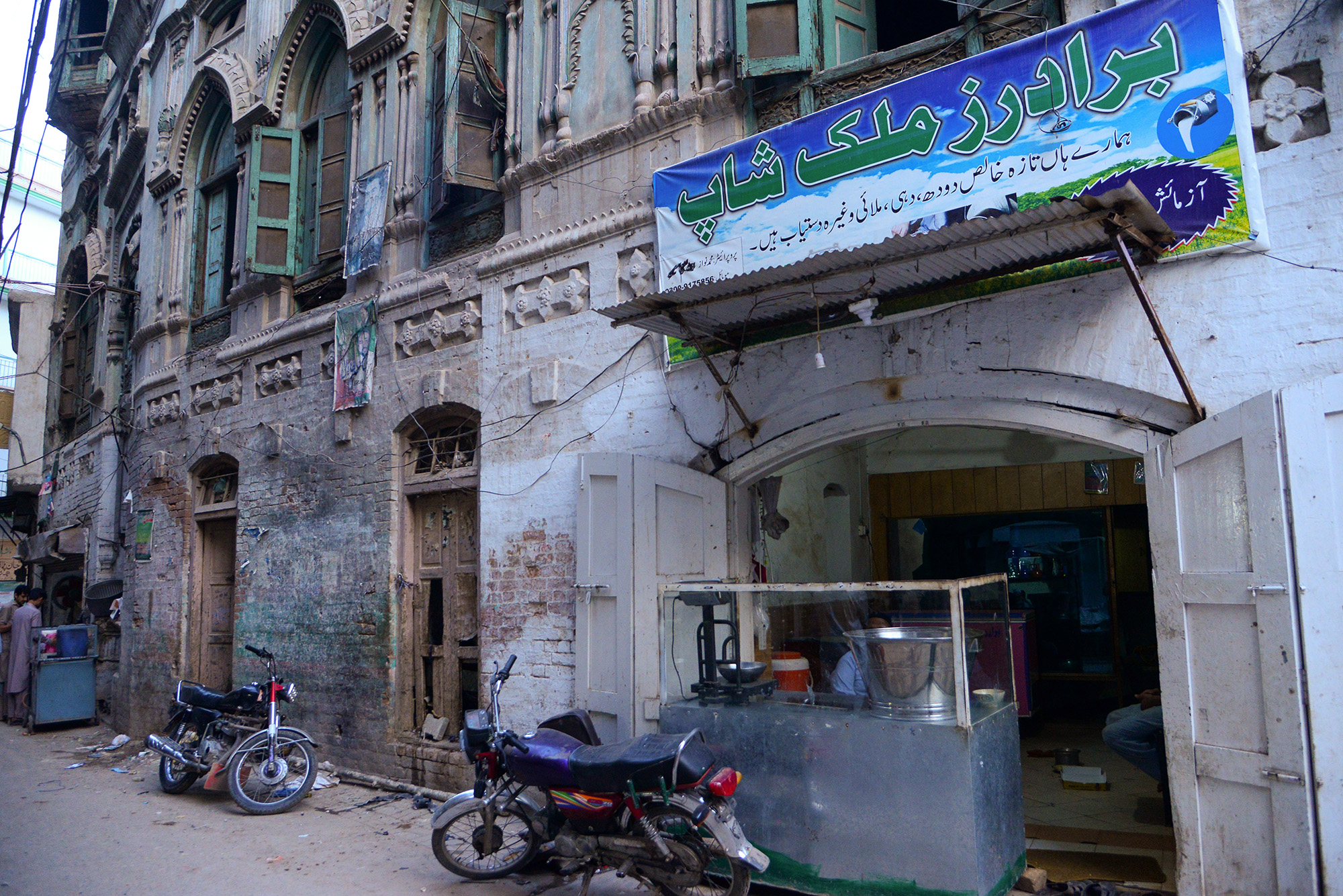
The facade of Raj Kapoor’s ancestral home in Peshawar, Khyber Pakhtunkhwa on Sept. 29, 2020. The provincial archaeology department has vowed to buy the mansion, restore it and convert into a museum. (AN photo/File)
The provincial archeology and museums directorate has declared the houses a national heritage site.
Samad said the administration was not directly in touch with the families of the Bollywood stars, but Kumar's wife was reportedly "happy" about the development and "contacting people here."
The current owners of the houses were planning to demolish them and build commercial centers in their place. The archeology department stopped the process under the Antiquity Act 2016 in late September, prompting Kumar, 97, who lives in Mumbai, to turn to Twitter and request those in Peshawar to share their photographs of the house.
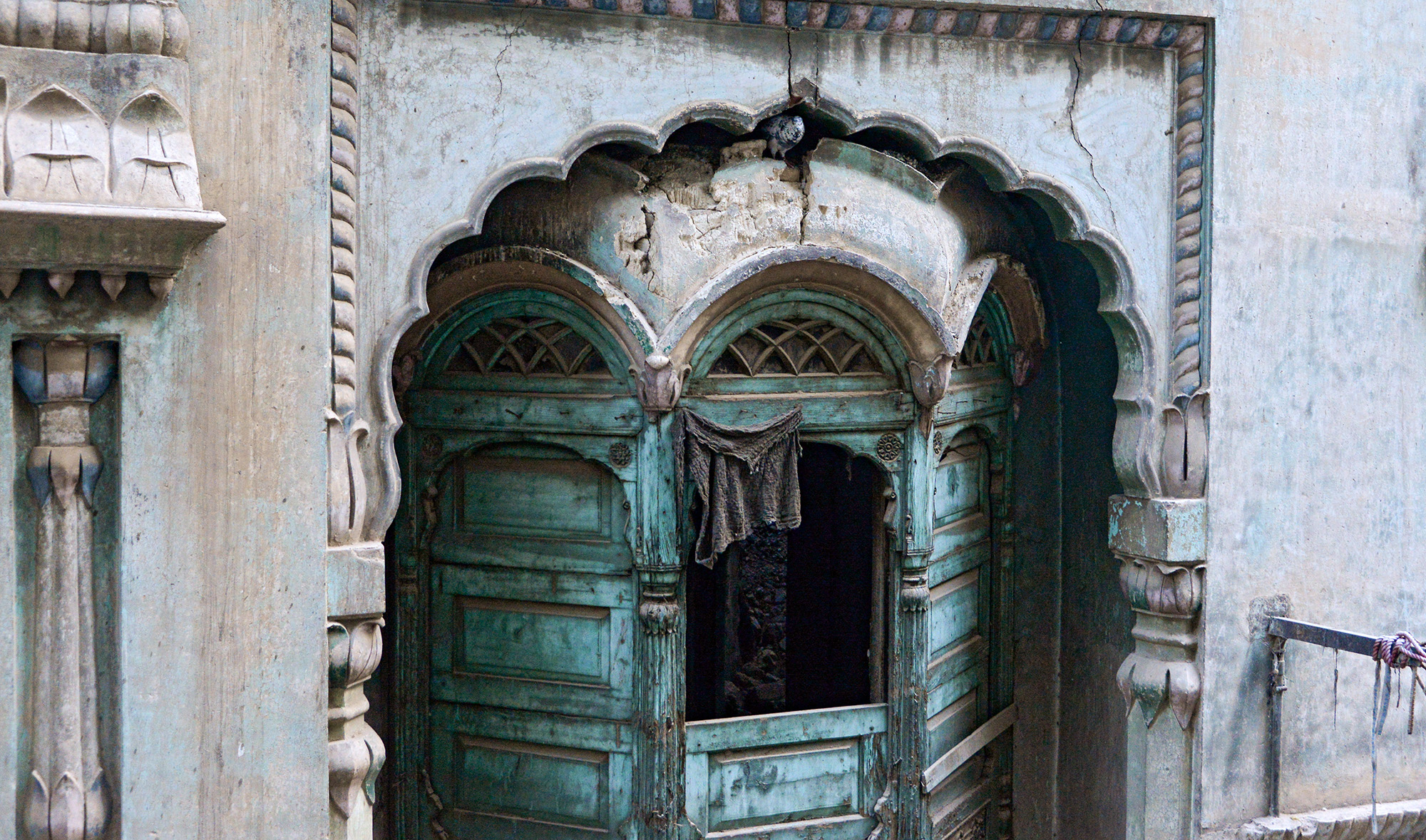
Peshawar locals say the Kapoor haveli, with its majestic facade and jharokhas — overhanging enclosed balconies — was built between 1916 and 1918 by Raj Kapoor's grandfather, Dewan Basheswarnath Singh Kapoor. (AN photo/File)
Kapoor, who was born in Peshawar in 1924 passed away in New Delhi in 1988.
Sayed Abdullah Shah, a government servant who lives near Kapoor’s ancestral house, told Arab News that the building's condition was deteriorating, and it is high time it was renovated.
"This is a great heritage for locals and foreigners equally and the government starts to rebuild it into its old shape without further delay. We observe the building getting damaged by each passing day,” he said. "Its preservation will attract a large number of visitors."
The Kapoor haveli, with its majestic facade and jharokhas — overhanging enclosed balconies — was built between 1916 and 1918 by Kapoor's grandfather, Dewan Basheswarnath Singh Kapoor.
Amir Nawaz, an octogenarian goldsmith who resides in the congested Dhakki Munawar Shah area, next to Qissa Khwani, told Arab News in September that in the late 1980s, Kapoor’s younger brother, Shashi Kapoor, and son Rishi visited Peshawar and took with them some soil from the house which was then laid into the cornerstone of the family's house in India.


