

Polio survivor makes athletic dreams come true for Pakistani wheelchair users

Short Url
Updated 29 March 2021
Follow

Polio survivor makes athletic dreams come true for Pakistani wheelchair users

  • Unable to afford a sports wheelchair, Muhammad Ayub made one himself and his design immediately attracted attention of disabled athletes
  • Estimates of the number of people living with disabilities in Pakistan wildly vary from 3.3 million to 27 million

KARACHI: With no control of his legs after childhood polio, Muhammad Ayub would crawl on the grass to play cricket during his school years in the early 1990s. Still determined to do sports, two decades later he started designing special wheelchairs that make it possible.
Born in Mirpur Khas in Pakistan's southeast Sindh province, Ayub, now 37, moved to Karachi in 1999, where he would attend Shifa School for Special Education.
"In those days there was no concept of wheelchairs for sportsmen. We were away from the concept of wheelchair. We would play while crawling on the grass," he told Arab News at his home in the city's Korangi area last week.
Ayub and other Shifa Shcool students would try using normal wheelchairs, but barriers persisted.
"We played a lot but would always face difficulty in playing. We would face problems in moving the bat and blowing. The hand would touch (the handle) while moving.”
It was only in 2013, when he saw someone using a custom-made sports wheelchair and was sure that his athletic dreams would now come true, until he learnt that it cost Rs15,000 ($94), a sum he could not afford.
But giving up was not an option for Ayub. He said: "I thought if they could make it, then I could also make it!"
After six months, with a budget of Rs7,000, he made a sports wheelchair which immediately made the rounds on social media when he posted its photo.
"I got orders from Ghotki, Islamabad and Lahore. They are still using those wheelchairs,” he said.
In 2017, when the Pakistan Tennis Federation decided to introduce wheelchair tennis, it also turned to Ayub to make them for disabled players.
"We had four wheelchairs so Para Sports Pakistan secretary Dr. Nadia Razzaq helped us and introduced some people to us, who were already in the field. Muhammad Ayub was one of them,” Khalid Rehmani, vice president of the federation, told Arab News.
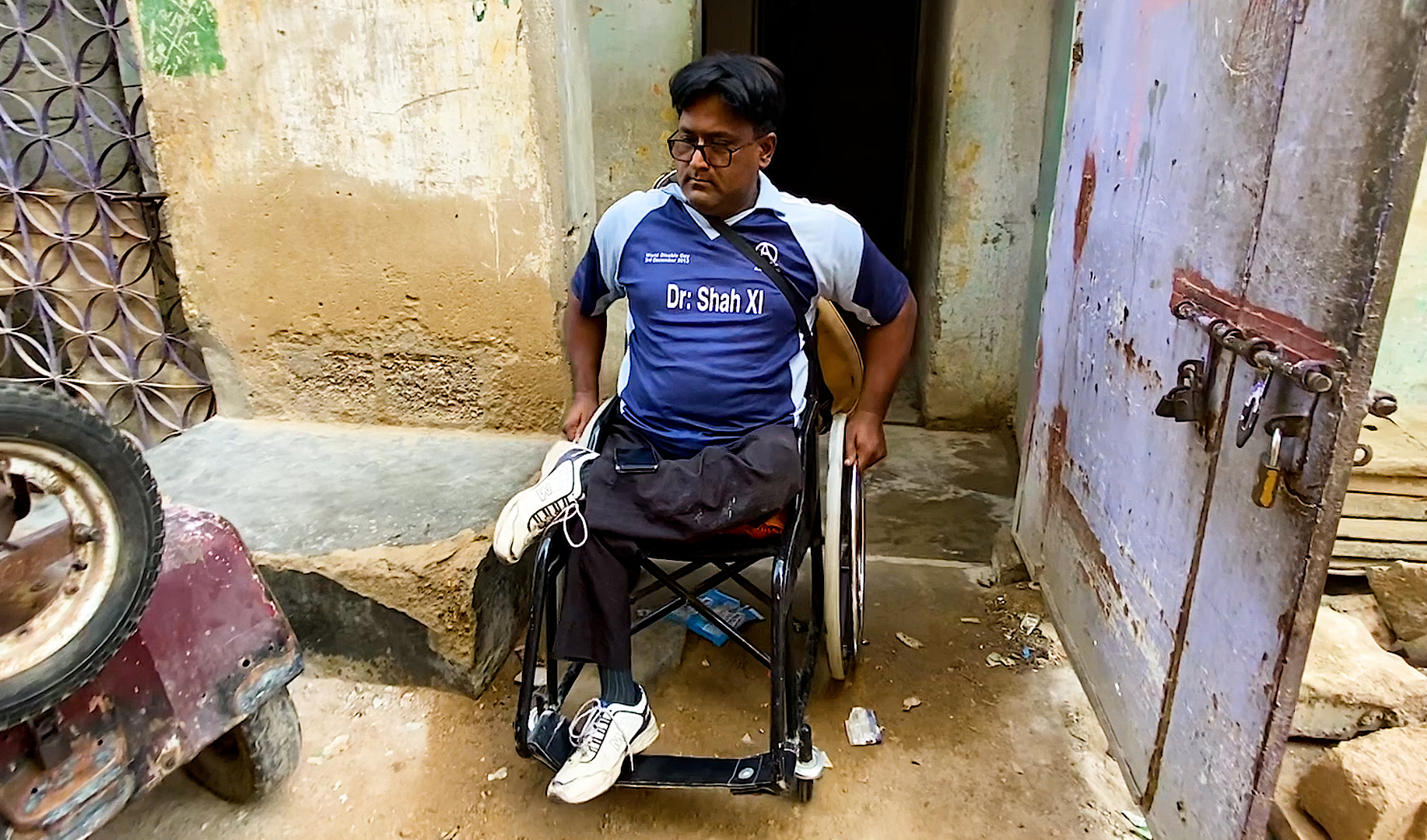


Muhammad Ayub speaks to Arab News at his home in Korangi area, Karachi, on Dec. 5, 2020. (AN photo)

Ayub made "excellent" sports wheelchairs, he said, and they are regularly used by the federation’s disabled members.
While he was determined to overcome physical barriers to pursue his dreams and also be financially independent, Ayub, who works for the Cantonment Board Clifton, knows that many others need support.
According to Human Rights Watch, estimates of the number of people living with disabilities in Pakistan wildly vary from 3.3 million to 27 million.
With his skills, Ayub is willing to help as much as he can.
"I am disabled and if someone needs a wheelchair, I can make one for him without taking any benefit," he said. "This way, my special brothers will be helped out and my heart will also be contented."


Pakistan’s Punjab deploys satellites, drones, AI to combat smog

Updated 5 sec ago
Follow

Pakistan’s Punjab deploys satellites, drones, AI to combat smog

  • Senior minister warns industrial masks may become necessary without a change in public attitudes toward pollution
  • Cities in Punjab face worsening smog each winter, driven by crop burning, vehicle emissions and industrial pollution

ISLAMABAD: Punjab Senior Minister Marriyum Aurangzeb on Wednesday said Pakistan’s most populous province deployed satellites, drones and artificial intelligence to tackle smog, warning that industrial masks may become necessary if public attitudes toward air pollution did not change.

Punjab cities face worsening smog each winter, driven by crop burning, vehicle emissions and industrial pollution that threatens public health and daily life. The smog season typically begins in late October, peaks between November and January and can persist through February.

Smog causes symptoms such as sore throats, eye irritation and respiratory illnesses, while prolonged exposure raises the risk of stroke, heart disease and lung cancer. Children are more vulnerable due to higher breathing rates and weaker immune systems.

“We have the AI machine-learning forecasting system in place, surveillance drones and technology cameras,” Aurangzeb said while addressing an event.

“At present, what is considered one of the world’s best environmental protection forces — with training, equipment, technology and digitally integrated data — is operating in Punjab,” she added.

Aurangzeb said surveillance is now being carried out through drones.

“There is monitoring, technology, cameras,” she continued. “Everything is digital.”

The minister maintained the eastern corridor from India was a major source of smoke which becomes active during the winter season.

She said this was the first time a complete testing system was introduced by the Environmental Protection Agency to measure pollution released by vehicles.

She added the government has loaned 5,000 super seeders to farmers, which are agricultural machines that plant crops directly into fields without removing leftover stubble, reducing crop burning, and helping curb winter smog.

Aurangzeb warned the situation could reach a point where people may have to use industrial masks and carry therm around like a “purse or wallet.”

“This will become a mandatory item if we do not change our attitudes and habits toward air quality, climate and conservation.”

Pakistan’s main urban centers routinely rank among the most polluted cities in the world, with vehicular emissions remaining one of the top contributors to air pollution.

The severe air pollution also undermines economic productivity and diminishes the quality of life for millions of residents.