ADDIS ABABA: Bombing, looting and skirmishes persisted in parts of Ethiopia’s Tigray on Saturday, a rebellious force in the northern region said after government troops declared they were within days of capturing the group’s leaders.
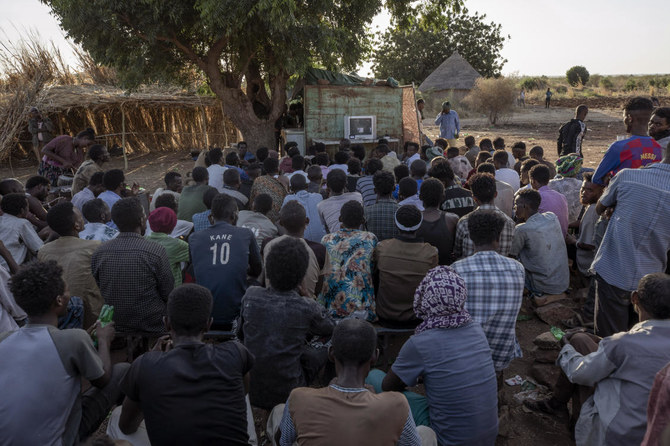
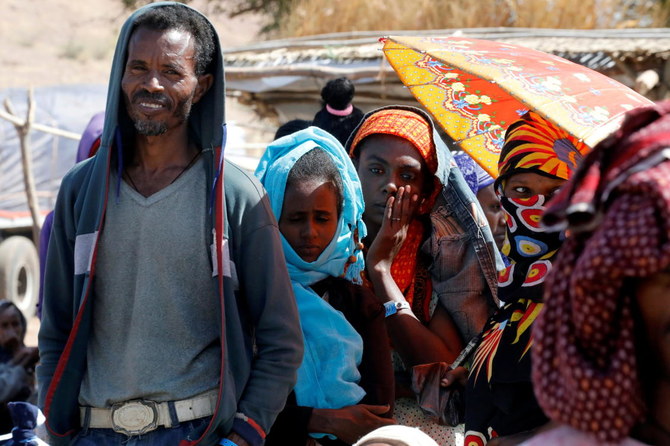
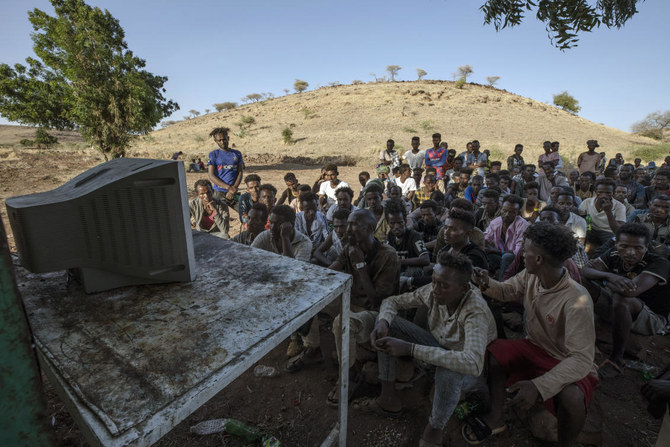
A month of fighting between Prime Minister Abiy Ahmed’s federal army and the Tigray People’s Liberation Front (TPLF) is believed to have killed thousands of people and driven some 46,000 refugees into neighboring Sudan.
Abiy’s government has said the conflict is winding down a week after it seized Tigray’s regional capital, Mekelle, but TPLF leader Debretsion Gebremichael told Reuters in a text message on Saturday there was still fighting outside the city.
He said federal forces bombed the town of Abbi Adi on Friday, without giving further details, while a TPLF spokesman accused government troops of looting in Mekelle.
“(They are) looting civilian properties, hotels and damaging factories after looting,” the spokesman Getachew Reda told a TPLF-owned TV station.
The government did not immediately respond to a request for comment. Most communications in Tigray are down and access to the area is severely restricted, making it hard to verify either side’s statements.
Abiy used to be a political partner of the TPLF — which dominated Ethiopia’s governing coalition for nearly three decades — but he irked his former allies by putting Tigrayan officials on trial for corruption and rights abuses.
They said the arrests were politically motivated, accusing Abiy of trying to tighten his grip over Ethiopia’s 10 semi-autonomous federal states. Abiy denies that, and has called the TPLF leaders criminals who mutinied against federal authority.
Army Col. Shambel Beyene said late on Friday that government forces were 10 km (six miles) away from a forest in the Gore area where Debretsion, Getachew and other TPLF members were thought to be hiding.
“We will only need a few days to get to them,” he said on state television.
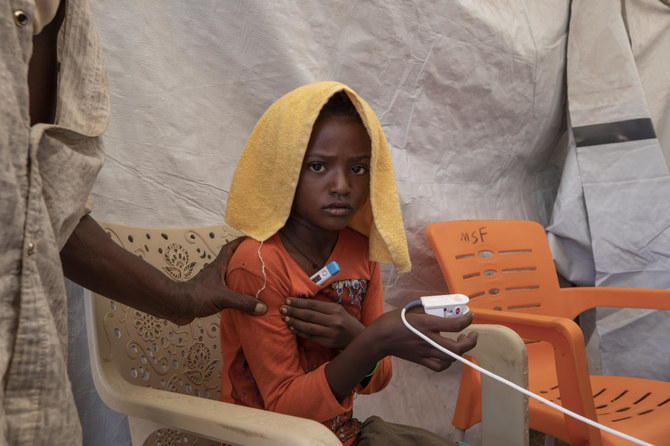
Relief agencies, meanwhile, are worried about a lack of food, fuel, medicines and even body bags in Tigray. Convoys are on standby to take aid in.
Residents in the central town of Shire told a new government-appointed provisional administration that the cost of groceries was sky-rocketing and fuel shortages were grounding ambulances used to take patients to hospitals.
“Residents are still staying away from their homes. Women are hiding in caves with their children,” one man said at a meeting aired on EBC late on Friday.
Others complained about looting in the town.
Abiy’s government has said it will protect civilians in the northern region and ensure their needs are met.
“Work to rebuild Tigray has commenced with teams ... undertaking repair work (and) restoring services,” he said in a Tweet on Saturday.
Abiy, who took office in 2018, won a Nobel Peace Prize the following year for making peace with neighboring Eritrea and democratic reforms.
He began opening up a closed economy, loosening a repressive political system, and taking action against those accused of corruption and rights abuses — some of whom were Tigrayan officials.
His government has also jailed thousands of opponents after violent unrest, angering his rivals.


![]()
![]()
![]()
![]()

Fighting flares in Ethiopia’s Tigray as army says closing in on rebellious force
Short Url
https://arab.news/4vjb8
Fighting flares in Ethiopia’s Tigray as army says closing in on rebellious force
- A month of fighting between PM Abiy Ahmed’s federal army and the Tigray People’s Liberation Front (TPLF) is believed to have killed thousands of people
- Ahmed's His government has also jailed thousands of opponents after violent unrest, angering his rivals


Latest updates


© 2026 SAUDI RESEARCH & PUBLISHING COMPANY, All Rights Reserved And subject to Terms of Use Agreement.