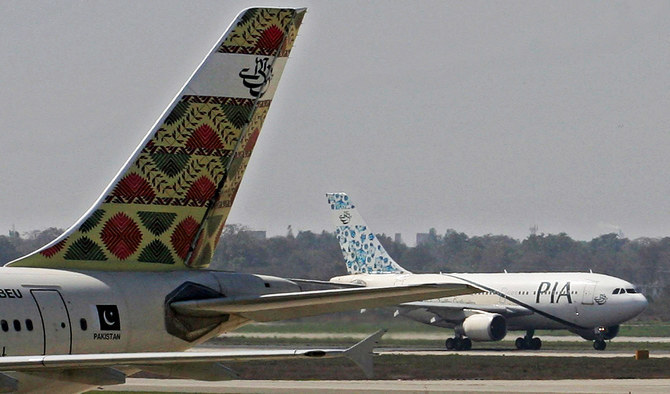
ISLAMABAD: The European Union Aviation Safety Agency (EASA) has decided to continue its suspension of Pakistan International Airlines’ (PIA) authorization to fly to the bloc, Pakistani media reported on Friday, in what is being described as a ‘blow’ to the carrier’s operations.
The suspension in June followed Pakistan’s grounding of 262 of the country’s 860 pilots, including 141 of PIA’s 434, whose licenses the country’s aviation minister had termed “dubious”.
The grounding of the pilots followed a preliminary report on a PIA crash in Karachi that killed 97 people in May.
“On 16 November 2020, your organization provided the agency with a comprehensive set of documents as evidence to support the Implementation of the agreed Corrective Action Plan [CAP] for the remaining open level 1 finding related to identifying issues in your Safety Management System,” a letter from EASA, quoted by Pakistan’s Geo News channel, said.
“The Agency reviewed the submitted material and found it satisfactory and sufficient as a first important step toward the closure of the above-mentioned finding,” it added.
However, the agency said the investigation conducted by the European Commission on the issuance of professional licenses was still ongoing, and the audit might not have positive results.
“We propose to contact you for a next update of the situation as soon as the concerns regarding the issuance of professional licenses is investigated in full and satisfactorily resolved,” the letter said. “In the meantime, the Agency will closely monitor the situation and further developments.”


![]()

EU safety agency retains ban on Pakistan International Airlines
Short Url
https://arab.news/mat75
EU safety agency retains ban on Pakistan International Airlines
- Suspension in June followed Pakistan’s grounding of 262 of the country’s 860 pilots, including 141 of PIA’s 434, over “dubious” licenses
- Pakistan’s grounding of the pilots followed a preliminary report on a PIA crash in Karachi that killed 97 people in May
Latest updates


Recommended


© 2026 SAUDI RESEARCH & PUBLISHING COMPANY, All Rights Reserved And subject to Terms of Use Agreement.