

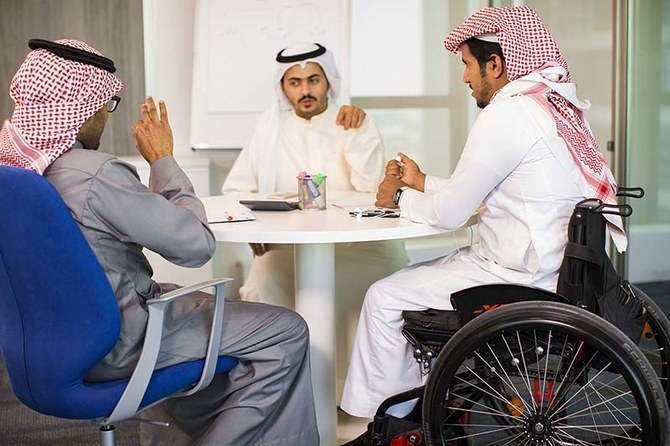

RIYADH: People with disabilities seeking employment in Saudi Arabia are getting a bigger boost with the help of Alwaleed Philanthropies and car companies.
Under the umbrella of Vision 2030, the Kingdom has focused on empowering people, especially those with special needs, to use their abilities in different fields, a topic of discussion that was emphasized in one of the G20 Riyadh Summit agendas during the Kingdom’s presidency.
In observation of International Day of Persons with Disabilities — marked each year by the UN to promote the rights and well-being of persons with disabilities in society — Alwaleed Philanthropies has partnered with the Physically Disabled Adults Association (Harakia), Careem, and Al-Jazirah Vehicles Agency to provide care for youth, women, and men with disabilities and boost their employment prospects.
The Harakia project, launched in 2017, is expected to reach 219,000 beneficiaries both directly and indirectly by 2021.
For the last four decades, Alwaleed Philanthropies has initiated and supported a variety of projects to equip women, youth, and those living with disabilities with the resources and support required to prosper.
“We have worked on a series of projects that focus on economic independence locally and internationally,” said Najla Al-Jeaid, manager for local initiatives at Alwaleed Philanthropies in an exclusive interview with Arab News.
“It is important to understand the ripple effect of socioeconomic empowerment. Supporting job creation can increase opportunities for the next generation, change perceptions, improve quality of life and elevate local industries,” said Al-Jeaid.
Harakia is their flagship project supporting individuals with physical disabilities in becoming more mobile and independent. The project involves numerous schemes to support people living with hearing impairments, childhood development challenges, and lower body disabilities across Saudi Arabia.
“In Saudi Arabia, we have examined and identified the barriers that this segment face and have initiated projects with our partners to overcome them through greater access to resources and training opportunities. We must take a more circular approach to overcome challenges, ensuring that the resources provided support long-term income generation for individuals,” said Al-Jeaid.
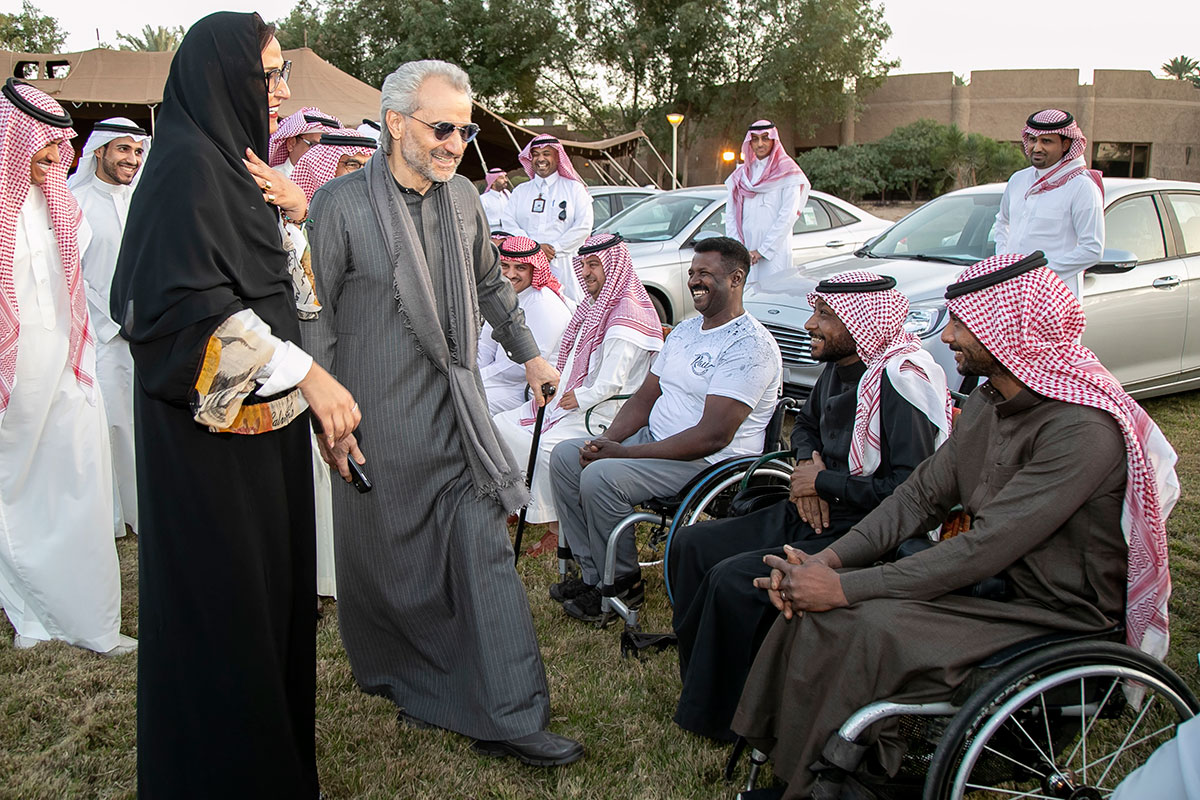
The beneficiaries of the Harakia project with Alwaleed Philanthropies’ Chairman Prince Alwaleed bin Talal Al-Saud. (Photo/Supplied)
She added that the Harakia project provides beneficiaries with greater access to equal opportunities for employment, enhances their quality of life, and supports increased participation in the economy.
“We believe that mobility is critical to almost every aspect of our lives: Our ability to work, to socialize, and to go out, and that it is truly synonymous with freedom and independence. By taking advantage of simple and cost-effective technology, we can make a long-lasting and life-changing differences to people’s lives,” said Al-Jeaid.
She said that the Harakia project not only provides important resources but connects people with disabilities with life-altering employment opportunities. “Through access to vehicles, people with disabilities can participate in the workforce as independent drivers, which provides greater independence and flexibility for those newly joining the job market, while simultaneously supporting increased participation in society.”
The General Authority for Statistics issued a report containing the results of the Persons with Disability Survey 2017. It revealed that the number of people in the Kingdom with difficulties (mild, severe, and extreme) was 1,445,723, which accounts for 7.1 percent of the total population. Males make up 3.7 percent and females 3.4 percent.
“We are dedicated to developing communities and achieving long-term and sustainable change. In doing so, we must empower people on the ground with the skills and resources they need to gain access to greater employment opportunities,” said Al-Jeaid.
She added that all of their programs are completely free. “For the Harakia project, eligible participants must apply and will be assessed by an expert team at the Physically Disabled Adults Association to receive a modified vehicle.”
Al-Jeaid expressed her appreciation for the team she works with. “For all our initiatives, we work with trusted partners on the ground to deliver truly impactful projects. We draw on a variety of expertise and knowledge to initiate life-changing projects for vulnerable communities locally, regionally, and internationally.”
She added: “These strong partnerships help us ensure that projects are being delivered to those who need it the most and with the right approach.”


