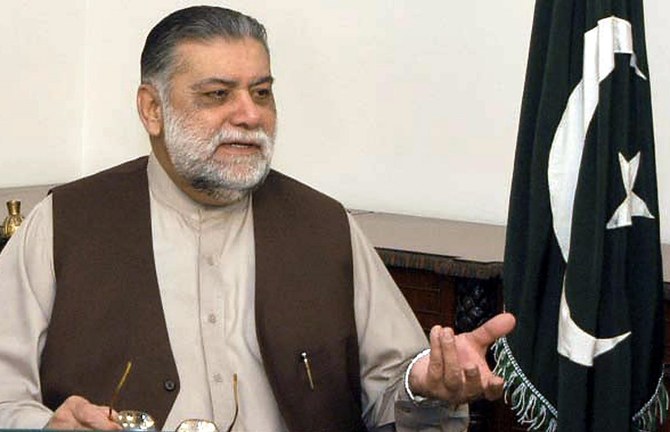
ISLAMABAD: Pakistan’s former prime minister Mir Zafarullah Khan Jamali passed away at the Armed Forces Institute of Cardiology in Rawalpindi on Wednesday, Dhani Bux Jamali, a close relative, confirmed while talking to Arab News.
The 76-year-old politician was rushed to the hospital after he suffered a cardiac arrest nine days ago.
According to the local media, he was on ventilator for the last four days but could not recover despite the medical treatment.
“His funeral will be offered at his native town Rojhan Jamali in Jaffarabad district in Balochistan,” said Dhani Bux Jamali.
The former prime minister belonged to the southwestern province and began his political career from there in the 1970s.
He also served as Balochistan’s chief minister twice during his career.
Jamali was counted among the top Pakistan Muslim League-Nawaz leaders, though he left the party after the 1999 military coup by General (r) Pervez Musharraf and became prime minister after winning his constituency in the 2002 general elections.
Pakistan’s army chief General Qamar Javed Bajwa and several political figures expressed their condolences at the ex-prime minister’s death.
https://twitter.com/OfficialDGISPR/status/1334190322918825984?s=20


![]()

Former prime minister Mir Zafarullah Khan Jamali passes away in Rawalpindi
Short Url
https://arab.news/4jgy3
Former prime minister Mir Zafarullah Khan Jamali passes away in Rawalpindi
- The 76-year-old politician began his career from Balochistan and twice served the province as chief minister
- Jamali suffered a cardiac arrest nine days ago and was taken to a leading medical facility for treatment
Latest updates


© 2026 SAUDI RESEARCH & PUBLISHING COMPANY, All Rights Reserved And subject to Terms of Use Agreement.