

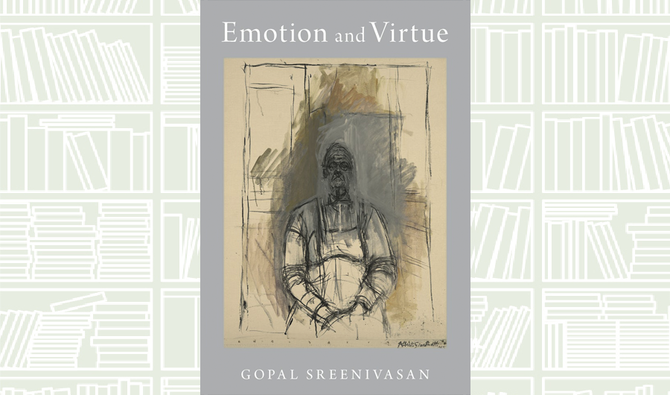
What We Are Reading Today: Emotion and Virtue by Gopal Sreenivasan

Short Url
Updated 01 December 2020
Follow

What We Are Reading Today: Emotion and Virtue by Gopal Sreenivasan

What must a person be like to possess a virtue in full measure? What sort of psychological constitution does one need to be an exemplar of compassion, say, or of courage? Focusing on these two examples, Emotion and Virtue ingeniously argues that certain emotion traits play an indispensable role in virtue. With exemplars of compassion, for instance, this role is played by a modified sympathy trait, which is central to enabling these exemplars to be reliably correct judges of the compassionate thing to do in various practical situations. Indeed, according to Gopal Sreenivasan, the virtue of compassion is, in a sense, a modified sympathy trait, just as courage is a modified fear trait.

While he upholds the traditional definition of virtue as a species of character trait, Sreenivasan discards other traditional precepts. For example, he rejects the unity of the virtues and raises new questions about when virtue should be taught. Unlike orthodox virtue ethics, moreover, his account does not aspire to rival consequentialism and deontology. Instead Sreenivasan repudiates the ambitions of virtue imperialism.

Emotion and Virtue makes significant contributions to moral psychology and the theory of virtue alike.


What We Are Reading Today: Making Waste by Sophie Gee

Updated 02 March 2026
Follow

What We Are Reading Today: Making Waste by Sophie Gee

Why was 18th-century English culture so fascinated with the things its society discarded? Why did Restoration and Augustan writers such as Milton, Dryden, Swift, and Pope describe, catalog, and memorialize the waste matter that their social and political worlds wanted to get rid of—from the theological dregs in “Paradise Lost” to the excrements in “The Lady’s Dressing Room” and the corpses of “A Journal of the Plague Year?” In “Making Waste,” the first book about refuse and its place in Enlightenment literature and culture, Sophie Gee examines the meaning of waste at the moment when the early modern world was turning modern.

Gee explains how English writers used contemporary theological and philosophical texts about unwanted and leftover matter to explore secular, literary relationships between waste and value. She finds that, in the 18th century, waste was as culturally valuable as it was practically worthless—and that waste paradoxically revealed the things that the culture cherished most.