

Survey reveals attitudes of French citizens of Arab origin toward secularism

1 / 3
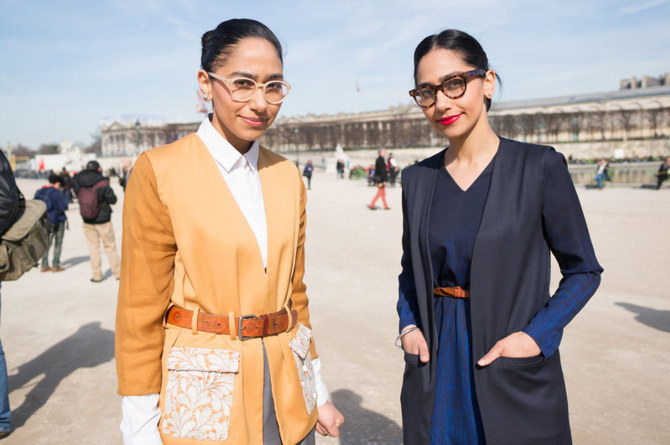
Sixty-five percent French Arabs surveyed affirm that they would defend the French values of secularism in their country of origin. (Shutterstock)
2 / 3
Sixty-five percent French Arabs surveyed affirm that they would defend the French values of secularism in their country of origin. (Shutterstock)
3 / 3
People pay tribute to the dead outside Notre Dame Basilica in Nice, France following a terrorist attack. France recently witnessed a wave of terrorist attacks. (AFP)
Short Url
Updated 30 November 2020
Follow

Survey reveals attitudes of French citizens of Arab origin toward secularism

  • The majority of Arabs in France accept French secularism but oppose a more militant version of the principle
  • Some are worried about new regulations treating Muslims very differently from other believers

LONDON: The opinion poll carried out jointly by Arab News and YouGov provides detailed data on the relationship of French people of Arab origin to secularism in France and reveals a generally benevolent view of the French model.

Indeed, 65 percent of the people questioned affirm that they would defend the French values of secularism in their country of origin. Among the over-45s 80 percent share this opinion. Less than half (46 percent) believe that the French model is not appropriate for Arab countries.

Secularism “the French way” is running up against a wall of incomprehension in the Arab-Muslim world, as strong tensions have demonstrated in recent weeks with some countries calling for a boycott of France.

The French model is mainly based on a triptych set out in the 1905 law on the separation of churches and state: the separation of politics and religion, state neutrality and respect for freedom of conscience. Even though the 1905 law was passed in an anti-clerical context, it is not fundamentally hostile to religion.

The French of Arab origin largely adhere to the 1905 definition of secularism but are reluctant to go beyond it. So 62 percent are opposed to the state restricting the wearing of religious clothing, with the proportion even higher among the younger generation (71 percent). However, responses varied according to the level of income. Of those questioned 34 percent of people with an income below €20,000 ($24,000) per year are in favor of more restrictive laws, compared to 49 percent of people with an income above €40,000.

Since the turn of the century, several laws have been adopted to limit the wearing of religious symbols, such as the 2004 law prohibiting the wearing of religious symbols in schools, and the 2010 law prohibiting the wearing of the burqa in public spaces.

“The French Muslims have generally accepted these new laws and respect them, but are worried about new regulations treating Muslims very differently from other believers,” said Haoues Seniguer, lecturer at Sciences Po Lyon University and a researcher at the Triangle laboratory (ENS/CNRS).

INNUMBERS

  • 65% willing to defend French secularism in their country of origin.
  • 62% oppose state restrictions on wearing religious clothing.

More and more politicians are calling for strong measures in a more radical secularism, in particular to limit the wearing of the veil in public spaces, for example at universities, or when the parents of pupils accompany school trips.

There are two visions of secularism in France. On one hand, there is the liberal legacy of the Third Republic embodied by the French statesman Aristide Briand — who served 11 terms as prime minister and introduced the law of 1905 — for which secularism does not have to interfere with the religiosity of individuals. On the other hand, there is a militant secularism, which considers secularism as a form of individual emancipation with regard to religion.

This second vision of secularism is on the rise today, and it is creating tensions among French Muslims, Seniguer said.

The polarization around the debate on Islam and secularism is not new. “Militant secularism was reinforced at the beginning of the 1990s, in a context of the growing visibility of Muslims in the public spaces and of identity claims, as illustrated by the affair of the scarf of Creil in 1989 (when three Muslim girls were suspended for wearing scarves in school),” Seniguer said.

Moreover, this period has also coincided with that of a globalized Islam and the advance of Islamists in several countries, such as the FIS in Algeria, which has sometimes manifested itself in violence.

The new law against separatism or “consolidating secularism and republican principles,” which has been toughened since the assassination of Samuel Paty, the teacher murdered in a Paris suburb in October, will be on the table of the Council of Ministers on December 9. Enough to further fuel lively new debates on the future of French secularism.


Filipino rescuers detect ‘signs of life’ in garbage avalanche that killed 4 and left dozens missing

Updated 4 sec ago
Follow

Filipino rescuers detect ‘signs of life’ in garbage avalanche that killed 4 and left dozens missing

  • Twelve workers have been rescued with injuries from the huge mound of garbage
  • “Authorities confirmed the presence of detected signs of life in specific areas, requiring continued careful excavation,” Cebu City Mayor Nestor Archival said

MANILA: Rescuers detected signs of life in an avalanche of garbage that killed at least four workers and left more than 30 others missing Thursday in a central Philippines landfill and plan to intensify search efforts, an official said Saturday.
Twelve workers have been rescued with injuries from the huge mound of garbage that collapsed among the low-slung buildings of a waste management facility in the village of Binaliw in Cebu City, authorities said.
Dozens of rescuers including police, firefighters and disaster-response personnel have raced against time to find more survivors in dangerous conditions in the rubble of twisted tin roofs, iron bars and combustible heaps of garbage and debris.
“Authorities confirmed the presence of detected signs of life in specific areas, requiring continued careful excavation and the deployment of a more advanced 50-ton crane, which is enroute with police escort,” Cebu City Mayor Nestor Archival said in a statement.
“Safety of responders remains paramount due to hazards such as unstable debris and acetylene risks, prompting adjustments to the security perimeter and controlled access,” Archival said.
The four dead, including an engineer and a female office worker, were all employees of the landfill and waste management facility with a staff of 110, according to the mayor and police.
The initial list of victims on Friday included two dead and 36 missing, which increased Saturday to four dead, according to Archival, who did not provide an updated nunber of people missing.
The cause of the collapse of the mountain of garbage remains unclear, but a survivor told The Associated Press on Friday that it happened in an instant without any warning despite fairly good weather at the time.
Jaylord Antigua, a 31-year-old office worker at the landfill, said the wall of garbage cascaded down and destroyed the administrative office he was in. He extricated himself with bruises on his face and arms by crawling in darkness in the rubble and debris.
“I saw a light and crawled toward it in a hurry, because I feared there will be more landslides,” Antigua said. “It was traumatic. I feared that it was my end, so this is my second life.”
It is unclear how the accident would affect garbage disposal in the landfill in Cebu, a bustling port city of nearly a million people that serves as a regional hub for trade, commerce and tourism.
Preparations “are also underway to manage the looming garbage collection issue,” Archival said in his statement without further details.
Such landfills and open dumpsites have long been a source of safety and health concerns throughout the Philippines, especially in areas close to poor communities where many residents scavenge for junk and leftover food in the garbage heaps.
In July 2000, a huge garbage mound in a shantytown in suburban Quezon City, part of metropolitan Manila, collapsed and ignited a fire after days of stormy weather.
The disaster left more than 200 people dead and many more missing, damaged scores of shanties and prompted a law requiring the closure of illegal dump sites nationwide, as well as improved and more sustainable waste management by authorities.