NEW DELHI: Thousands of Indian farmers, angry over reform of the agriculture sector, held a third day of protests on the outskirts of the capital on Sunday, blocking roads into the city and defying a government appeal to move to a designated site.
The government on Saturday invited farmers’ union leaders for talks on new legislation to deregulate agriculture but that has not calmed farmers’ anger over what many see “anti-farm laws,” and their action appeared to be spreading.
“We will stay put here today,” said Rakesh Tikait, spokesman of the Bharatiya Kisan Union, one of more than 30 protesting unions, as he and his members blocked a road on the eastern approaches to Delhi.
The farmers object to legislation introduced by Prime Minister Narendra Modi’s government in September that would let farmers sell their produce anywhere, including to big corporate buyers like Walmart, not just at government-regulated wholesale markets where growers are assured of a minimum price.
Small growers worry they will be left vulnerable to big business and could eventually lose price support for staples such as wheat and rice.
Modi sought to allay farmers’ concerns on Sunday.
“From these reforms, farmers will get new rights and opportunities,” he said in his monthly radio address.
But one farm union leader said many protesters were demanding that the government withdraw the laws.
“The farmers’ leaders will meet later on Sunday to decide their response to the government,” he said, referring to the government’s call for talks.
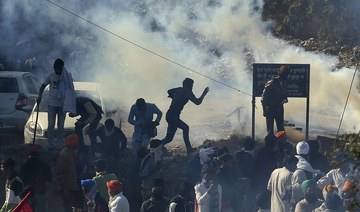
The protests began with farmers from the northern states of Haryana and Punjab on the outskirts of New Delhi on Friday, when police fired tear gas and water cannon in a bid to disperse them.
But instead farmers from the neighboring state of Uttar Pradesh joined in over the weekend, blocking roads to the east of the capital.
Media reported protests by farmers in the southern states of Andhra Pradesh, Tamil Nadu and Kerala on Saturday.
Prices of fresh produce prices at wholesale markets in the city began to tick up and commuters have faced travel disruption. (Reporting by Manoj Kumar; Editing by Euan Rocha, Robert Birsel)


![]()

Indian farmers defiant against reform as Modi tries to calm anger

Short Url
https://arab.news/45eug
Indian farmers defiant against reform as Modi tries to calm anger
- The government on Saturday invited farmers’ union leaders for talks on new legislation to deregulate agriculture
- Small growers worry they will be left vulnerable to big business

Latest updates


Recommended


© 2026 SAUDI RESEARCH & PUBLISHING COMPANY, All Rights Reserved And subject to Terms of Use Agreement.