

Red Sea Development Co. signs $2bn in new contracts, 70% to local companies

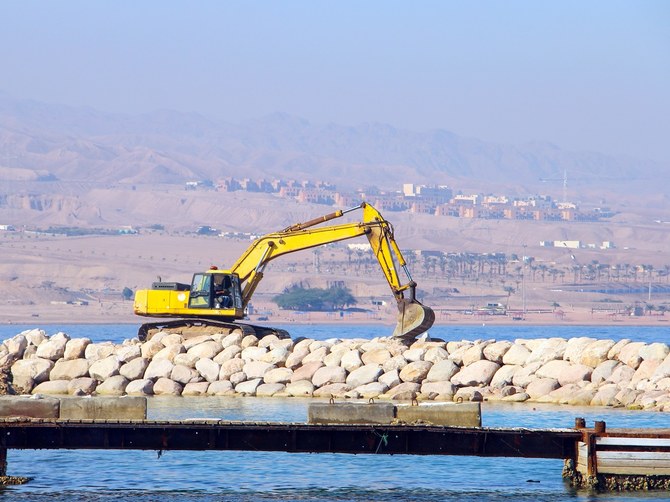
The Red Sea Project aims to make a great impression in the tourism sector, as the project looks to attract one million visitors by the end of 2030. (File/Shutterstock)
Short Url
Updated 24 April 2022
Follow

Red Sea Development Co. signs $2bn in new contracts, 70% to local companies

The Red Sea Development Co. (TRSDC) signed more than 500 contracts for a total value of $2 blln so far, out of which 70 percent were awarded to local companies, Ahmed Ghazi Darwish, Chief of Staff at TRSDC, told Argaam in an exclusive.

He further added that construction of the base camp at the Red Sea project started in February 2019, noting that the developer seeks to have Saudi companies as partners in the project success.

The public-private partnership (PPP) initiative is in final stages, the official explained, adding that new partnerships, which will provide utility services including water, electricity and waste treatment, will be unveiled by the end of the year.

TRSDC signed an agreement with Saudi-based Nesma & Partners Contracting Co. Ltd. and Almabani General Contractors for the airside infrastructure works contract for the mega Red Sea tourism project’s international airport, Darwish pointed out.

The company contracted Saudi Al-Majal Al-Arabi Holding Group to build accommodation for workers and Saudi Arabian Real Estate Infrastructure Co. (Binyah) to construct a 77-kilometer (km) road network at the Kingdom’s upcoming tourist destination.

Moreover, Dubai-based DuBox Precast Products Industrial, a subsidiary of Amana Contracting Group, was awarded by TRSDC a contract to build a factory in Rabigh to transport manufactured products to the project site. The factory provided many job opportunities for nationals in the province.

Darwish said TRSDC is planning to raise SAR 15 billion finance from five Saudi banks, regarding which the details will be revealed soon.

He also affirmed that tourism will be the second important sector after oil and will create jobs, as well as contribute to the Kingdom’s gross domestic product (GDP).

“Job opportunities account for 10 percent of the global tourism industry, compared to 3.4 percent in the Kingdom, thanks to Umrah and Hajj seasons,” the official noted.

Tourism will be a key contributor to the economic growth of Saudi Arabia, Darwish added, noting that mega projects, including NEOM, Qiddiya and The Red Sea support Vision 2030, overseen by the Public Investment Fund (PIF).

The Red Sea Project aims to make a great impression in the tourism sector, as the project looks to attract one million visitors by the end of 2030.

Darwish also confirmed that TRSDC is coordinating with environmental experts to determine the viability of construction and development of some islands to preserve wildlife and the environment.

There are more than 90 islands, out of which 22 will be developed, while nine others will be nature reserves.

Finally, Darwish said the COVID-19 pandemic accelerated the project implementation, highlighting that there has been a renewed focus on the work and signing of new contracts.

Powered by Argaam


US trade policy uncertainty sees muted response from markets

Updated 7 sec ago
Follow

US trade policy uncertainty sees muted response from markets

RIYADH: President Donald Trump renewed his condemnation of the US Supreme Court on Monday after it ruled against his sweeping tariff program last week, vowing to ‌turn to ‌other ​powers ‌and ⁠licenses ​but giving no ⁠details.

The Supreme Court, in a 6-3 ruling on Friday, voided most of the tariffs Trump imposed in 2025, finding that the emergency law he relied on did not allow the imposition of the levies.

Trump said on Saturday he would raise ‌a temporary tariff from 10 percent to 15 percent on US ⁠imports ⁠from all countries, the maximum level allowed under the law, a day after the court ruled he had exceeded his presidential authority when he imposed an array of higher rates ​under an ​economic emergency law.

"The court has also approved all other Tariffs, of which there are many, and they can all be used in ⁠a much more ‌powerful and obnoxious ‌way, with legal ​certainty, than ‌the Tariffs as initially ‌used," he wrote in a social media post.

US stock index futures slipped on Monday as traders reacted to the latest twist in the US’s economic policy. 

At 12noon GMT, Dow E-minis were down ​162 points, or 0.33 percent, Nasdaq 100 E-minis ‌were down 129 points, or 0.51 percent, and S&P 500 E-minis were down 23.75 points, or 0.34 percent.

Most ‌megacap and growth stocks were lower in premarket trading, though Alphabet bucked the trend with a 0.3 percent gain after rising around 4 percent on Friday.

“It’s really hard from ​a ‌business ⁠standpoint when ​you ⁠are at a company to know how do you plan if you’re not even sure about suppliers, supply chains and what the tariffs are going to look like,” said Arthur Laffer Jr., president of Laffer Tengler Investments, according to Reuters.

“That’s a huge concern for corporate America and why it was really important to get that hammered out and ironed out as fast as possible, so that companies know what the playing field really looks like, and they can plan accordingly,” he added.

All three main stock ⁠indexes clocked weekly gains on Friday as markets took the Supreme ‌Court’s decision in stride, with the Nasdaq snapping a five-week ‌losing streak.

Other stock markets across the world greeted the latest wave of uncertainty with a muted response.

In the Gulf region, Saudi Arabia’s main market — which had been closed on Sunday due to a national holiday — ended the day up 0.34 percent.

Dubai’s main share index closed up 1.82 percent, led by a 3.64 percent gain in blue-chip developer Emaar Properties and a 2.92 percent leap in Emirates NBD Bank.

In Abu Dhabi, the index ended the session up 0.55 percent, with Americana Restaurants International leading the gainers with its share price surging 7.73 percent.

Qatar’s index closed up 1.08 percent, driven ​by banking shares, including ​a 0.43 percent uptick in Qatar National Bank, the region’s largest lender. 

Other global markets faced a mixed picture, with the UK's FTSE 100 subdued on Monday.

The blue-chip ‌index was up ‌0.1 percent at 12:00noon GMT, after closing ​at ‌record ⁠highs ​last week. For the UK, the ⁠tariff rate has increased from 10 percent ‌to 15 percent,

Unicredit analysts noted, ‌following Trump's latest announcement.

Vijay Valecha, chief investment officer at Century Financial said the possible US tariff increase from 10 percent to 15 percent “ has brought trade tensions back into focus, tempering the optimism seen after the recent Supreme Court tariff ruling.”

He added: “Markets are now reassessing the economic impact of higher import costs, possible retaliation from trade partners, and the broader implications for global growth.”