

Red Sea Development Co. signs $2bn in new contracts, 70% to local companies

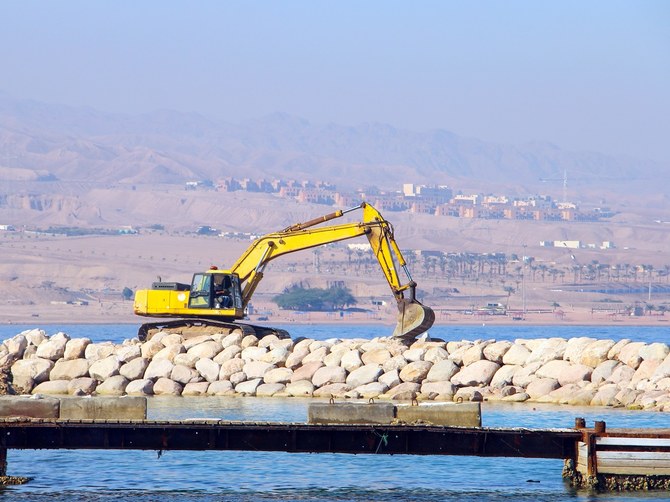
The Red Sea Project aims to make a great impression in the tourism sector, as the project looks to attract one million visitors by the end of 2030. (File/Shutterstock)
Short Url
Updated 24 April 2022
Follow

Red Sea Development Co. signs $2bn in new contracts, 70% to local companies

The Red Sea Development Co. (TRSDC) signed more than 500 contracts for a total value of $2 blln so far, out of which 70 percent were awarded to local companies, Ahmed Ghazi Darwish, Chief of Staff at TRSDC, told Argaam in an exclusive.

He further added that construction of the base camp at the Red Sea project started in February 2019, noting that the developer seeks to have Saudi companies as partners in the project success.

The public-private partnership (PPP) initiative is in final stages, the official explained, adding that new partnerships, which will provide utility services including water, electricity and waste treatment, will be unveiled by the end of the year.

TRSDC signed an agreement with Saudi-based Nesma & Partners Contracting Co. Ltd. and Almabani General Contractors for the airside infrastructure works contract for the mega Red Sea tourism project’s international airport, Darwish pointed out.

The company contracted Saudi Al-Majal Al-Arabi Holding Group to build accommodation for workers and Saudi Arabian Real Estate Infrastructure Co. (Binyah) to construct a 77-kilometer (km) road network at the Kingdom’s upcoming tourist destination.

Moreover, Dubai-based DuBox Precast Products Industrial, a subsidiary of Amana Contracting Group, was awarded by TRSDC a contract to build a factory in Rabigh to transport manufactured products to the project site. The factory provided many job opportunities for nationals in the province.

Darwish said TRSDC is planning to raise SAR 15 billion finance from five Saudi banks, regarding which the details will be revealed soon.

He also affirmed that tourism will be the second important sector after oil and will create jobs, as well as contribute to the Kingdom’s gross domestic product (GDP).

“Job opportunities account for 10 percent of the global tourism industry, compared to 3.4 percent in the Kingdom, thanks to Umrah and Hajj seasons,” the official noted.

Tourism will be a key contributor to the economic growth of Saudi Arabia, Darwish added, noting that mega projects, including NEOM, Qiddiya and The Red Sea support Vision 2030, overseen by the Public Investment Fund (PIF).

The Red Sea Project aims to make a great impression in the tourism sector, as the project looks to attract one million visitors by the end of 2030.

Darwish also confirmed that TRSDC is coordinating with environmental experts to determine the viability of construction and development of some islands to preserve wildlife and the environment.

There are more than 90 islands, out of which 22 will be developed, while nine others will be nature reserves.

Finally, Darwish said the COVID-19 pandemic accelerated the project implementation, highlighting that there has been a renewed focus on the work and signing of new contracts.

Powered by Argaam


Saudi investment pipeline active as reforms advance, says Pakistan minister

Updated 08 February 2026
Follow

Saudi investment pipeline active as reforms advance, says Pakistan minister

ALULA: Pakistan’s Finance Minister Mohammed Aurangzeb described Saudi Arabia as a “longstanding partner” and emphasized the importance of sustainable, mutually beneficial cooperation, particularly in key economic sectors.

Speaking to Arab News on the sidelines of the AlUla Conference for Emerging Market Economies, Aurangzeb said the relationship between Pakistan and Saudi Arabia remains resilient despite global geopolitical tensions.

“The Kingdom has been a longstanding partner of Pakistan for the longest time, and we are very grateful for how we have been supported through thick and thin, through rough patches and, even now that we have achieved macroeconomic stability, I think we are now well positioned for growth.”

Aurangzeb said the partnership has facilitated investment across several sectors, including minerals and mining, information technology, agriculture, and tourism. He cited an active pipeline of Saudi investments, including Wafi’s entry into Pakistan’s downstream oil and gas sector.

“The Kingdom has been very public about their appetite for the country, and the sectors are minerals and mining, IT, agriculture, tourism; and there are already investments which have come in. For example, Wafi came in (in terms of downstream oil and gas stations). There’s a very active pipeline.”

He said private sector activity is driving growth in these areas, while government-to-government cooperation is focused mainly on infrastructure development.

Acknowledging longstanding investor concerns related to bureaucracy and delays, Aurangzeb said Pakistan has made progress over the past two years through structural reforms and fiscal discipline, alongside efforts to improve the business environment.

“The last two years we have worked very hard in terms of structural reforms, in terms of what I call getting the basic hygiene right, in terms of the fiscal situation, the current economic situation (…) in terms of all those areas of getting the basic hygiene in a good place.”

Aurangzeb highlighted mining and refining as key areas of engagement, including discussions around the Reko Diq project, while stressing that talks with Saudi investors extend beyond individual ventures.

“From my perspective, it’s not just about one mine, the discussions will continue with the Saudi investors on a number of these areas.”

He also pointed to growing cooperation in the IT sector, particularly in artificial intelligence, noting that several Pakistani tech firms are already in discussions with Saudi counterparts or have established offices in the Kingdom.

Referring to recent talks with Saudi Minister of Economy and Planning Faisal Alibrahim, Aurangzeb said Pakistan’s large freelance workforce presents opportunities for deeper collaboration, provided skills development keeps pace with demand.

“I was just with (Saudi) minister of economy and planning, and he was specifically referring to the Pakistani tech talent, and he is absolutely right. We have the third-largest freelancer population in the world, and what we need to do is to ensure that we upscale, rescale, upgrade them.”

Aurangzeb also cited opportunities to benefit from Saudi Arabia’s experience in the energy sector and noted continued cooperation in defense production.

Looking ahead, he said Pakistan aims to recalibrate its relationship with Saudi Arabia toward trade and investment rather than reliance on aid.

“Our prime minister has been very clear that we want to move this entire discussion as we go forward from aid and support to trade and investment.”