

Pipe dreams leave US energy firms caught in climate trap

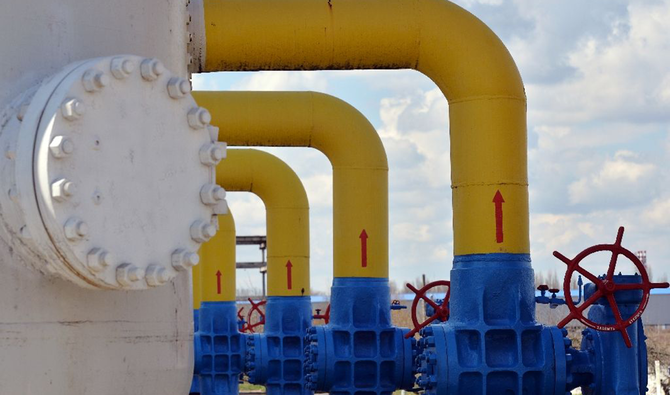
Nearly half the oil and gas pipeline miles that crisscross the US are at least 50 years old. (Reuters/File)
Short Url
Updated 24 November 2020
Follow

Pipe dreams leave US energy firms caught in climate trap

  • The future of the Enbridge Inc. owned line supplying the region is under threat, as climate activists have widen their campaign to cut US fossil fuel dependency from new pipelines

NEW YORK: In remote northern Michigan, a propane shortage in early 2014 caused prices to nearly double, squeezing about half of the families there who rely on the fossil fuel to heat their homes.

Glenda Bowler remembers her son fitting a wood stove at his restaurant as an alternative to propane, which reaches Michigan’s Upper Peninsula via a 645-mile pipeline.

“Everybody’s thermostats got turned down, and you turned to supplemental, like wood or electric to help. I’m old, so I can’t go cut wood,” the 68-year-old said.

Now the future of the Enbridge Inc. owned line supplying the region is under threat, as climate activists widen their campaign to cut US fossil fuel dependency from new pipelines to the refurbishment or expansion of older ones.

“To speed up the extraction of what remains is an insane strategy because we need to have something that replaces that energy source in the future and we don’t have it as long as people are continuing to rely on oil,” Anne Woiwode, co-chair of the Sierra Club’s Michigan chapter, said.

But as authorities worldwide face the challenge of a smooth transition to a lower-carbon future, energy firms are wrestling with investment decisions to keep their businesses running and prevent supply disruptions.

Enbridge had to temporarily close its Line 5 this summer after damage was discovered, boosting calls for the 67-year-old line carrying crude oil, propane and liquid fuels to Canada through the sensitive Straits of Mackinac, to be shut down.

Nearly half the oil and gas pipeline miles that crisscross the US are at least 50 years old. And even though the world’s largest fuel consumer is starting to rely more on renewables, fossil fuels still provide almost all of its road fuel and natural gas accounts for about 40 percent of electricity generation.

Michigan Gov. Gretchen Whitmer this month revoked a decades-old easement allowing the Enbridge line to operate, saying that its location and age means it poses a major risk and vowing to shut it after a transition period.

Roughly 43 percent of pipeline miles for hazardous liquids, which includes crude oil, were installed pre-1970, while 55 percent of gas transmission pipeline miles were installed before 1970, according to the US Department of Transportation.

Climate activists, Native tribes, and local opponents have waged years-long battles to prevent construction of pipelines with some, like Keystone XL, a 830,000-barrel-per-day crude expansion project, still in limbo after more than a decade.

Although the $8 billion Atlantic Coast Pipeline project, once the largest gas line under construction, was canceled this year, the Dakota Access LLC oil pipe and other large crude pipelines from Texas have been completed in recent years.

If existing pipelines are shut, suppliers could be forced to transport fuel and gas to consumers by rail or road.

Pipelines moved 4.4 billion barrels of foreign and domestic crude oil to refineries in 2019, while rail cars accounted for just 123.6 million barrels, or 3 percent of pipeline volumes, and trucking was about 2.4 percent of pipeline volume, US Energy Information Administration data showed.


Gulf-EU value chain integration signals shift toward long-term economic partnership: GCC secretary general

Updated 03 February 2026
Follow

Gulf-EU value chain integration signals shift toward long-term economic partnership: GCC secretary general

RIYADH: Value chains between the Gulf and Europe are poised to become deeper and more resilient as economic ties shift beyond traditional trade toward long-term industrial and investment integration, according to the secretary general of the Gulf Cooperation Council.

Speaking on the sidelines of the World Governments Summit 2026 in Dubai, Jasem Al-Budaiwi said Gulf-European economic relations are shifting from simple commodity trade toward the joint development of sustainable value chains, reflecting a more strategic and lasting partnership.

His remarks were made during a dialogue session titled “The next investment and trade race,” held with Luigi Di Maio, the EU’s special representative for external affairs.

Al-Budaiwi said relations between the GCC and the EU are among the bloc’s most established partnerships, built on decades of institutional collaboration that began with the signing of the 1988 cooperation agreement.

He noted that the deal laid a solid foundation for political and economic dialogue and opened broad avenues for collaboration in trade, investment, and energy, as well as development and education.

The secretary general added that the partnership has undergone a qualitative shift in recent years, particularly following the adoption of the joint action program for the 2022–2027 period and the convening of the Gulf–European summit in Brussels.

Subsequent ministerial meetings, he said, have focused on implementing agreed outcomes, enhancing trade and investment cooperation, improving market access, and supporting supply chains and sustainable development.

According to Al-Budaiwi, merchandise trade between the two sides has reached around $197 billion, positioning the EU as one of the GCC’s most important trading partners.

He also pointed to the continued growth of European foreign direct investment into Gulf countries, which he said reflects the depth of economic interdependence and rising confidence in the Gulf business environment.

Looking ahead, Al-Budaiwi emphasized that the economic transformation across GCC states, driven by ambitious national visions, is creating broad opportunities for expanded cooperation with Europe. 

He highlighted clean energy, green hydrogen, and digital transformation, as well as artificial intelligence, smart infrastructure, and cybersecurity, as priority areas for future partnership.

He added that the success of Gulf-European cooperation should not be measured solely by trade volumes or investment flows, but by its ability to evolve into an integrated model based on trust, risk-sharing, and the joint creation of economic value, contributing to stability and growth in the global economy.

GCC–EU plans to build shared value chains look well-timed as trade policy volatility rises.

In recent weeks, Washington’s renewed push over Greenland has been tied to tariff threats against European countries, prompting the EU to keep a €93 billion ($109.7 billion) retaliation package on standby. 

At the same time, tighter US sanctions on Iran are increasing compliance risks for energy and shipping-related finance. Meanwhile, the World Trade Organization and UNCTAD warn that higher tariffs and ongoing uncertainty could weaken trade and investment across both regions in 2026.