

Saudi Arabia to make coronavirus vaccine free for citizens and residents

Muslim pilgrims wearing protective face masks arrive to circle the Kaaba at the Grand mosque during the annual Haj pilgrimage amid the coronavirus disease (COVID-19) pandemic, in the holy city of Mecca, Saudi Arabia July 29, 2020. (Reuters)
Short Url
Updated 24 November 2020
Follow

Saudi Arabia to make coronavirus vaccine free for citizens and residents

  • It hopes the vaccines would cover 70 percent of the Kingdom’s population by the end of 2021

JEDDAH: The Saudi Ministry of Health is aiming to offer free vaccines to 70 percent of citizens and expats in the Kingdom who have not yet contracted the coronavirus disease (COVID-19).

Officials are hoping to have met the target for inoculations by the end of next year.

“Those who have not tested positive for COVID-19 will be given priority in the vaccine campaign in the coming months,” said Dr. Abdullah Asiri, the ministry’s assistant undersecretary for preventive health.

However, under-16s are not to be vaccinated unless research or tests prove there to be a need, he added.

He noted that the Kingdom planned to announce a clear schedule of vaccinations arrival to the country in the coming weeks.

“The Kingdom worked on two paths to obtain the vaccine, through the COVAX organization, which the G20 had a role in creating and financing.
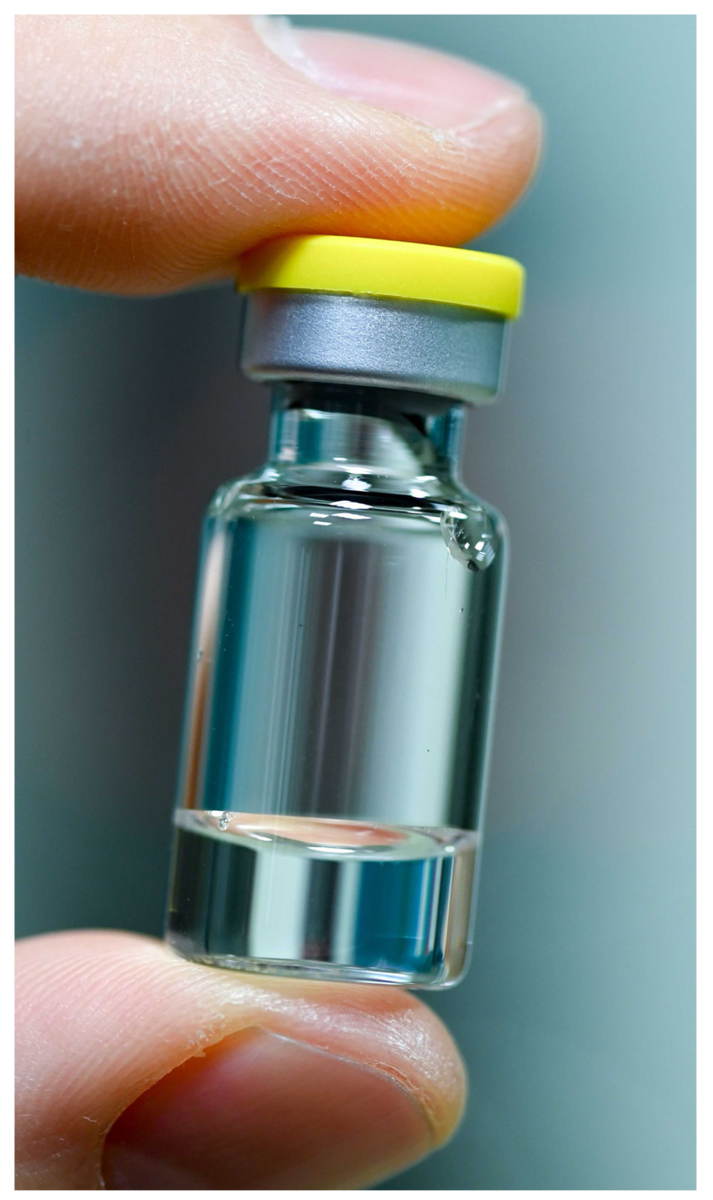
“Saudi Arabia will obtain a large amount of vaccines through this facility, while the second track is direct contracting with the big companies to cover the gap that cannot be covered through COVAX,” Asiri said.

COVAX is a global initiative aimed at working with vaccine manufacturers to provide countries around the world with equitable access to safe and effective vaccines once they are licensed and approved.

Asiri pointed out that obtaining effective vaccines required a long preparation plan and supply chain, and time for the vaccine to arrive in large enough quantities to the countries requiring it.

FASTFACT

The Kingdom plans to announce a clear schedule of vaccine arrival in the coming weeks.

“Therefore, what will be released this year is not expected to be in the large quantities that would affect the pandemic’s trajectory, which isn’t expected before mid-2021,” he added.

Assistant to the minister of health and official spokesman, Dr. Muhammad Al-Abd Al-Aly, said that the ministry would only provide COVID-19 vaccines that were effective against the virus, had no side effects, and were approved by the authorities concerned with granting licenses.

Meanwhile, Saudi Arabia recorded 19 new COVID-19-related deaths on Monday taking to 5,796 the total number of people in the country who had now died after contracting the virus.

There were 231 new cases reported in the Kingdom, putting the total so far at 355,489. Officials said 5,877 cases were still active, of which 765 patients were in a serious or critical condition.

According to the Ministry of Health, 46 of the newly recorded cases were in Riyadh, 18 in Makkah and Jeddah, and 11 in Madinah.

In addition, 445 patients had recovered from COVID-19, moving the total number of recoveries in the Kingdom up to 343,816.

Saudi Arabia has so far conducted 9,295,599 polymerase chain reaction tests, with 40,395 carried out in the last 24 hours.


Nobel Prize winner discusses art of writing at Ithra

Updated 06 December 2025
Follow

Nobel Prize winner discusses art of writing at Ithra

  • Jon Fosse offers insights into storytelling at the 10th iRead celebration

DHAHRAN: Nobel Prize-winning Norwegian author and playwright Jon Fosse drew a full house to Ithra on Friday, as he discussed art, writing, and the human experience during a session entitled “Nobel Minds” at the 10th edition of the institution’s iRead program.

Fosse, who won the 2023 Nobel Prize in Literature, appeared on stage with moderator Tariq Khawaji, Ithra’s cultural consultant.

Jon Fosse, who won the 2023 Nobel Prize in Literature, appeared on stage with moderator Tariq Khawaji, Ithra’s cultural consultant. (Supplied)

Outside, the landmark Ithra building, designed by Norwegian firm Snohetta, was lit in purple to mark the celebration. 

Fosse, whose work includes more than 70 novels, plays, poems, essays, and children’s books, and has been translated into more than 50 languages, including Arabic, is known for his minimalist, introspective style. His unconventional syntax and pared-down prose have significantly influenced postdramatic theater and contemporary experimental fiction. 

HIGHLIGHTS

• The landmark Ithra building, designed by Norwegian firm Snohetta, was lit in purple to mark the 10th anniversary of the institution’s iRead program.

• During the ‘Nobel Minds’ session, Jon Fosse discussed his writing process, sources of inspiration, and how writers might develop their own signature styles.

• Tariq Khawaji told Arab News that bringing Fosse to Saudi Arabia was especially meaningful as Arabic translations of his work remain relatively new to many readers. 

Khawaji told Arab News that bringing Fosse to Saudi Arabia was especially meaningful as Arabic translations of his work remain relatively new to many readers. 

Jon Fosse, who won the 2023 Nobel Prize in Literature, appeared on stage with moderator Tariq Khawaji, Ithra’s cultural consultant. (Supplied)

At a book signing following the session, he noted that Fosse’s pared-back lyrical language is a boon to both translators and new audiences. 

“I think one of Fosse’s strengths is his extremely simple language, he always uses the simplest phrasing and avoids inflated vocabulary or difficult expressions. This is why translators often find his writing both lyrical and clear,” Khawaji said. 

If I’m writing well, I have to bring something new to the book for me, and hopefully also for other people; something that didn’t exist before.

Jon Fosse, Norwegian Nobel laureate

“I think he speaks to the world through the problem of the individual — this tendency toward the quiet, the stripped-down. And I believe the Norwegian landscape, especially the western region, plays a very strong role in shaping him. His characters often feel like they come from a place with vast silence and depth. Even outside the session, you could sense many layers in how he spoke — something almost carved by that landscape,” he continued.

On the topic of artificial intelligence, Fosse said that while it can mimic a writer’s voice, it cannot replicate the essence behind it. (Supplied)

After noting Fosse’s 18 major awards, Khawaji added: “I think his Arabic readership is still small — though his plays have been translated and performed. I believe introducing him to the Arab world will increase his readership significantly, and I think the reception will change. Readers will discover a unique, unfamiliar voice. It was important to have him here.”

During his hour-long English-language conversation with Khawaji before the book signing, Fosse discussed his writing process, sources of inspiration, and how writers might develop their own signature styles.

“I think you can say all literature, in a certain sense, comes from literature. So the more you read — and the better literature you read — the cleverer you most likely will be,” he said.

“If I’m writing well, I have to bring something new to the book for me, and hopefully also for other people; something that didn’t exist before. And to get to that, you have to leave yourself (somehow). If you don’t leave yourself, you know exactly what you knew before,” he added.

On the topic of artificial intelligence, Fosse said that while it can mimic a writer’s voice, it cannot replicate the essence behind it.

“I’ve done it myself. I asked the computer to write something (in my style) and it was like a kind of parody, but still there were some very interesting sides to it. And there were some great metaphors that happened that I couldn’t have figured out myself,” he said. 

“Perhaps it is a childish idea but I think that art has so much to do with this universal individuality of the artist. It cannot possibly be replaced by a machine,” Fosse concluded.