- Industrial Vision Systems uses artificial intelligence to scan fruits and vegetables through a machine that grades the items and identities defects
- Ministry of National Food Security and Research says working closely on agricultural technology transfers from China and South Korea
ISLAMABAD: A Pakistani agritech startup has developed a machine that uses artificial intelligence to grade fruits, vegetables and dates to help farmers and industry boost exports and modernize the South Asian nation’s agricultural practices, with the company’s CEO saying the firm is in talks with farmers in several Middle Eastern countries to sell the technology there.
Agriculture contributes over 25 percent to Pakistan’s gross domestic product and employs more than 35 percent of the labor force, according to the World Bank.
But evaluating the quality of fresh produce continues to be done manually, which experts say contributes to income losses for farmers and hurts exports. A number of agritech startups have recently taken up the challenge to modernize agricultural practices through technology and help farmers boost income.
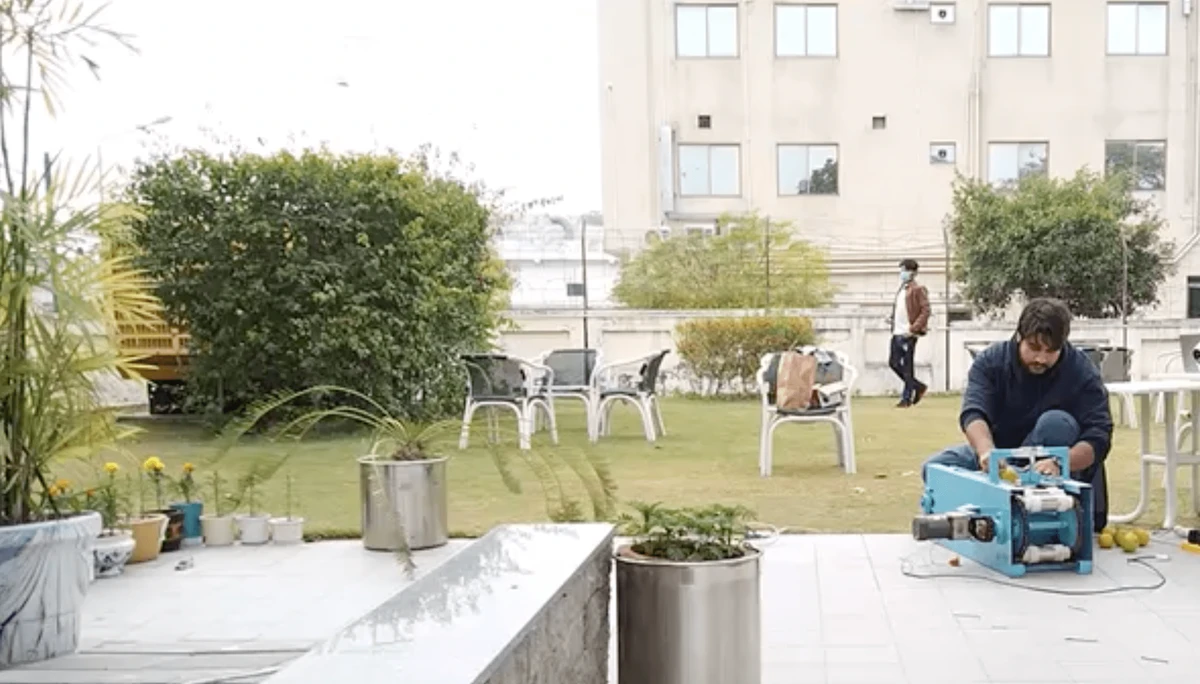
One such startup is Industrial Vision Systems, which uses a portable artificial intelligence machine to scan fruits and vegetables through a camera that is connected to a computer. The machine not only grades the items but also generates a complete dataset on the basis of their quality, and points out defects.
“The better the quality of your produce, the better the report you get from the machine, allowing farmers to get fair compensation for the hard work they have put in [to grow them],” Saad Tanveer Ahmed, a co-founder of the startup, told Arab News.
By identifying defects in the produce, the machine allows farmers to “take informed decisions to sell their crop,” Ahmed said.
Talking about his product’s relevance in the international market, he said the company was in touch with a number of date farmers in Jordan, Saudi Arabia and the UAE to implement the technology there.
Dr. Javed Humayun, senior joint secretary at the Ministry of National Food Security and Research, told Arab News on Monday that modern technology was vital to enhance Pakistan’s yield and farmers' income and exports, and “that's why we have been working closely on agricultural technology transfer from China and South Korea.”
"We don't have any special funds allocation to support agritech startups, but we do encourage young researchers and scientists to come up with innovative technologies to help modernise our agriculture sector, create job opportunities for youth and ensure the food security," Humayun said.
“The demand for the advanced technology is very high in the agricultural industry, but unfortunately we lag behind the developed world,” Waheed Ahmed, patron-in-chief of the All Pakistan Fruit and Vegetables Exporters Association, told Arab News.
He said Pakistani academia and industry needed to come together to develop the required technology and sponsor new initiatives.
“We can’t increase our agri exports through obsolete technologies like manual graders,” Waheed Ahmed added, urging the government to support local agri-tech initiatives.
The Industrial Vision Systems’s CEO said his startup had received a number of letters of intent from the fruit industry and was planning to roll out its commercial version in March next year.
“The machine is based on a working principle that has been used in the world for many years,” Ahmed said. “But this is the first time it is developed in Pakistan in a cost effective manner that is acceptable to the industry.”