

LONDON: DP World has offered its continued commitment to invest in Britain’s trade and logistics infrastructure after it exits the EU.
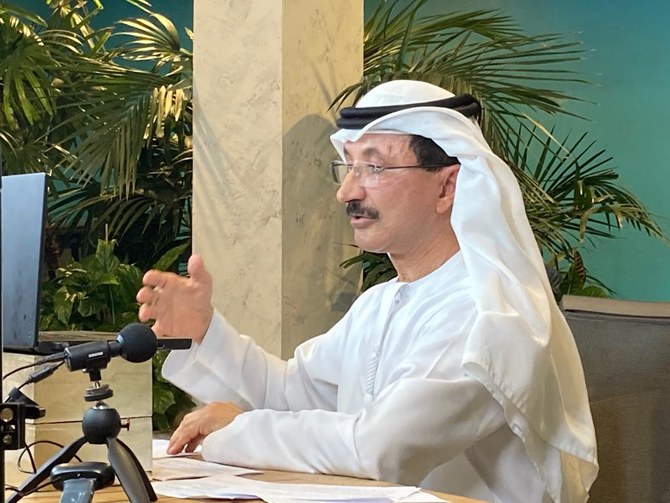
Addressing the House of Commons and the House of Lords, DP World Group Chairman Sultan Ahmed bin Sulayem shared his view on how “free zones can be the step up countries need, from emerging markets to more established economies, to stay resilient and drive growth in the post-COVID trade economy.”
He said: “We know this from the successes we’ve seen at the Jebel Ali Free Zone in Dubai, which allows 100 percent foreign ownership, 0 percent import or re-export duties, 0 percent personal income tax, no currency restrictions, no restriction on foreign talent and no restriction on capital repatriation. This has helped the city rely less on its natural resources and become the largest industrial zone in the region, facilitating trade worth more than $93 billion annually and benefiting more than 560 companies from 70 countries.”
Yesterday I addressed the UK's Parliament to offer DP World’s continued investment in the UK’s trade infrastructure. We are ready to help the UK rise to the challenges and opportunities of leaving the EU, whatever the outcome of the negotiations. https://t.co/j80bTE8tTE
— Sultan Ahmed Bin Sulayem (@ssulayem) November 19, 2020
He also referred to the Caucedo marine terminal and free zone that DP World established in the Dominican Republic, which has “enabled the country to emerge as a strong competitor in international markets, helping to serve as a roadmap for its neighbors and the region.”
Bin Sulayem said DP World has made the most significant investments in the UK outside the UAE, with over £2 billion ($2.66 billion) in jobs and technology over the past decade at London Gateway, its Southampton port, and P&O Ferries, among others.
“We are ready to help the UK rise to the challenges and opportunities of leaving the EU, whatever the outcome of the negotiations,” Bin Sulayem said in a tweet following the briefing.
“The potential power of free zones is particularly strong in ‘shovel ready’ markets, where our existing sites are primed for expansion into even more sophisticated economic and logistics zones, like our London Gateway terminal on the River Thames estuary. Over the next 10 years, we’ve earmarked around £1 billion for investment into the site,” he added.
But he said the UK cannot aim for the same trade ambitions as other countries as over the last four decades all of its trade has been negotiated through the EU, and must therefore adapt to become an independent global trader post-Brexit.
.@ssulayem: The UK is where we have made the most significant investments outside the #UAE, having invested more than £2 billion in jobs and technology over the past decade at London Gateway, our Southampton port, and P&O Ferries. pic.twitter.com/IFXGaE5nlm
— Dubai Media Office (@DXBMediaOffice) November 20, 2020
“Regardless of whether you view the UK’s previous trade-bloc membership as a help or hindrance, the country now has an opportunity to position itself as a key player in the post-COVID trade economy,” Bin Sulayem added.
“The need for focused, sophisticated and business-friendly trade zones has never been greater as companies look for new ways of getting closer to their customers, optimizing their trade flows, attracting inward investments and diversifying into new trade markets.”
He said the pandemic has shown that ports must do more than merely handle and move cargo.
He added that companies are seeking shorter supply chains and diversified routes, which are done through sophisticated economic and logistics zones surrounding a port or terminal.
“Free zones aren’t a universal remedy, but a critical component in how countries can diversify their trade flows and opportunities for inbound investment,” he said.