KARACHI: The government on Thursday revived one of the oldest mass transit systems in the country’s most densely populated city by operationalizing a 14-kilometer stretch of the Karachi Circular Railway (KCR) while promising to modernize it.
The KCR was launched in 1964 when most metropolitan cities of the world were trying to develop mass transit systems. In 1970, it covered 44 kilometers and meandered through various neighborhoods of Karachi.
In the following years, however, railway authorities reduced the number of trains since there was a shift in the transportation trend and most people had started using buses. Eventually, the system was completely shut down in 1999.
“The KCR is once again available to the masses and the credit for that goes to the Supreme Court of Pakistan, Imran Khan’s federal government, the provincial administration and the railways staff,” said Sheikh Rashid Ahmed, federal minister for railways, after relaunching the service that covers 64 kilometers in total.
Several efforts were made during the last 21 years to address the transportation needs of the sprawling metropolis, though the KCR could not be reactivated due to largescale encroachments that covered railway properties and tracks.
“There is a big land grabbing mafia that has occupied railway lands,” said the minister, adding that his department would increase the number of trains to the system after the Sindh administration managed to remove the encroachments and built undergrounds and overhead bridges.
“The KCR will be fully revived and modernized within a year,” he continued, adding that Rs1.8 billion had been allocated for the project and about Rs17 million had already been spent.
“Removing encroachments is a sensitive issue for the government and we are working on it. The Supreme Court has given clear instructions that every inch of the railway land should be cleared. The Sindh government is in the process of implementing the decision. Before the KCR is fully made functional, all encroachments will have to be removed,” divisional railways superintendent in Karachi, Arshad Salam Khattak, told Arab News.
At the moment, he maintained, “we are in the first phase of the project.”
“Today we made the main line of KCR functional … The idea is to have a modern mass transit system, not the old one,” he added.
According to railway officials, two trains will be run on the main track for fifteen days before their number is raised to four and finally 10.
Initially, the authorities wanted to charge all travelers Rs50, but the fare was reduced to Rs30.
The labor class will be able to obtain a monthly pass for just Rs750.


![]()
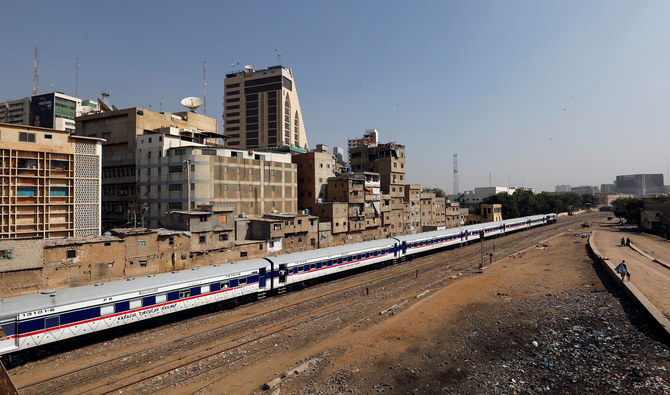
Karachi Circular Railway partially reactivated after more than two decades
Short Url
https://arab.news/y3z6n
Karachi Circular Railway partially reactivated after more than two decades
- The KCR is one the largest mass transit projects that was launched in 1964 and shut down in 1999 after more people started using buses
- The government wants to add more trains and tracks to the system after removal of encroachments from railway lands
Latest updates



© 2026 SAUDI RESEARCH & PUBLISHING COMPANY, All Rights Reserved And subject to Terms of Use Agreement.