Startup of the Week: Saudi startup aims to overtake leaders in last-mile delivery market

Photo/Supplied
Short Url
Updated 17 November 2020
Follow

Startup of the Week: Saudi startup aims to overtake leaders in last-mile delivery market

JEDDAH: The global boom in electronic commerce, further boosted due to the coronavirus disease (COVID-19) pandemic, has resulted in a dramatic increase in the number of parcels delivered each day.

Customer expectations for speedy fulfillment have also been rising, leaving companies to grapple with multiple, last-mile delivery challenges.

Last-mile delivery is the most expensive and time-consuming part of the shipping process and most e-commerce retailers in Saudi Arabia struggle with it. Delays, reduced success rate, and difficulty handling cash on delivery (COD), are among the many obstacles faced by the sector.

However, one Jeddah-based startup claims to have solutions to the problem.

Saee is a Saudi tech-logistical, last-mile delivery company aiming to introduce a new concept into the local market.

The startup helps to facilitate higher success rates and improve profit margins for companies and individuals, while alleviating the need for costly overheads such as cars and couriers.

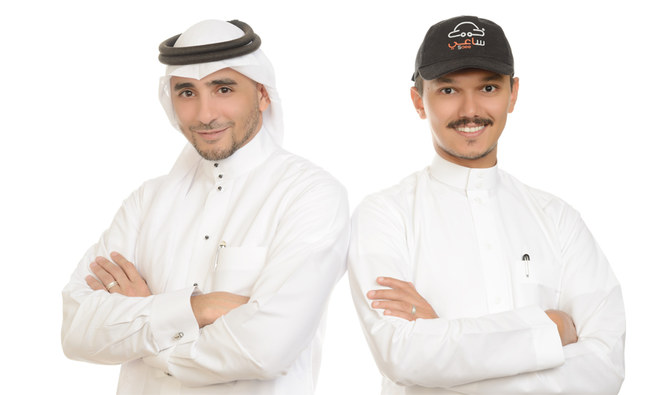
“The most important things that retail, e-commerce clients expect from last-mile shipping companies is a high success rate, and rapid refunds,” Saee co-founder Tariq Alturkestani told Arab News.

Saee was founded with the support of King Abdullah University of Science and Technology (KAUST) to be the local solution for Saudi e-commerce platforms. It offers specialized services designed to meet retailers’ needs, such as guaranteed fast COD consolidation, and the facilitation of smart, flexible dispatch to freelancers, active customer service, and warehouse management.

COD services are being adopted by online retail companies to gain customers’ trust and to encourage them to try new products. However, they have high associated costs, which drives up costs in a country where around 95 percent of packages are sent via this service.

“I believe that e-commerce has a big dilemma called cash on delivery,” Saee co-founder Eihab Nassier told Arab News. “The end-user or the buyer is not obligated to take whatever they picked from the internet.

“Accordingly, the success rate for the shipments is 70 percent; since only seven out of 10 shipments get received by clients; meaning that e-commerce retailers are enduring about 30 percent of the cost with no actual revenue.”

The other side of the COD problem is slow cash flow, especially for small- and medium-sized enterprises (SMEs).

“As an e-commerce platform, the cycle means that I should send the shipment and get it delivered and then collect the money, transfer it, and then deposit it into my account which takes anywhere from 10 to 20 days. So, we’re talking about a cash gap of 20 days in the best-case scenario. But it often reaches three months,” said Nassier.

One of the solutions that Saee is offering for the problem is the concept of cash before delivery (CBD). “We give the clients the cash before the shipment is delivered with a very small percentage just to endure the cost,” he added.

“We do a transfer every week for our clients, and we have dedicated teams as well as an in-house developed technology to give our clients updated reports constantly.”

Saee delivers last-mile shipments in more than 120 cities and towns using 13 dispatch centers throughout the Kingdom and is working on expanding its reach further. “By the end of this year, we hope to be covering the entire Kingdom,” said Alturkestani.

Another factor that distinguishes Saee from other companies in the field is its reliance on a fleet of freelancers, which means it only recruits couriers according to demand.

“On average we dispatch around 5,000 shipments per day around the Kingdom, during peak seasons such as last Ramadan. In that time period, we dispatched around 12,000 shipments per day with a success rate of around 80 to 85 percent of the received packages,” he added.

During the COVID-19 lockdown, shipment companies scrambled to meet increased demand for residential deliveries, particularly with the many imposed controls and safety protocols. However, Alturkestani said that given the easy scalability of their business model, they were able to fulfill dispatch times.

“During the Black Friday season, we hope that we will be able to reach 15,000 delivery shipments per day,” he added.

According to Alturkestani, the firm’s elastic model and having one of the highest delivery success rates in Saudi Arabia has made major e-commerce companies prefer Saee over other leading courier companies in the Kingdom.

The company’s business model has allowed Saee to avoid having to pay for couriers, gasoline, and vehicle insurance, as well as being able to dodge the worst effects of off-season financial slumps. At the same time, it offers clients more efficient solutions to match their needs and provides local people with the opportunity to increase their income.

Saee’s fleet of freelancers guarantee clients a better performance; agents are not obliged to work within a specific timeframe and deliver a certain amount of shipments per day, so they are less pressured and have the time to focus.

“The average amount of shipments with other companies goes from 50 to maybe 90 or even 100 where our agents deliver around 20 (shipments),” said Nassier.

The KAUST partnership with the Saudi Human Resources Development Fund (HRDF) in the 9\10th accelerator program allowed Nassier and Alturkestani to meet and start their collaboration in 2016.

The company first began to reduce the unemployment rate for females in Saudi Arabia by carpooling women to work and was subsidized by the government program Wusool. However, after a royal decree allowed women to drive, Saee gradually pivoted its model and moved to dispatch of e-commerce packages.

Saee began working with big companies in Saudi Arabia and after raising its profile began targeting smaller companies with services that matched their demand.

“We just started two service products for small enterprises, even those who have one shipment per month only. We wanted to give them more options and to create an impact,” Nassier said.

He believes that the company has great potential to make a difference and bring a solution for the COD market in Saudi Arabia. “Who knows, maybe for the world after that? We want to be the number one company for e-commerce shipping in five years.”


Defense Minister Prince Khalid bin Salman inaugurates 3rd World Defense Show in Riyadh

Updated 09 February 2026
Follow

Defense Minister Prince Khalid bin Salman inaugurates 3rd World Defense Show in Riyadh

  • Organized by the General Authority for Military Industries (GAMI), the five-day event will run until February 12
  • Prince Khalid launched several key initiatives, including the launch of several defense firms and signing of cooperation deals
  • The show is also serving as a launchpad for cutting-edge security technologies across various government sectors

RIYADH: Minister of Defense Prince Khalid bin Salman inaugurated the third edition of the World Defense Show (WDS) on Sunday on behalf of Crown Prince Mohammed bin Salman.

Organized by the General Authority for Military Industries (GAMI), the five-day event will run until February 12, showcasing the Kingdom’s rapid strides toward strategic independence and technological leadership in the defense sector.

The 2026 edition features a purpose-built venue with a 2,700-meter runway for live air and land demonstrations, underscoring the show’s status as a premier global defense event.

GAMI Governor Ahmad Al-Ohali emphasized that the show reflects Saudi Arabia's commitment to localizing over 50 percent of military spending in line with Vision 2030, fostering an integrated ecosystem where government bodies and international partners collaborate on innovation.

The event brings together official delegations, government entities, and leading international companies specializing in the defense and security sectors. (SPA)

Strategic agreements and major launches

The opening day witnessed significant activity at the Saudi Arabian Military Industries (SAMI) Group pavilion, where Prince Khalid launched several key initiatives:

New entities: The inauguration of SAMI Land Company, SAMI Autonomous Company, and the SAMI Land Industrial Complex.

Supply chain: The unveiling of the SAMI Local Content Program (RUKN) and the HEET Program.

International cooperation: A memorandum of understanding was signed between the Saudi General Authority for Defense Development and the Korean Agency for Defense Development to cooperate on advanced military research.

Defense deals: The Minister signed cooperation agreements with Slovakia, Malaysia, and Somalia.

Defense Minister Prince Khalid signed cooperation agreements with Slovakia, Malaysia, and Somalia. (SPA)

Technological debuts & innovations

The show is also serving as a launchpad for cutting-edge security technologies across various government sectors:

AI-Powered Lucid Gravity: Public Security debuted its advanced Lucid Gravity electric security vehicle at the Ministry of Interior's pavilion. The vehicle integrates state-of-the-art artificial intelligence and specialized security equipment designed to accelerate emergency response times and support field operations.

Public Security’s advanced Lucid Gravity electric security vehicle is displayed at the Ministry of Interior’s pavilion. (SPA)

This high-tech addition highlights Public Security’s shift toward smart, sustainable security solutions. By leveraging predictive intelligence and advanced command-and-control systems, the Lucid Gravity exemplifies the ministry’s commitment to protecting the Kingdom through integrated technological innovation and sustainable mobility.

Smart Helmet: Also at the Ministry of Interior’s pavilion, the General Directorate of Civil Defense unveiled its smart helmet. Designed to revolutionize public safety and emergency response, the helmet features day-and-night cameras and specialized sensors to detect hazardous materials in hard-to-reach locations.

The device serves as a mobile command node, delivering live video feeds directly to command-and-control centers. By enabling real-time data analysis and faster decision-making, the smart helmet significantly reduces incident response times and enhances personnel safety in high-risk environments.

The smart helmet features day-and-night cameras and specialized sensors to detect hazardous materials in hard-to-reach locations. (SPA)

Border Security: The General Directorate of Border Guard (GDBG) showcased an integrated security system featuring radar and thermal cameras capable of detecting drones and classifying moving targets to protect critical infrastructure.

It also functions as an early warning system for critical facilities and border areas and is fully integrated with command and control systems.

Border Guard's ntegrated security system features radar and thermal cameras capable of detecting drones and classifying moving targets to protect critical infrastructure. (SPA)

Counter-Terrorism: The Islamic Military Counter Terrorism Coalition (IMCTC) presented a comprehensive framework integrating intellectual, media, and military domains to combat extremism and terror financing.

Visitors are briefed on specialized programs designed to raise the readiness of national personnel and foster sustainable institutional cooperation among member states to combat extremism. On the event’s opening day, the pavilion hosted high-level delegations, including ministers, military leaders, and ambassadors who reviewed the coalition's pivotal role in coordinating international security efforts and commended its initiatives that support regional and global stability.

A view of the Islamic Military Counter Terrorism Coalition pavilion. (SPA)

Meteorology: The National Center for Meteorology (NCM) displayed advanced weather systems essential for ensuring the safety of the event's air shows and military operations.

At its dedicated pavilion, the NCM is showcasing its latest advanced meteorological technologies and systems. These solutions serve both the military and civilian sectors, providing accurate data to support beneficiary entities' operational processes and highlighting the center's pivotal role in national security and safety.

NCM's latest meteorological technologies and systems serve both the military and civilian sectors

World Defense Show CEO Andrew Pearcey noted that participation is expected to surpass previous records, reflecting the event's growing importance on the international stage. The show continues through February 12.