

Investcorp sells US real estate assets for $900m

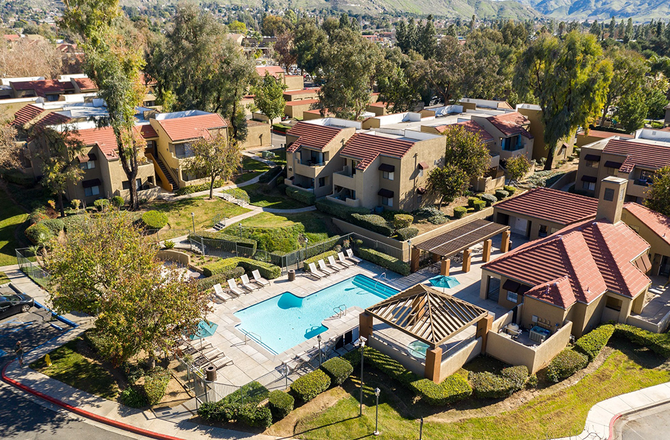
The properties were garden and townhome-style apartment buildings located in major metropolitan areas in Arizona, California, Florida and New York.
Short Url
Updated 14 November 2020
Follow

Investcorp sells US real estate assets for $900m

Investcorp, a global provider and manager of alternative investment products, announced that it has recently sold eight multifamily properties located in Arizona, California, Florida and New York, to multiple buyers for more than $900 million.

The properties were garden and townhome-style apartment buildings located in major metropolitan areas in Arizona, California, Florida and New York. Investcorp acquired the assets in 2016 and 2017 and completed numerous value-enhancing initiatives, increasing average monthly revenue per unit by approximately 20 percent, implementing select property and amenity upgrades and interior unit renovations as well as benefiting from the targeted markets’ consistently strong housing fundamentals with favorable supply/demand dynamics.

Yasser Bajsair, CEO of Investcorp, Saudi Arabia, said: “The US multifamily real estate continues to be a key area of focus for us given its strong fundamentals and resiliency as everyone will always need a place to live. We will continue to leverage our deep market expertise and history of successfully investing in real estate to identify attractive opportunities that align with our criteria and that we believe to be well-positioned to create value for our investors.”

Khulood Ebrahim, real estate product specialist at Investcorp, said: “We are pleased with the outcome of the exits and for the value that we created for our investors and shareholders. We assembled this portfolio of highly leased residential properties in key target markets with strong underlying economies, growing populations and limited supply, and the sales are a testament to our ability to consistently execute on our investment thesis to target strong cash flow-generating assets with opportunities for further capital appreciation through active, hands-on management.”

Investcorp is a global investment manager, specializing in alternative investments across private equity, real estate, credit, absolute return strategies, GP stakes and infrastructure. Founded in 1982, the company today has a presence in 12 countries across the US, Europe, GCC and Asia, including India, China and Singapore.


Jameel Observatory-CREWSnet advances climate resilience in Bangladesh

Updated 20 January 2026
Follow

Jameel Observatory-CREWSnet advances climate resilience in Bangladesh

The Jameel Observatory Climate Resilience Early Warning System Network, an initiative co-founded by the Massachusetts Institute of Technology and Community Jameel to reinvent climate change adaptation in vulnerable communities into a proactive, integrated and evidence-based process, announced the launch of its Adaptation Fortress initiative, transforming existing cyclone shelters and providing protection from heat waves in Bangladesh for the first time.
The first Adaptation Fortress is under construction in Satkhira district, southwest Bangladesh. If this pilot is successful, the initiative will open a pathway, with additional funding, to scaling up to 1,250 Adaptation Fortresses providing heatwave relief to half a million of the region’s most vulnerable residents.
More than 30 million people live in southwestern Bangladesh. Between 2019 and 2021, including in the midst of the COVID-19 pandemic, multiple cyclones hit the region, devastating land, homes and entire communities. The threats posed by climate change — rising sea levels and more extreme weather — mean that people living in this region are likely to face similar crises in the years ahead. In addition to cyclones, extreme heat is a growing threat, putting people at risk of dehydration and heatstroke. In 2024, the UN found that heat waves caused nationwide school closures for two weeks, with some schools closing for six to eight weeks due to the combined impact of heat waves and flooding.
In Bangladesh, the Jameel Observatory-CREWSnet has used its mid-century climate projections and analysis of local human systems to design a pilot for a multi-purpose, multi-objective structure called an Adaptation Fortress.
By engaging extensively with local communities, the Jameel Observatory-CREWSnet, which includes among its partners BRAC, a global nongovernmental organization established in Bangladesh, is demonstrating a new model of climate adaptation that repurposes schools that are also cyclone shelters to serve as sanctuaries during extreme heat events.
The climate resilient shelter model is the first of its kind in Bangladesh and serves as a blueprint for infrastructure development across South Asia. Designed to protect the most vulnerable community members during government-declared heat emergencies, Adaptation Fortresses feature solar power generation and battery backup systems to ensure the shelter is resilient to outages during extreme heat conditions. The site also includes rainwater harvesting capacity and is designed so that excess energy generated when air conditioning is not in use is made available for community use.
Mohammed Abdul Latif Jameel KBE, founder and chairman of Community Jameel, said: “The Jameel Observatory-CREWSnet’s construction of this first pilot Adaptation Fortress marks a milestone for Bangladesh and the region. It lays the foundation for a proactive response to cyclones and heat stress — emergencies that the team has projected will become frequent events, threatening the lives of millions in Bangladesh. By adapting infrastructure today, we are building the resilience needed for tomorrow.”
Professor Elfatih Eltahir, lead principal investigator of the Jameel Observatory-CREWSnet, said: “Bangladesh built a vast network of cyclone shelters that have been effective in protecting vulnerable populations. For the first time the Jameel Observatory-CREWSnet is introducing the concept of shelter from heat waves as well as cyclones in southwest Bangladesh. This integrated and proactive initiative will significantly improve climate resilience in a region with some of the highest risks from climate change.”
Dr. Deborah Campbell, executive director of the Jameel Observatory-CREWSnet, said: “Bangladesh is getting hotter and will experience more frequent and severe heat waves, leaving many people very vulnerable to heat stress and lacking the resources to adapt. The Adaptation Fortress initiative will provide shelter for the most vulnerable community members in southwest Bangladesh and has the potential to serve as a model for similar proactive climate resilience infrastructure development across Bangladesh and South Asia.”
Dr. Md Liakath Ali, principal investigator of the Jameel Observatory-CREWSnet at BRAC, said: “BRAC is proud to partner with the Jameel Observatory-CREWSnet in pioneering the Adaptation Fortress initiative, an important step toward protecting vulnerable communities from the growing risks of extreme heat in coastal Bangladesh. By transforming existing cyclone shelters into multi-purpose, climate-resilient infrastructure, we are demonstrating how locally grounded solutions can address emerging climate hazards while strengthening community well-being. Alongside the pilot, we are committed to engaging policy makers so that future heat and climate risks are integrated into national planning processes. The lessons from this initiative will not only support communities in the southwest, but also inform long-term, scalable strategies for resilience across the country.”